UNC Charlotte researchers advance DNA-guided antimicrobial technology with NCInnovation support
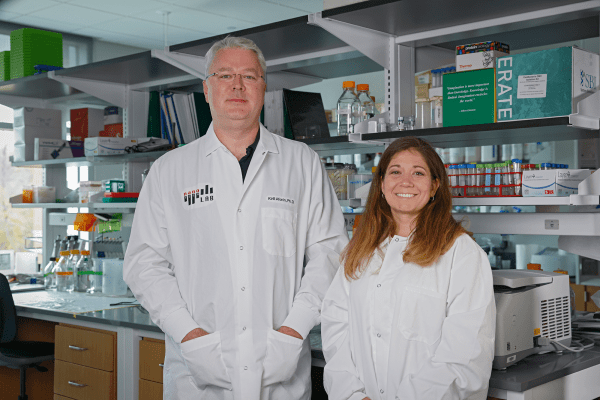
A UNC Charlotte research team in the Klein College of Science has received a new grant from NCInnovation to accelerate development of a novel antimicrobial technology that could offer a new approach to treating chronic wounds and infections caused by antibiotic-resistant bacteria.
The project, “Silver Nanoclusters: Scalable Broad-Spectrum Antimicrobials for Clinical Translation and Commercialization,” is led by Kirill Afonin, professor of chemistry in the Klein College of Science, and co-principal investigator M. Brittany Johnson, assistant professor of biological sciences.
Addressing a growing challenge
Antibiotic-resistant bacterial infections contribute to more than one million deaths worldwide each year, creating an urgent need for alternatives to conventional antibiotics as resistance continues to outpace the development of new drugs.
Traditional antibiotics typically target a single bacterial process or molecular pathway, creating opportunities for bacteria to develop resistance over time. Many antibiotics also struggle to eliminate dormant bacteria or pathogens that persist inside human cells, both of which can contribute to recurring infections.
Chronic wounds, including diabetic foot ulcers, are particularly vulnerable to infections caused by antibiotic-resistant bacteria. These infections can delay healing and increase the risk of hospitalization and severe complications.
Silver nanoclusters: multiple advantages to antimicrobial treatment
To address these challenges, the research team has developed antimicrobial materials based on DNA-templated silver nanoclusters, known as DNA-AgNCs.
The DNA-AgNC platform uses programmable DNA scaffolds to template, stabilize and organize ultrasmall silver nanoclusters. The approach gives researchers precise control over the size, arrangement and properties of the antimicrobial material, while enhancing its effectiveness against drug-resistant bacteria.
This makes them fundamentally different from many conventional antibiotics that target a single cellular process and could make them effective against a broad range of pathogens. The formulations also showed minimal toxicity to the mammalian cells evaluated during testing.
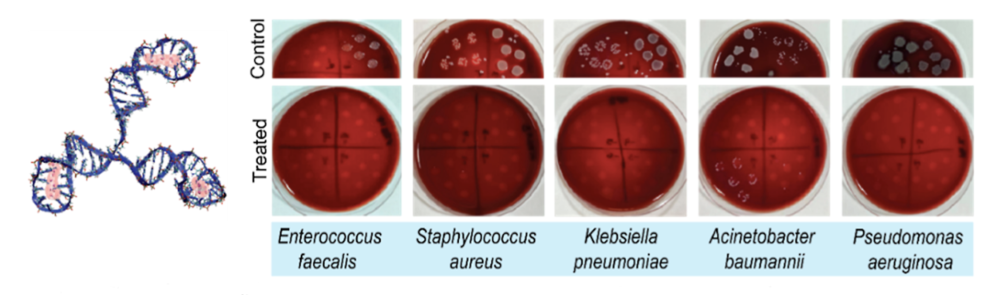
Adopted from Spatially Organized DNA-Templated Silver Nanoclusters as Potent Antimicrobial Agents for ESKAPE Infections.
“What makes this platform particularly exciting is its programmability,” Afonin added. “We can engineer the DNA scaffolds to control the organization, local concentration and properties of the nanoscale silver, creating opportunities to develop safer, more effective antimicrobial products.”
Their preliminary laboratory studies using multidrug-resistant ESKAPE pathogens, a group of bacteria responsible for many difficult-to-treat health care-associated infections, demonstrated that rather than relying on a single bacterial target, DNA-AgNCs appear capable of attacking bacteria through multiple mechanisms, including disruption of bacterial membranes and the generation of reactive oxygen species.
Programmable DNA scaffolds
The platform’s design enables researchers to tune the spatial organization of silver nanoclusters through DNA engineering, creating opportunities to optimize antimicrobial activity, stability and delivery for different clinical applications.
“Our technology represents a fundamentally different approach to fighting bacterial infections,” said Afonin. “By using short synthetic DNA oligonucleotides to precisely organize ultrasmall silver clusters, we have developed novel antimicrobial materials that demonstrate remarkable potency against drug-resistant bacteria while maintaining promising compatibility with mammalian cells in our laboratory studies,” he said.
Hide and seek inside host cells
Johnson said the team’s findings suggest the technology may be capable of targeting bacterial populations that often evade conventional treatment.
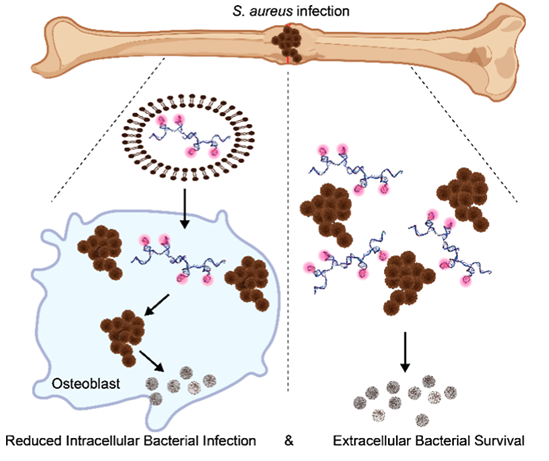
Traditional antibiotics often struggle to eliminate bacteria that hide inside host cells, where they can persist and contribute to recurring infections. The team’s laboratory studies demonstrated that DNA-AgNCs can enter host cells and significantly reduce intracellular bacterial populations, potentially opening a pathway for treating infections that are difficult to eradicate with existing therapies.
“We have successfully used DNA-AgNCs to kill both extracellular and intracellular clinically relevant bacterial pathogens,” Johnson said. “This is particularly exciting because DNA-AgNCs have the potential to target dormant and intracellular bacteria that are difficult to clear and often contribute to long-term and recurrent infections,” she said.
Glow in the dark microbes
Beyond their antimicrobial properties, the silver nanoclusters are naturally fluorescent, allowing researchers to monitor their behavior and stability. That built-in tracking capability could support future manufacturing and quality-control processes as the technology moves toward commercialization.
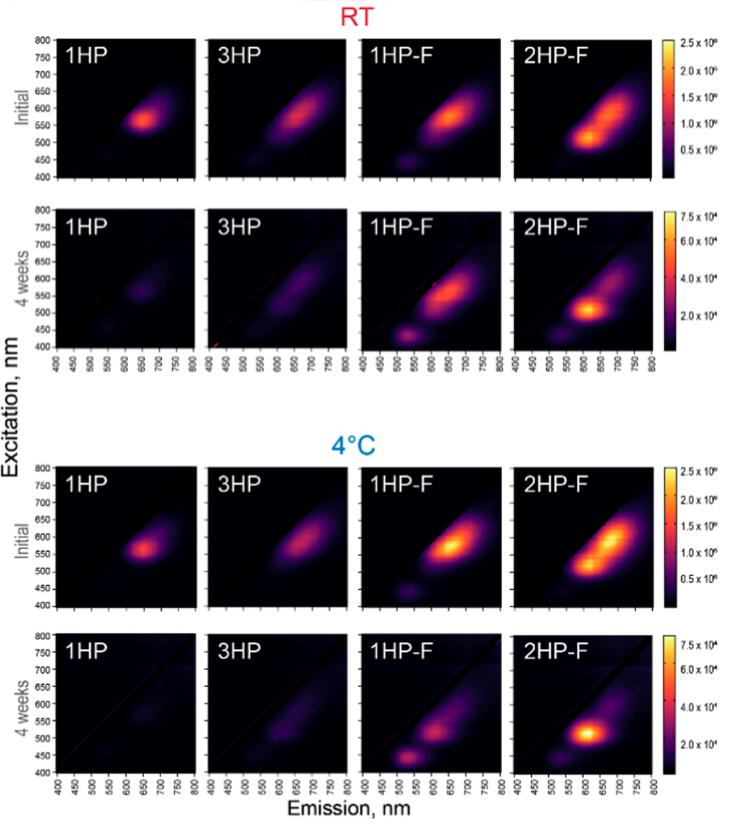
Adopted from Spatially Organized DNA-Templated Silver Nanoclusters as Potent Antimicrobial Agents for ESKAPE Infections.
Ideal conditions for these therapies would be efficacy at room temperature so they could be used more easily by patients outside of clinical settings. Several DNA-AgNC formulations developed by the researchers maintained antimicrobial activity after weeks of storage at ambient room temperature conditions.
Advancing the research toward clinical translation
The NCInnovation grant will support additional laboratory and animal studies, regulatory planning and commercialization activities needed to prepare the technology for licensing and future product development.
The team’s initial commercialization strategy focuses on topical antimicrobial products, including gels, sprays and wound dressings designed for infected diabetic foot ulcers and other chronic wounds.
If successfully translated, the technology could improve treatment options for patients with chronic wound infections while establishing a new antimicrobial platform developed and commercialized in North Carolina.
The award is part of NCInnovation’s latest funding round, which approved $6.8 million for eight university research projects across North Carolina. The grants support technologies with commercial potential and help researchers advance discoveries from the laboratory toward real-world applications.
This marks UNC Charlotte’s seventh NCInnovation research grant, in addition to two pilot grants awarded during the organization’s first year. NCInnovation is a public-private partnership focused on accelerating the commercialization of university research across North Carolina.
Written by Jenn Conway
Portrait by Kat Lawrence
Figures courtesy of the researchers and adopted from Spatially Organized DNA-Templated Silver Nanoclusters as Potent Antimicrobial Agents for ESKAPE Infections.