Sarah Stellwagen researches spider silk’s potential beyond the web
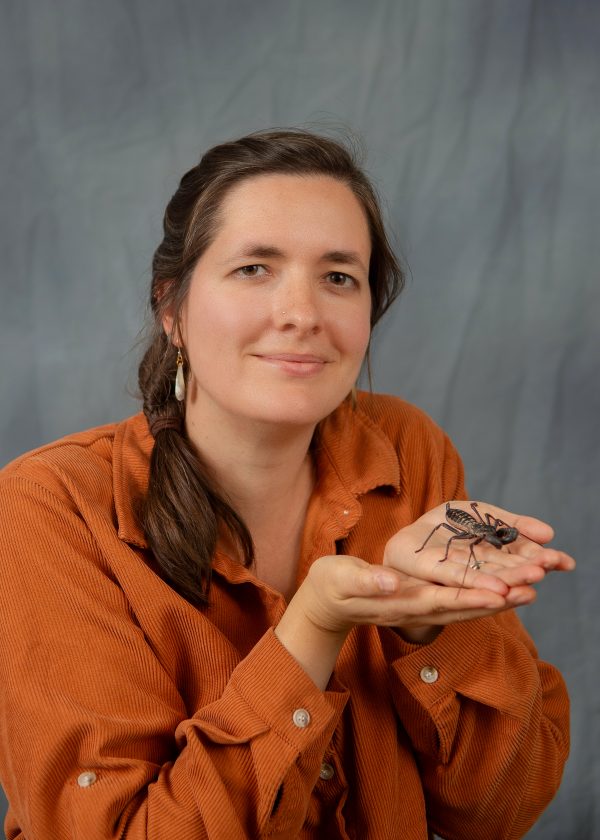
Spider silk is one of nature’s most remarkable materials, and Sarah Stellwagen, assistant professor of biological sciences at UNC Charlotte, is working to better understand how it works and how it could inspire future technologies.
In the Stellwagen Lab, researchers study silk produced by spiders and other arthropods at both the materials and genetics levels. By testing the strength, flexibility and other properties of silk, the team seeks to uncover what makes different silk types uniquely suited for tasks ranging from building webs to capturing prey.
Spider silk is known for its exceptional performance, combining strength comparable to high-grade steel with a much lighter weight. Understanding those properties could help inform the development of synthetic materials with potential applications in fields such as medicine, manufacturing and pest management.
“Researchers have made plenty of protein soup, as a spider does, but unlike spiders, they haven’t been able to spin that protein into solid threads at a scale that is relevant for the public,” Stellwagen said.
By studying how silk proteins function in nature, Stellwagen’s research aims to provide the foundation for future synthetic materials designed for specific uses.
Read the full Q&A with Stellwagen to learn more about her research and the possibilities of spider silk.