UNC Charlotte’s Dasgupta Lab shines light on cancer-related weight loss
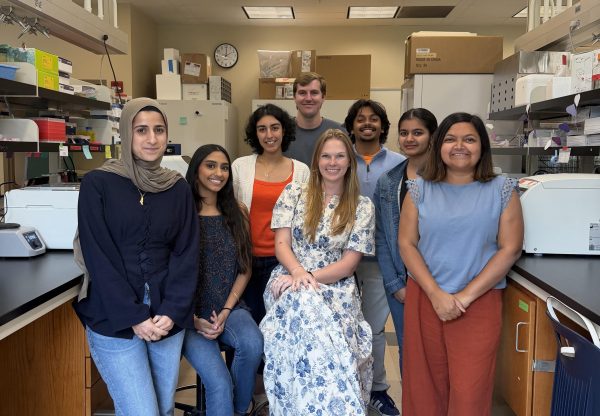
On Friday, Sept. 25, UNC Charlotte’s Dasgupta Lab will participate in the second annual Cancer Cachexia Awareness Day. The annual observance aims to increase understanding of cachexia, the wasting syndrome that affects up to 80% of people with advanced cancer. Despite its prevalence, cachexia often remains unknown to patients and families until they are already living with it.
The international day of recognition is organized by the Cancer Cachexia Society and its patient and caregiver advocacy arm, the Cancer Cachexia Network.
Aneesha Dasgupta, Ph.D., is an assistant professor in the Department of Biological Sciences and director of community, engagement and success in the Klein College of Science. Her lab studies cachexia associated with pancreatic cancer to identify novel therapeutic avenues that improve patient outcomes.
The team has received funding from the National Cancer Institute, part of the National Institutes of Health, for the project “Targeting Perp in PDAC tumor and cancer cachexia.”
In recognition of Cancer Cachexia Awareness Day, Dasgupta shared how her lab is advancing awareness and treatment of the wasting syndrome.
What does your lab study, and how does your work help us better understand cancer cachexia?
Our lab studies pancreatic cancer-associated cachexia — a syndrome marked by involuntary, unintentional weight loss that cannot be reversed through nutritional support alone. This loss stems from the depletion of both muscle and fat, and it occurs at a higher rate in pancreatic cancer than in any other cancer type. Patients with cachexia face worse survival outcomes, reduced tolerance to chemotherapy and greater functional decline. Our focus is on the muscle loss component: Identifying its causes and uncovering novel therapeutic targets.
How did you first become interested in studying cachexia, and why has it remained such an important focus for you?
I got into cachexia research almost by accident. As a graduate student studying pancreatic cancer metabolism, I didn’t even know what cachexia was — until a postdoc in my lab took me under his wing and trained me. The more I learned, the more I realized how devastating and underappreciated this syndrome was; I still remember people dismissing it as “just a symptom” of cancer. We know better now, and I’ve watched the field’s understanding of it grow enormously. What keeps me going is simple — restoring weight loss can genuinely extend a patient’s life and improve its quality. And the syndrome is understudied, so it is going to take a lot of us to make a difference.
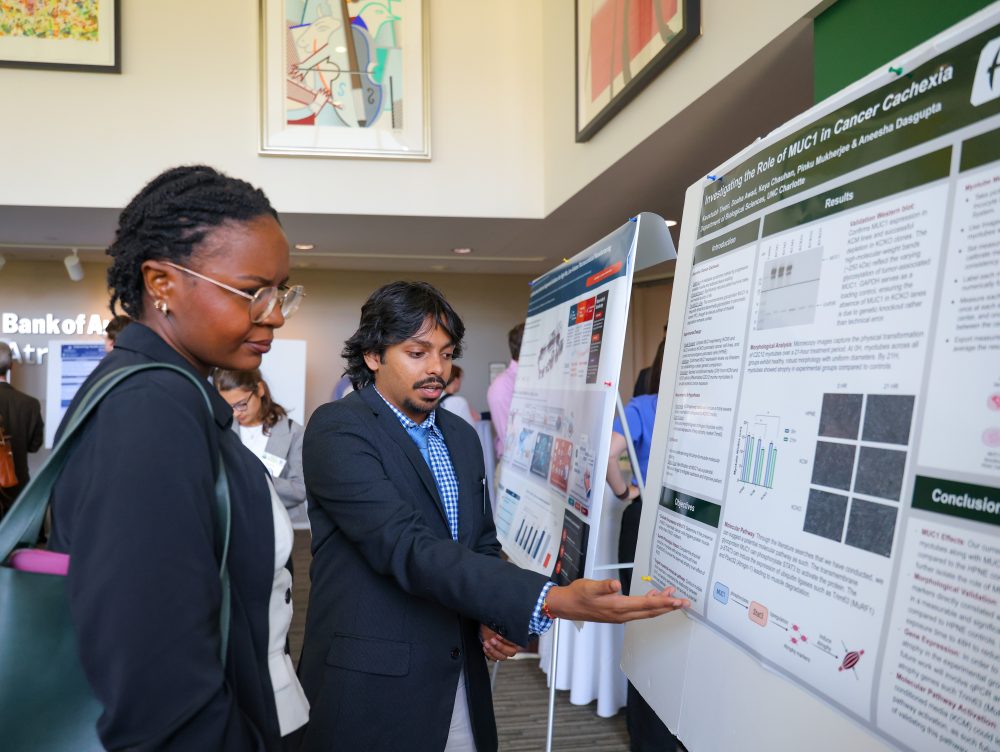
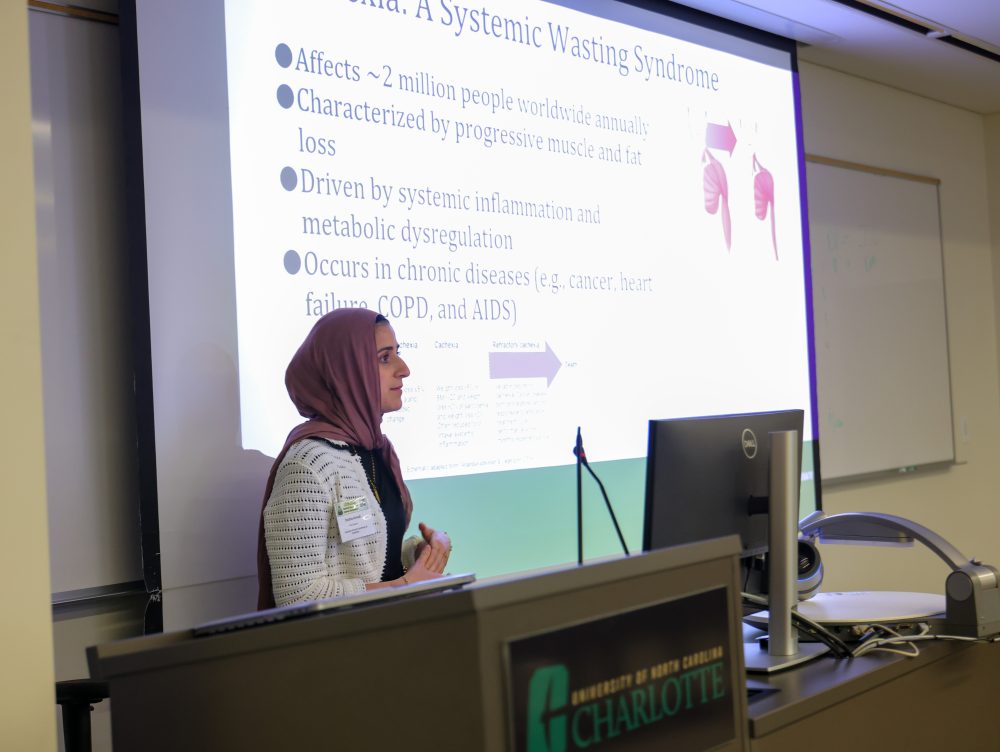
Who do you work with to advance cachexia research, and how do these partnerships strengthen your work?
We collaborate closely with clinicians, whose insight helps connect what we observe in the lab to what’s happening in patients. We also work with other researchers who bring expertise in different aspects of cachexia, such as fat metabolism or liver changes associated with the syndrome. Beyond the lab, we stay connected with advocacy groups; I am involved with the Charlotte Affiliate of the Pancreatic Cancer Action Network, which raises funds for research, runs support groups for survivors and caregivers, and helps spread awareness about pancreatic cancer and cachexia.
What has your involvement with the Cancer Cachexia Society meant for your career and your research?
The Cancer Cachexia Society has been instrumental throughout my journey as a young cachexia researcher. It gave me a space to connect with others in the field, learn from their expertise and present my own work through trainee talks. It’s an especially supportive community, and it’s played a real role in helping me find my footing in this field. As part of CCS, I co-founded the Women in Cachexia (WCX) initiative alongside my colleagues. Through WCX, we celebrate the achievements of women in the field and host “Stories and Science” seminars, where women scientists share their scientific journeys, the challenges they’ve faced and the impactful research they’re pursuing.
How did Cancer Cachexia Awareness Day come about, and what does it represent for the field?
This was a major milestone — we got support for the day from 30 not-for-profit and for-profit institutions, and the day was officially unveiled at the 2025 Cancer Cachexia Conference in Turin, Italy. We are actively trying to get congressional support for the day. Cancer Cachexia Awareness Day is currently observed every year on the last Friday of September, and the CCS conference takes place every other year around that same time.
Why is awareness of cachexia so important for patients, caregivers and clinicians?
Awareness is the crucial first step. For many pancreatic cancer patients, unexplained weight loss is the earliest warning sign — yet because it’s easy to dismiss as unremarkable, it often goes unnoticed until later stages. This also ties into why pancreatic cancer is mostly diagnosed in later stages. Awareness also drives funding. If a syndrome isn’t recognized as significant, it gets overlooked when funding decisions are made. Funding is what allows researchers to understand this syndrome and uncover potential treatment avenues.
Written by Aneesha Dasgupta and Emily Hamm
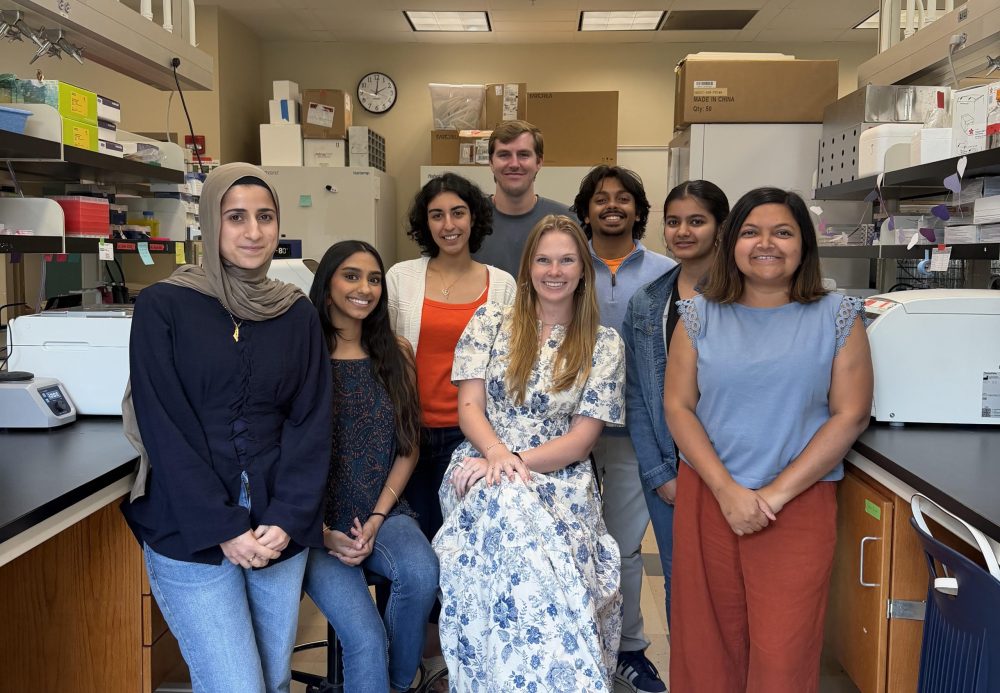
Lab photo provided by Aneesha Dasgupta
Photos of 2026 Charlotte Regional Biomedical Sciences Symposium by Kat Lawrence