Morgan Carter receives NSF CAREER award for bacterial-fungal interaction study
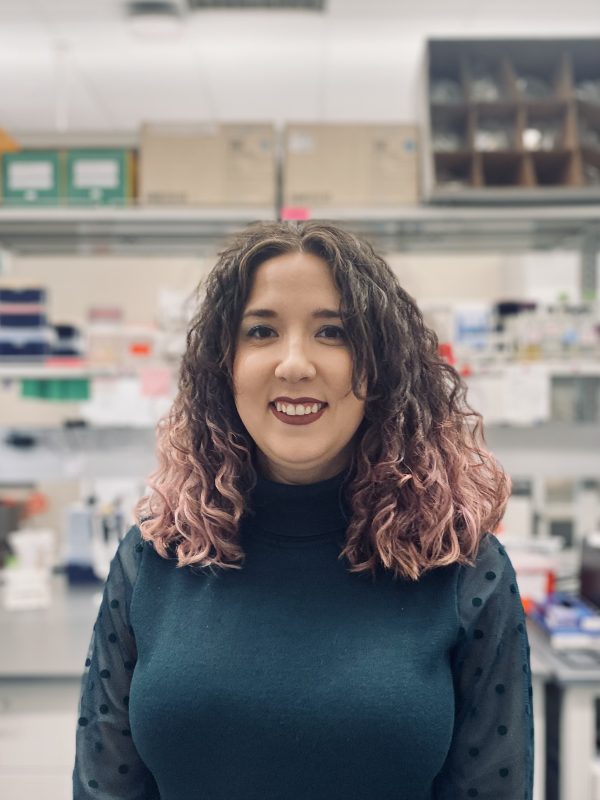
Morgan Carter, assistant professor of biological sciences in the UNC Charlotte Klein College of Science and CIPHER center, has received a prestigious National Science Foundation CAREER award to advance understanding of how bacteria influence and communicate with the fungi they inhabit.
The five‑year award totaling $1.22 million supports Carter’s project “Mechanisms of Hidden Microbes: Secretion System Usage by Endofungal Bacteria.” The grant is funded through the NSF Division of Molecular and Cellular Biosciences.
Carter’s research examines how bacteria living inside fungi use specialized secretion systems, molecular “syringes” and “harpoons,” to deliver proteins that alter fungal behavior. Although fungi play critical roles as pathogens, mutualists and nutrient cyclers, scientists are still learning more about how bacterial partners shape fungal biology.
“Despite being invisible to us, bacteria and fungi can signifcantly impact each other and health outcomes,” Carter said. “By uncovering how endofungal bacteria communicate with their hosts, we can better predict and eventually manipulate the behavior of microbial communities.”
The project focuses on two bacterial systems, examining how certain bacteria interact with fungi, hoping to better understand the partnerships that shape life in soil and other environments.
One part of the project examines bacteria in the Mycetohabitans group, which live inside fungi and have evolved alongside their hosts. Researchers are studying the proteins these bacteria use to communicate with and influence the fungi, delivered through a system known as Type III secretion.
The second part focuses on Luteibacter mycovicinus, a newly identified bacterium that can temporarily live in fungi. Carter’s lab will explore whether its Type VI secretion system helps the bacteria form or maintain those short‑term relationships.
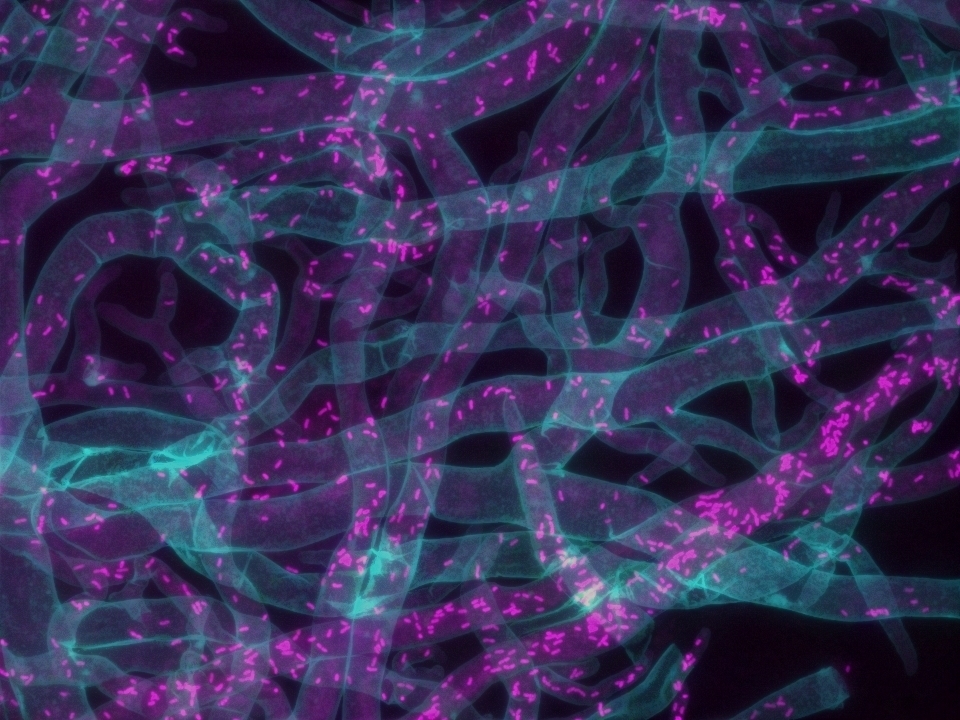
Carter’s lab will combine computational prediction, transcriptomic sequencing, mutagenesis, phenotyping assays and reporter technologies to study these interactions at both cellular and organismal levels. The work will also expand a curated collection of endofungal bacteria for comparative studies, creating a long‑term resource for the scientific community.
The CAREER award also supports an extensive educational plan. Carter will integrate fungal research into a first‑year exploratory course, giving approximately 100 students hands-on experience in microbial sampling at the UNC Charlotte Botanical Gardens.
With support from the grant, additional undergraduates will join a cohort‑based research program to identify new endofungal bacteria and graduate students will receive advanced mentorship.
Carter will also develop new public‑facing materials for the Botanical Gardens, including signage, short classes and outreach booths, to help visitors learn about microbial life and its ecological importance.
“This award allows us to connect complex biological research with meaningful training and public engagement,” Carter said. “We hope to enable future scientists and spark curiosity about the microbial world.”
The NSF CAREER program recognizes early‑career faculty who demonstrate potential to serve as academic role models and lead advances in their fields.
Written by Jenn Conway
Photos courtesy of the Carter Lab