UNC Charlotte and NCBiotech kick off North Carolina Life Sciences Week with the 2025 Biomedical Sciences Symposium
UNC Charlotte’s Center for Biomedical Engineering and Science (CBES) and the North Carolina Biotechnology Center (NCBiotech) hosted the 2025 Biomedical Sciences Symposium on Monday, Sept. 15 at the Dubois Center.
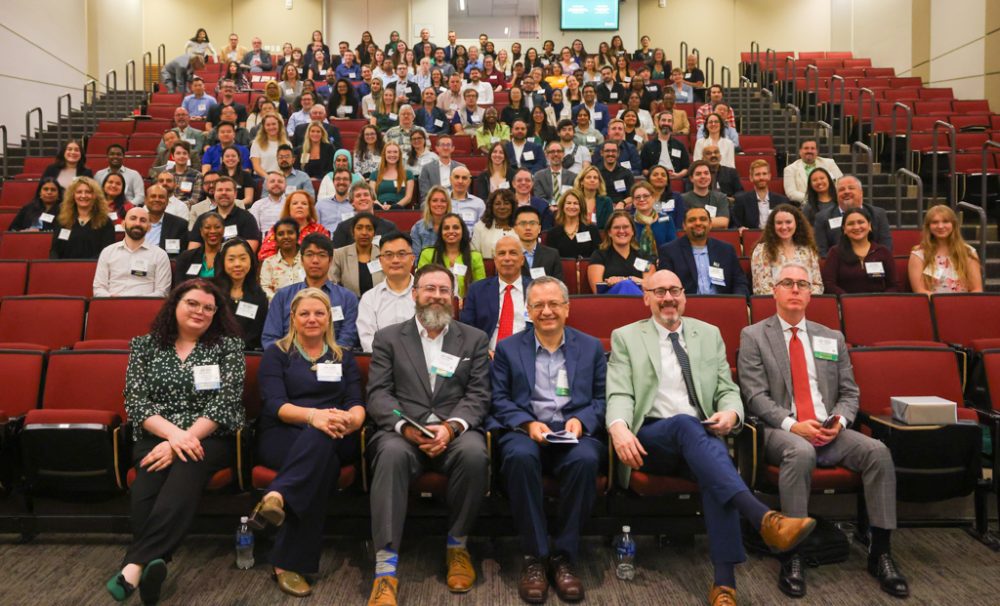
The event kicked off North Carolina Life Sciences Week as proclaimed by North Carolina Gov. Josh Stein and Charlotte Mayor Vi Lyles, bringing together over 300 representatives from 70+ institutions to share research and advance discovery across the state.
“We are proud to host this important symposium, and we are proud to fuel innovation and discovery in the state’s largest and most dynamic city,” said Chancellor Sharon Gaber in the opening remarks.
Researchers at UNC Charlotte are solving urgent, real-world problems and finding breakthroughs in cancer, gene therapies, drug detection, vaccine efficacy and water purification. As a nationally recognized leader in collaborative science, UNC Charlotte ranks third for new startup companies created and fifth for new patents filed, per research dollar.
Charlotte Is Leading Collaborative Science
“UNC Charlotte is no stranger to partnerships, and those partnerships have fueled our rise in rankings, research and enrollment,” said Vice Chancellor for Research John Daniels. “Our current active award portfolio is $247 million — and if you do the math on the multiplier effect — that has a billion-dollar impact right here in the Charlotte region and beyond.”
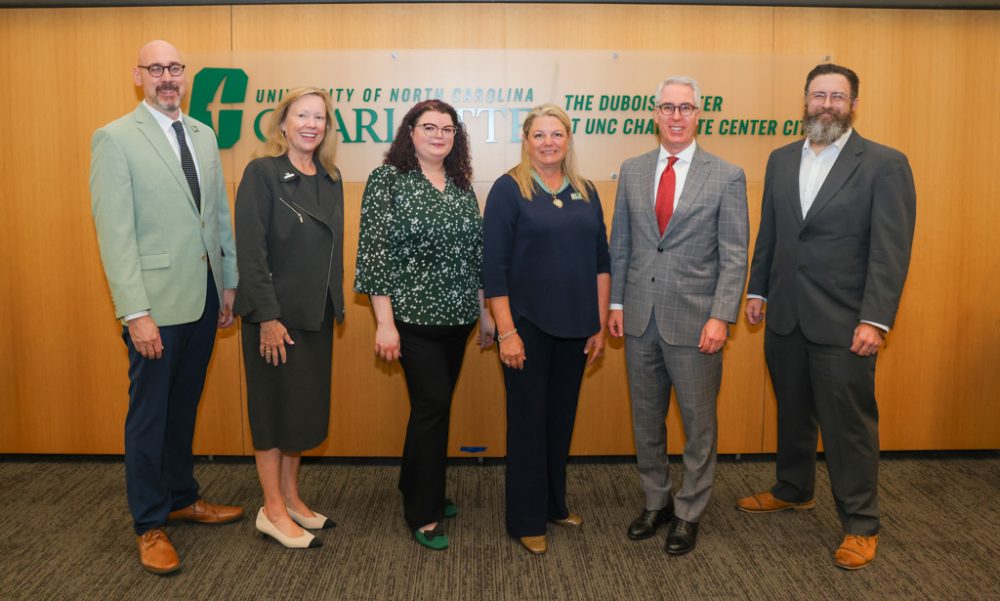
Tracy Dodson, COO and head of economic development at the Charlotte Regional Business Alliance, presented a snapshot into life sciences across the region during the morning session.
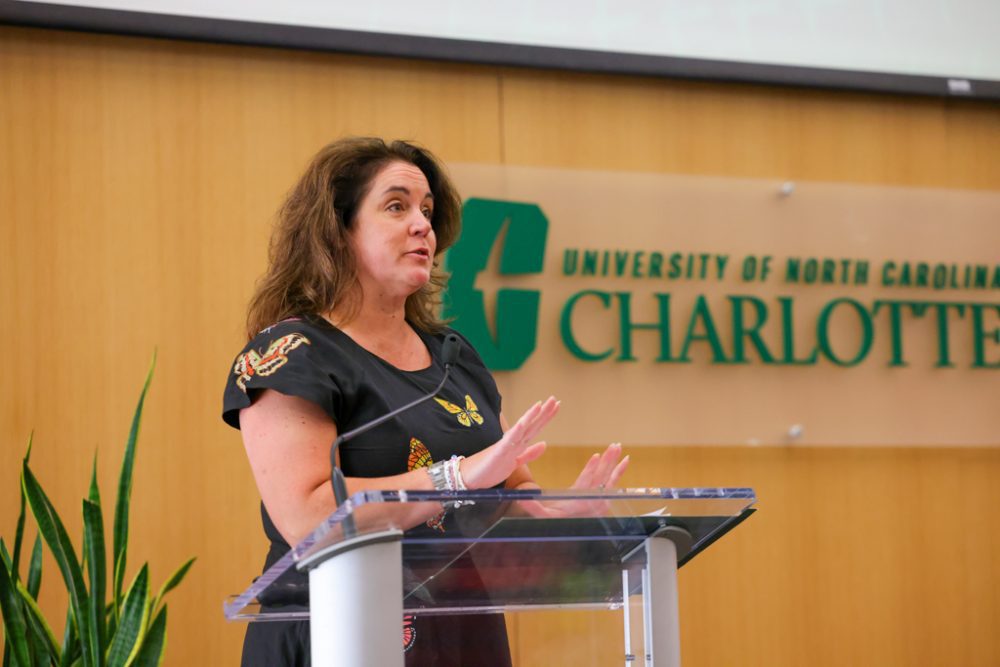
“60% of UNC Charlotte graduates live and work in the Charlotte region, which provides valuable talent to Charlotte’s growing corporate and life sciences community,” said Dodson, who earned a bachelor’s degree from UNC Charlotte in 1998. “Through innovative corporate partnerships, UNC Charlotte connects students with employers, which is why so many students choose to stay.”
As the academic anchor for the North Tryon Tech Hub, UNC Charlotte’s CO-LAB is providing a dynamic space for life sciences entrepreneurs and industry professionals to convene with faculty and students to develop practical, use-inspired solutions.
John Hardin, Ph.D., executive director of the North Carolina Board of Science, Technology & Innovation, showcased North Carolina’s ranking as second in the nation for employment in the life sciences industry and first in education and workforce training in the life sciences.
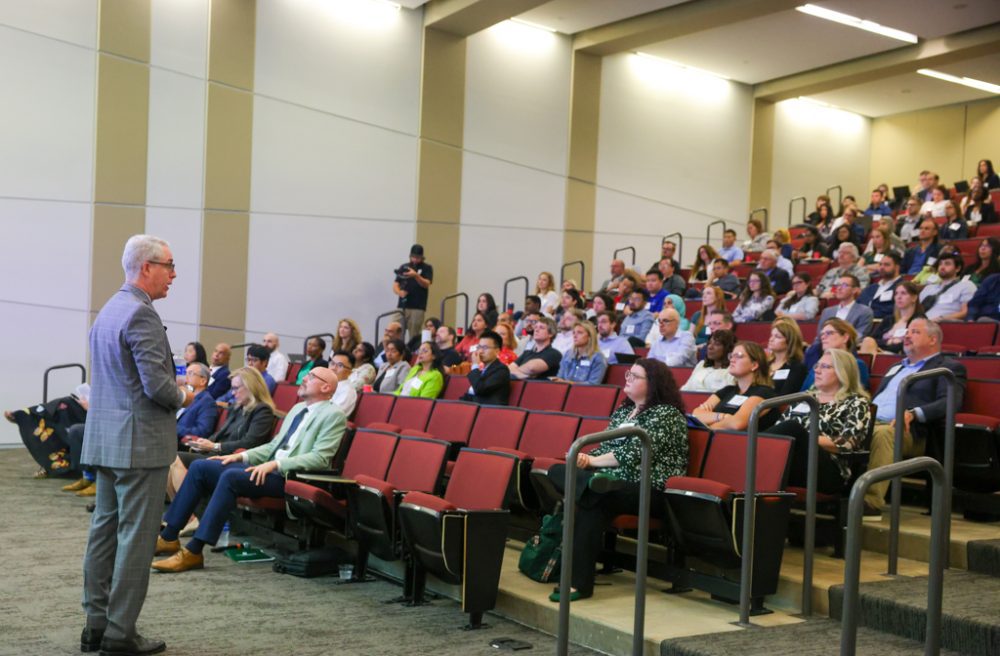
“This region is quickly becoming a hotbed of innovation for life sciences, and this symposium highlights that,” said Hardin. “There are more people at this symposium than ever before, and that’s not an accident, that’s a reflection of great things.”
Daniel Janies, Ph.D., Carol Grotnes Belk Distinguished Professor of Bioinformatics and Genomics at UNC Charlotte and director for the Center for Computational Intelligence to Predict Health and Environmental Risks (CIPHER), presented the Center’s research aiming to prevent the next pandemic.
CIPHER brings together cross-disciplinary expertise in computer science, bioinformatics, software and information systems, biological sciences, mathematics, geography, public health, data sciences, education and communications.
The symposium’s mid-morning session featured more insightful presentations, beginning with Brad Bower, Ph.D., chief AI and data science officer at the National Institute of Biomedical Imaging and Bioengineering (NIBIB), part of the National Institutes of Health (NIH), who presented the keynote “Bench to Bedside: Translating Trustworthy AI.”
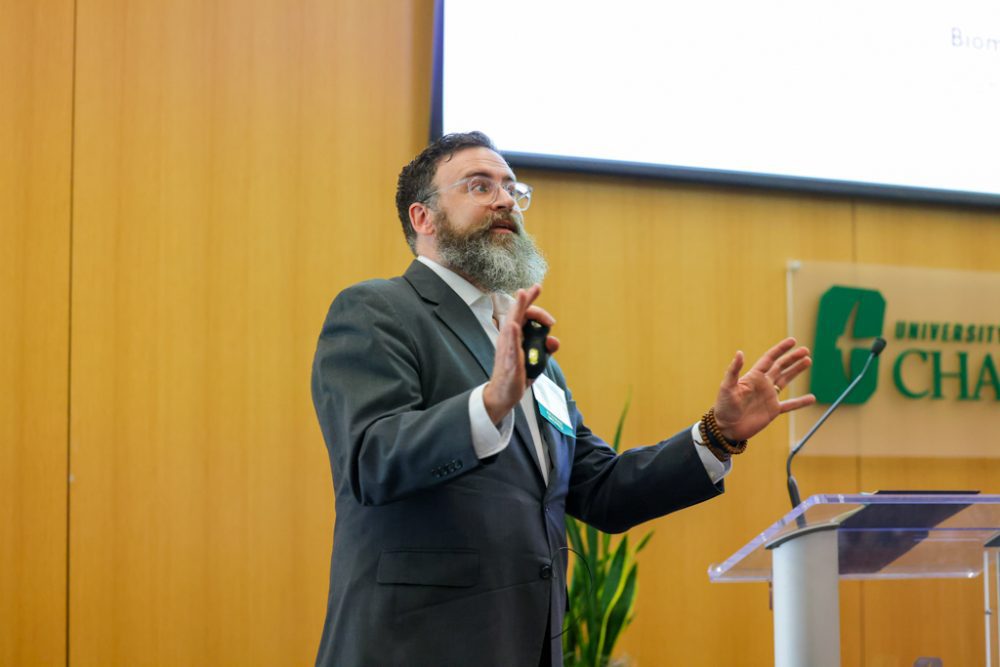
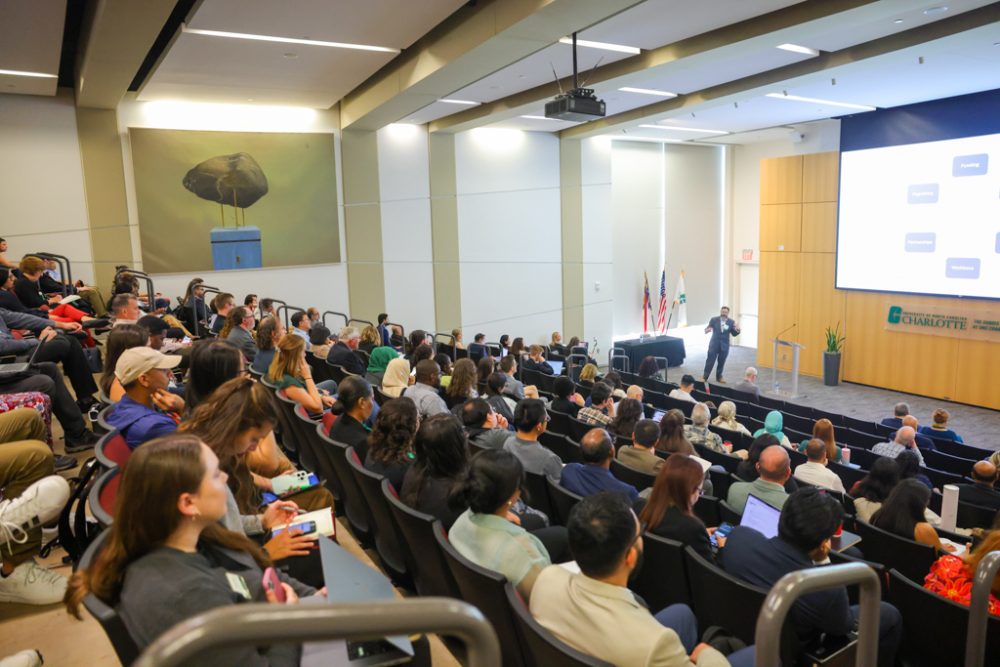
Continuing in the theme of AI, Metin Gurcan, Ph.D., from the Wake Forest University School of Medicine discussed its role in medical imaging. Wrapping up the plenary session, Rob Keynton, Ph.D., dean of the William States Lee College of Engineering, spoke about the process of distilling bioengineering research into innovation.
Researchers and students from universities and biotechnology companies across North Carolina presented their research throughout the afternoon. The event featured 113 research projects, including 65 poster presentations and 40 oral presentations. Eleven prizes were awarded to the poster presenters, with seven UNC Charlotte students taking home awards.
“The symposium successfully brought together life sciences experts to showcase the current research and innovation taking place across the region. The impressive plenary speakers drew an enthusiastic crowd, as well as a wide one, representing so many different institutions,” said Bernadette Donovan-Merkert, founding dean of the Klein College of Science. “I loved seeing our students’ pride as they shared their work, and I’m excited for the future collaborations this event will spark.”
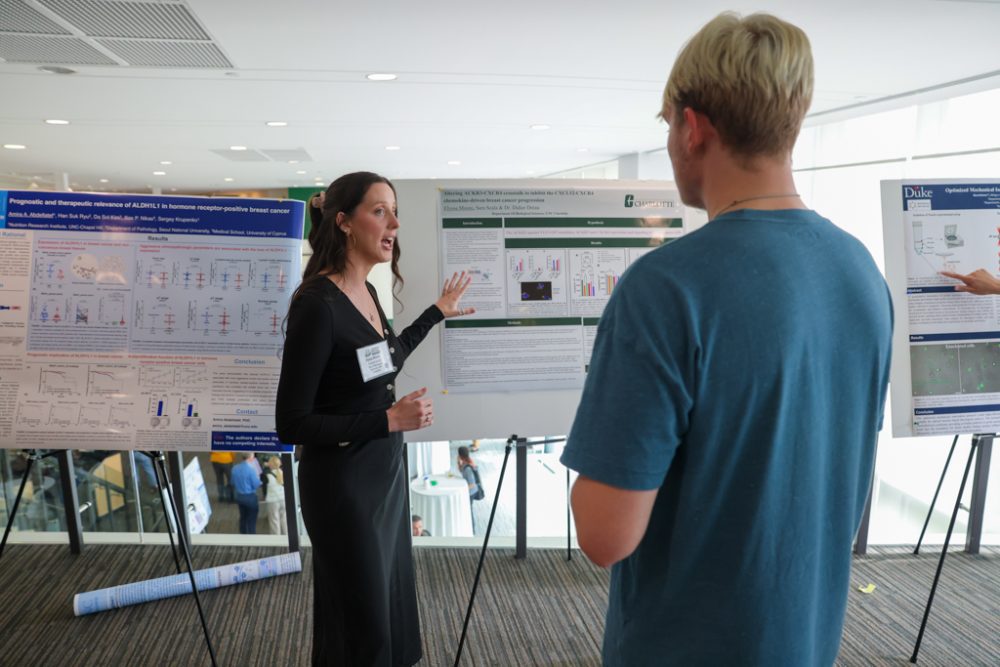
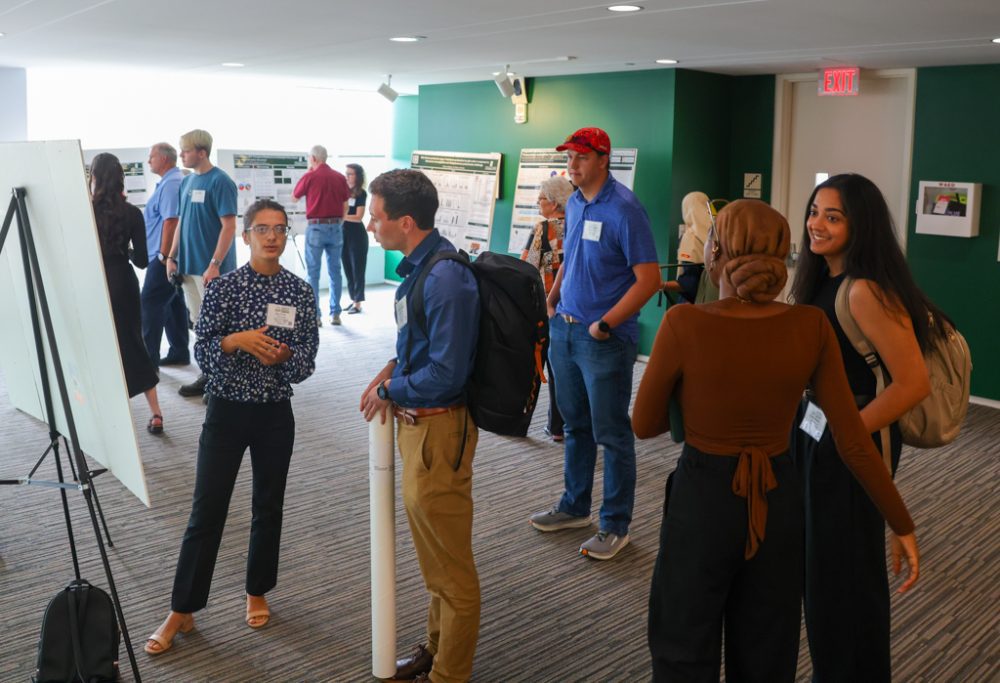
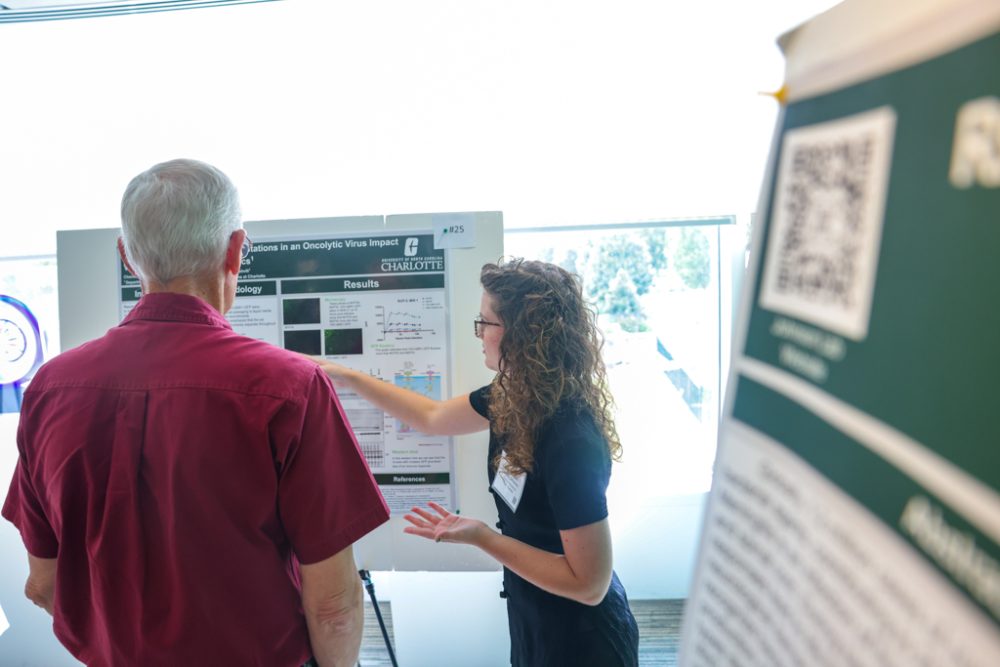
UNC Charlotte faculty members from the Klein College of Science, the William States Lee College of Engineering and the College of Computing and Informatics also presented during the afternoon session, sharing research spanning the life sciences.
Topics included:
- Cancer and translational medicine
- AI and medical imaging
- Regenerative medicine
- Host-pathogen interactions and health/medicine
- Infectious disease and health
- Biomaterials and translational medicine
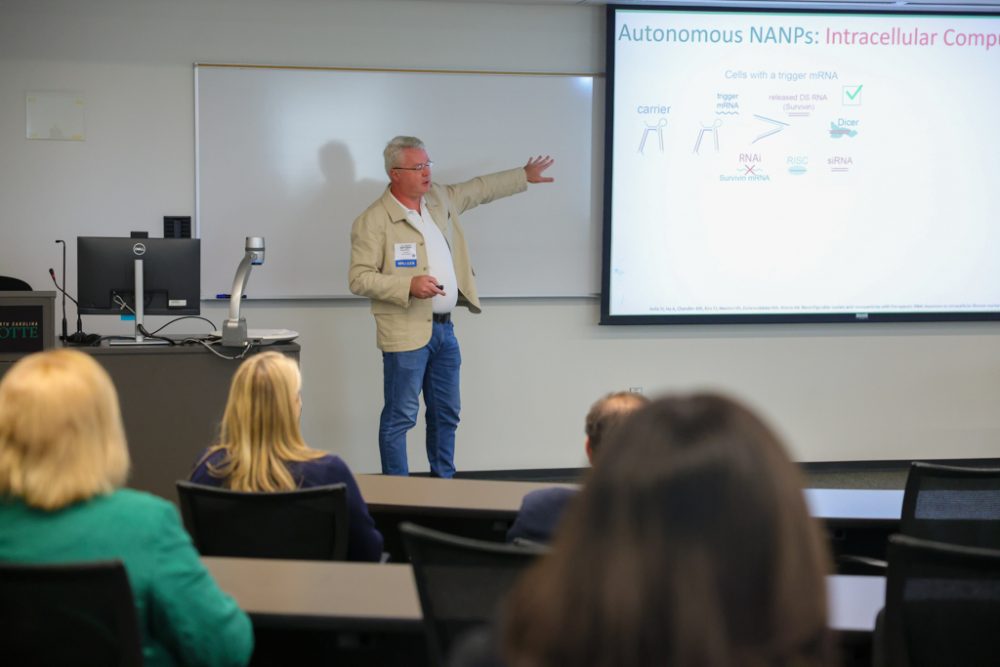
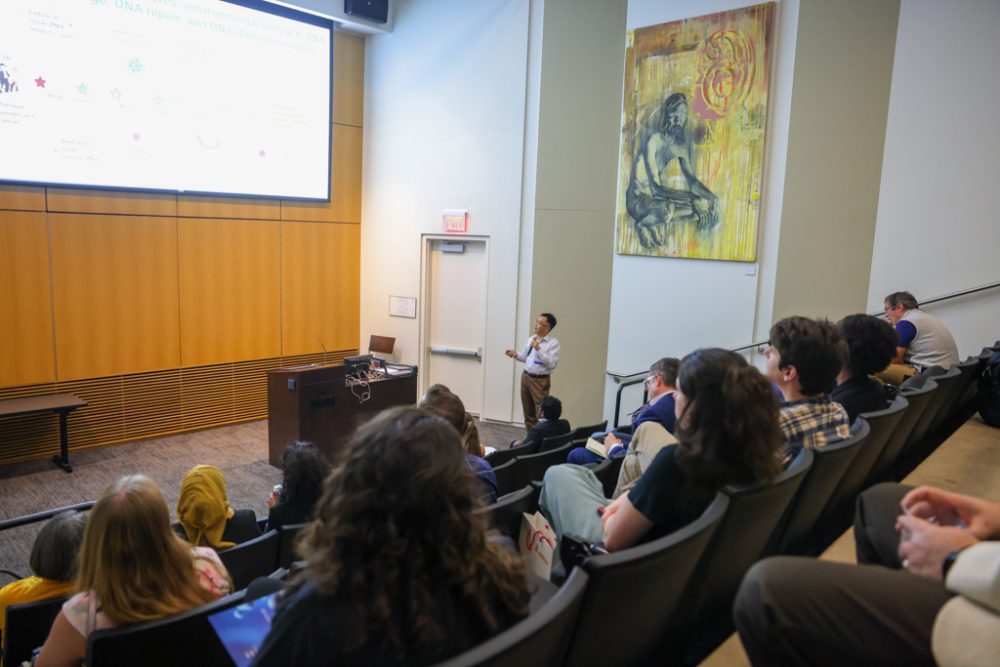
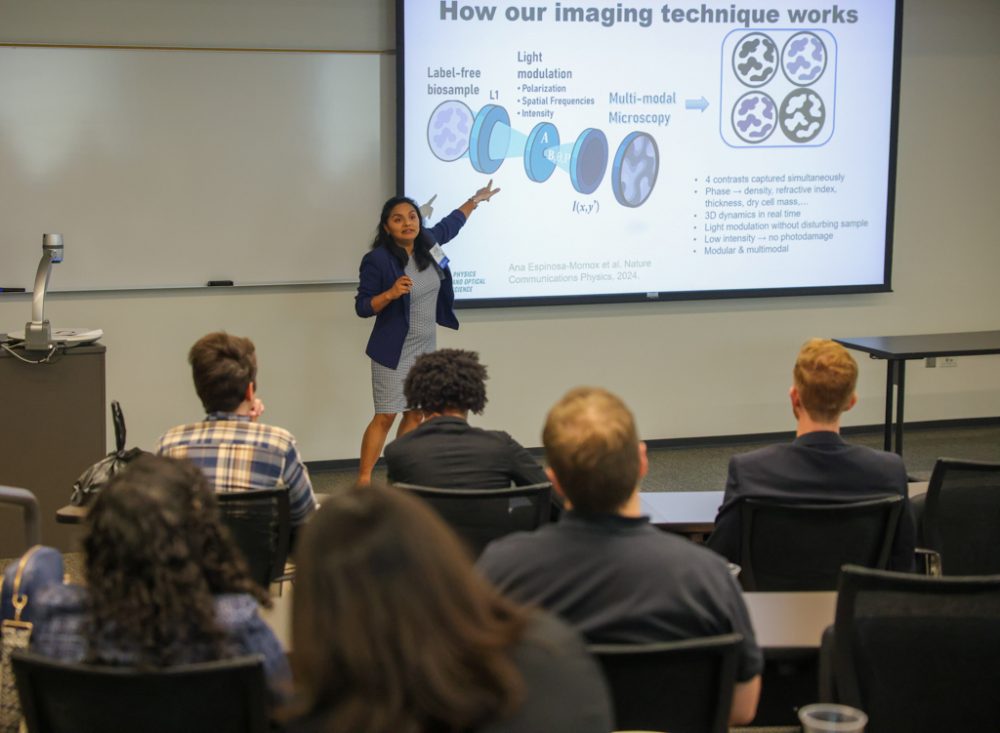
The symposium was made possible due to the efforts of the event organizers Christine Richardson, Ph.D., director of CBES and professor and chair of the Department of Biological Sciences and Megan Mitchem, M.S., as well as UNC Charlotte faculty and staff members Didier Dréau, Juan Vivero-Escoto, Ahmed Hemby, Ahmed El-Ghannam, Taufiquar Khan, Don Jacobs, Dan Janies, Brittany Johnson, Brigid Mullany, Adam Reitzel, Nigel Zheng, Sharon Bullock, Anika Green, Lucy Chen, Lisa Johnson and David Lloyd.
Special thanks to the 2025 symposium sponsors
- North Carolina Biotechnology Center
- UNC Charlotte Division of Research
- SARSTEDT Group
- Carolina BioOncology Institute
- BioCytics Inc
- Cytiva
- Thermo Fisher Scientific
- American Society for Biochemistry and Molecular Biology
- Hunt Optics & Imaging
- UNC Charlotte Office of Undergraduate Research
UNC Charlotte students awarded at the 2025 Biomedical Sciences Symposium
The 2025 Biomedical Sciences Symposium kicked off North Carolina Life Sciences Week on Monday, Sept. 15 at the Dubois Center at UNC Charlotte Center City, where students from universities across North Carolina presented their research throughout the afternoon. The event featured 113 research projects, including 65 poster presentations and 40 oral presentations.
UNC Charlotte’s Center for Biomedical Engineering and Science (CBES) and the North Carolina Biotechnology Center (NCBiotech) hosted the event, where over 300 representatives from 70+ institutions convened to share research and advance discovery across the state.
Posters were judged prior to the symposium by panels of researchers in the field and the winners were announced at the end of the day.
Poster Winners
Regenerative Medicine
First place: Khayzaran Qubbaj, UNC Charlotte
Second place: Caleb Aguayo, Wake Forest Institute for Regenerative Medicine
Host-Pathogen Interactions and Infectious Disease
First place: Erin Mills, UNC Charlotte
Second place: Loren Cocciolone, UNC Charlotte
Cancer and Translational Medicine
First place: Madeline Childress, UNC Chapel Hill
Second place: Halle Meyers, UNC Chapel Hill
Big Data and AI in Life Sciences
First place: Isha Jain, UNC Charlotte
Second place: Javier Avalos Nuñez, UNC Charlotte
Medical Devices and Nanomaterials and Structure Based Design
First place: Ana Espinosa-Momox, UNC Charlotte
Second place (tie): Jacob Ortega, Campbell University, School of Osteopathic Medicine and Udayakumar Karuppanan, UNC Charlotte
Klein College of Science student named Newman Civic Fellow
Madison File, a junior Levine Scholar majoring in chemistry and psychology, has been named a 2025–26 Newman Civic Fellow by Campus Compact, recognizing her dedication to campus leadership and community-focused research.
File’s outreach spans support for families facing serious illness, those experiencing homelessness and heart disease in communities of color.
On campus, she’s actively involved in campus events and student organizations including Ninerthon, Students Against Melanoma, Niner Guides, and Health Care Justice.
Through her research with the Academy for Population Health Innovation (APHI) and the Collective Wellness Lab, File has worked to improve behavioral health services in underserved communities and mitigate access barriers to youth psychiatric care.
The Newman Civic Fellowship is a yearlong program recognizing students for their leadership potential and commitment to creating positive change in communities. The fellowship provides students opportunities for leadership development, networking, and access to grants, scholarships, and post-graduate pathways.
Read more about Madison File and the Newman Civic Fellowship.
Goff Named Finalist for Charlotte’s 2025 Teaching Excellence Award
Andrew Goff, lecturer of biological sciences in the Klein College of Science, is a finalist for the 2025 UNC Charlotte Teaching Excellence Award for non-tenured faculty.
Goff is an energetic educator whose passion for biology and dedication to students have shaped him into a standout instructor and mentor at UNC Charlotte.
Trained as a scientist and called to be a teacher, Goff uses his real-world experience and passion for learning to engage students both inside and outside the classroom.
“Teaching is relentless, infinite and wonderful,” Goff said. “As an educator, I strive to be the person that my students will approach with questions when seeking guidance during their academic careers.”
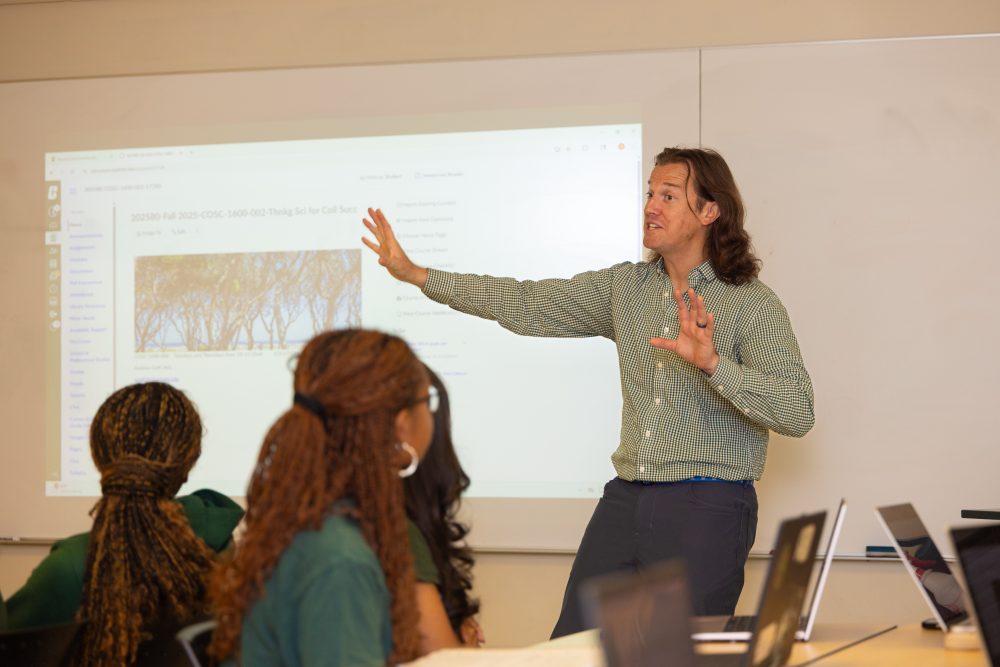
Goff is known for redesigning courses like general zoology and coordinating anatomy and physiology labs, always with a focus on improving student learning.
“The ability to recognize struggling pupils and implement effective language and deliver sensitive, yet poignant, comments is important for all educators,” said Goff.
Whether guiding students in introductory courses or mentoring them through advanced work, he consistently earns praise for his creativity, his approachable nature and his ability to make challenging material accessible and engaging.
“Mr. Goff brings a level of enthusiasm and knowledge about biology to every class that always keeps me engaged, and makes me look forward to attending class.”
–Dylan Petrea, a student of Goff’s
Goff also serves as an academic advisor and mentor, known for his open-door policy and willingness to support students beyond academics. His office hours often draw lines of students eager for guidance, advice or simply conversation. Goff’s approachable nature and genuine investment in student success have made him a trusted mentor and advocate at UNC Charlotte.
“Andrew is constantly improving the educational experiences of our students,” said Christine Richardson, professor and chair of biological sciences. “His efforts have made a huge impact on student learning outcomes, using innovative teaching techniques and creating a successful learning environment.”
Beyond the classroom, Goff actively fosters student growth through co-curricular engagement. He co-founded the Student Biology Club, leads creek cleanups across Mecklenburg County and participated in a student-led aquaponics project funded by the Charlotte Green Initiative.
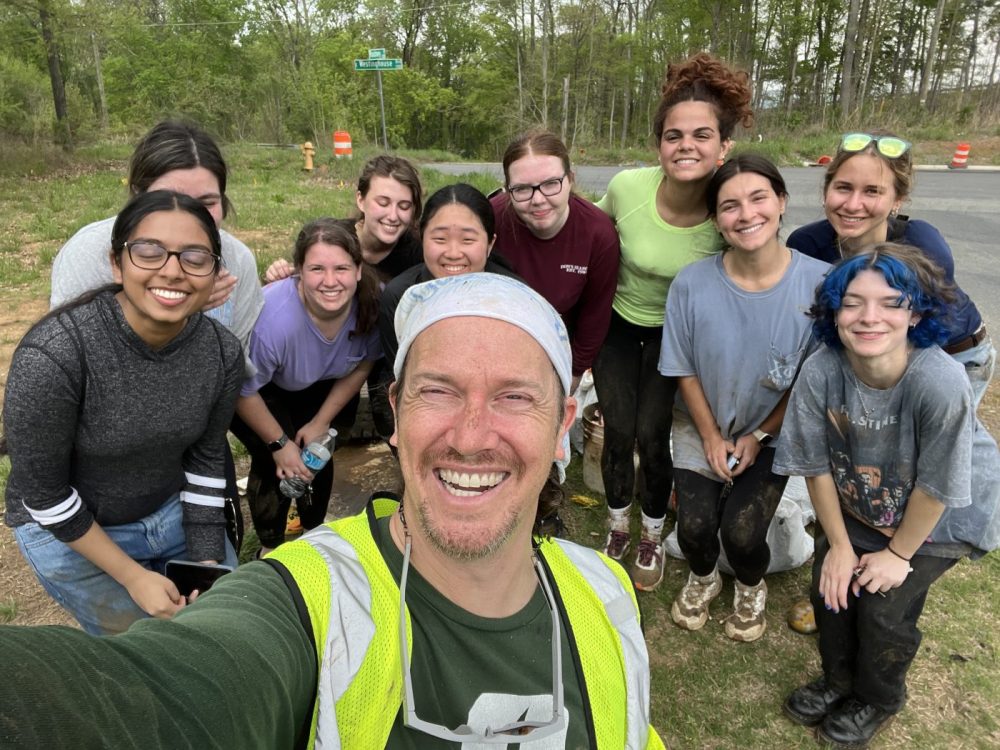
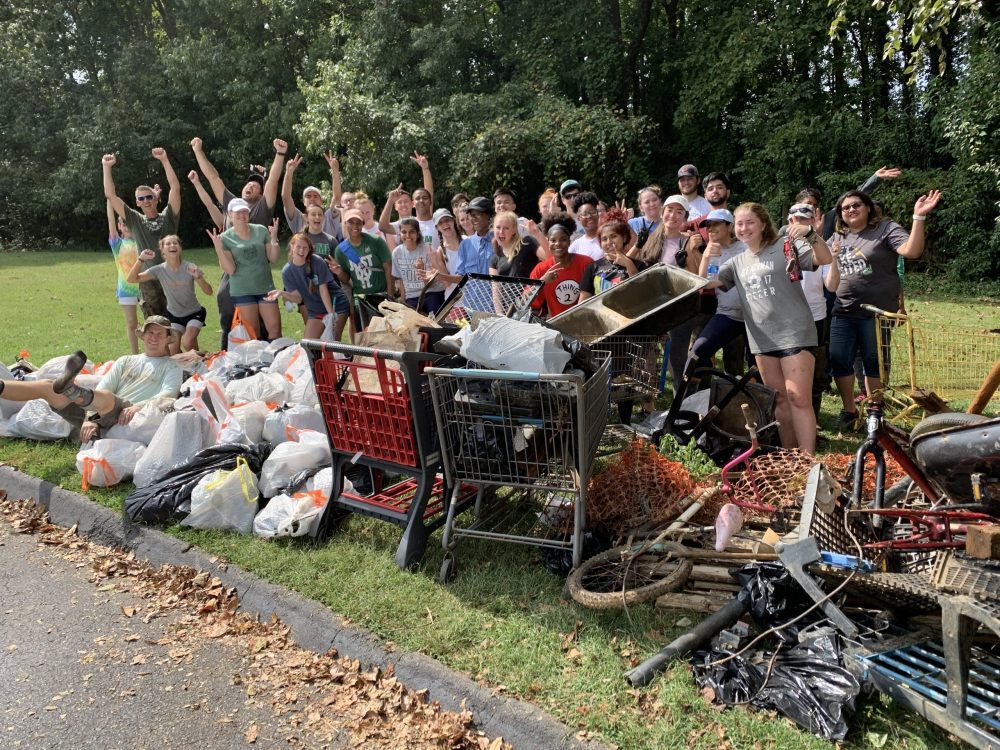
“Mr. Goff has great energy in the classroom and knows how to keep students engaged,” said Emily Ramirez, a student of Goff’s. “His energy is truly a sign of his passion and commitment to teaching.”
The other two finalists for the award are Nadia Najjar, teaching associate professor of software and information systems and Susana Cisneros, senior lecturer of Spanish.
Ali Koohang, part-time lecturer in chemistry, was also named as an honorable mention finalist from the Klein College of Science.
The faculty will be recognized at an awards ceremony on Thursday, Sept. 11.
Charlotte Research Aims to Unlock Breakthroughs in Autoimmune Disease Treatment with $3.7M Grant
UNC Charlotte researcher Danillo Augusto, Ph.D., was recently awarded a $3.7 million grant from the National Institutes of Health for an immunomics project that is using a new approach to study human immune response and autoimmune diseases.
Augusto and his team of researchers are employing a novel method using long-read sequencing technology. The research design is among the first of its kind to examine an extremely complex portion of the human genome to map how it interacts with pathogens, eliciting autoimmune response.
Understanding the host-pathogen interaction could unlock more discoveries for mitigating autoimmune diseases.
“The genomic region that we are studying is like a hot spot for disease association,” said Augusto. “In this very large region, there are approximately 170 genes and about 50 percent of them are directly related to the immune system. The research could have a large impact on how we understand human immune response and multiple diseases.”
This type of research, called immunomics, studies how differences in the genes of an individual’s immune system affects the way we respond to pathogens, like viruses and bacteria. These genetic differences can influence whether our body fights off an infection effectively or, in some cases, reacts in a harmful way that causes disease.
The research uses advanced gene sequencing techniques and laboratory analysis, and requires enormous computing power to analyze the large, complex datasets.
The Augusto lab in the Klein College of Science is home to the world’s largest repository of samples from patients with Pemphigus Foliaceus, an autoimmune condition that causes painful blisters in the skin.
“It’s like a puzzle, and we have to align all of the gene sequences to find where they overlap to create the whole picture,” said Augusto, assistant professor of biological sciences. “We sequence the entire region and we can compare individuals or groups of individuals to find commonalities in their gene expression.”
The grant application scored in the top two percentile for all the grants under consideration from the National Institute of Allergy and Infectious Diseases (NIAID) within the NIH and is currently the largest active NIH grant at UNC Charlotte.
The research is underway with Augusto’s collaborator Stephen Francis, Ph.D., associate professor at the University of California San Francisco, and the team of UNC Charlotte researchers in the Augusto lab:
- Ticiana Farias, Ph.D., assistant research professor
- Kary Ocaña Gautherot, Ph.D., assistant research professor
- Verónica Calonga Solís, Ph.D., post-doctoral researcher
- Ivan Rodrigo Wolf, Ph.D., post-doctoral researcher
- Javier Avalos Núñez ’22, doctoral biology student
- Jonathan Beaumont ’23, doctoral biology student
- Sarah Jafrin, doctoral biology student
- Savannah Poston ’24, masters biology student
- Aniqa Azam, ’24 post-baccalaureate researcher
- Bryce Anderson, ’25 post-baccalaureate researcher
- Efupom Fang, undergraduate biology student

Klein College of Science Employees Earn Reappointment, Promotions and Tenure
Congratulations to these Klein College of Science employees with new titles and positions for 2025-26.
Biological Sciences
Ellen Wisner, teaching professor
Shankari Somayaji, associate teaching professor
Junya Tomida, associate professor
Patricjia van Oosten-Hawle, associate professor
Chemistry
Jessica White, associate teaching professor
Mathematics and Statistics
Sarah Birdsong, associate teaching professor
Duan Chen, professor
Kevin McGoff, professor
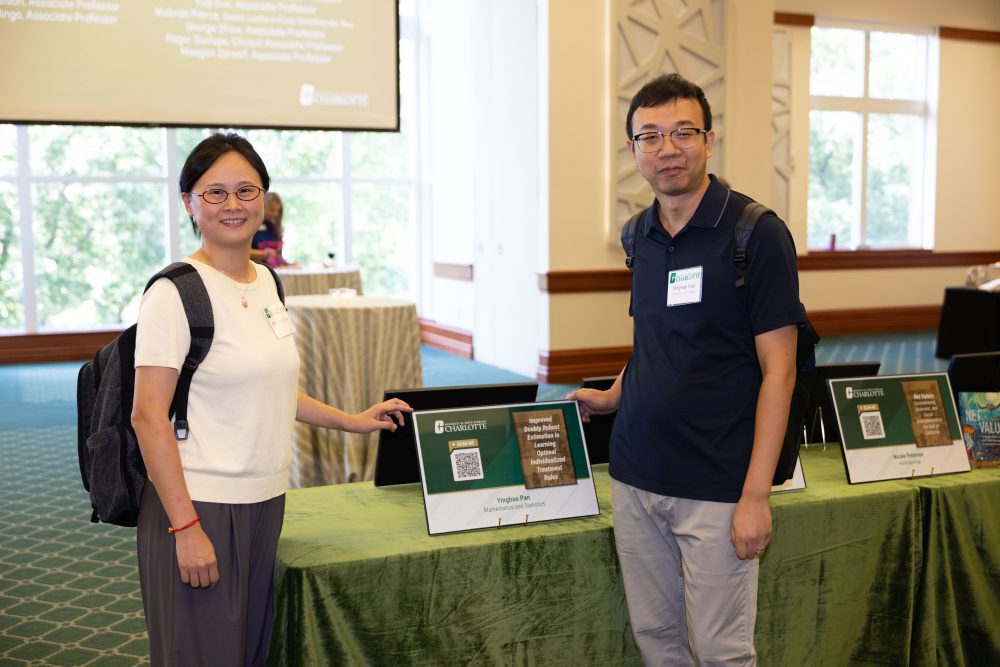
Yinghao Pan, associate professor
Arindam Roy, associate professor
Botanical Gardens
Cara Lursen, business services coordinator
Counting the Things with Wings for the Great Southeast Pollinator Census
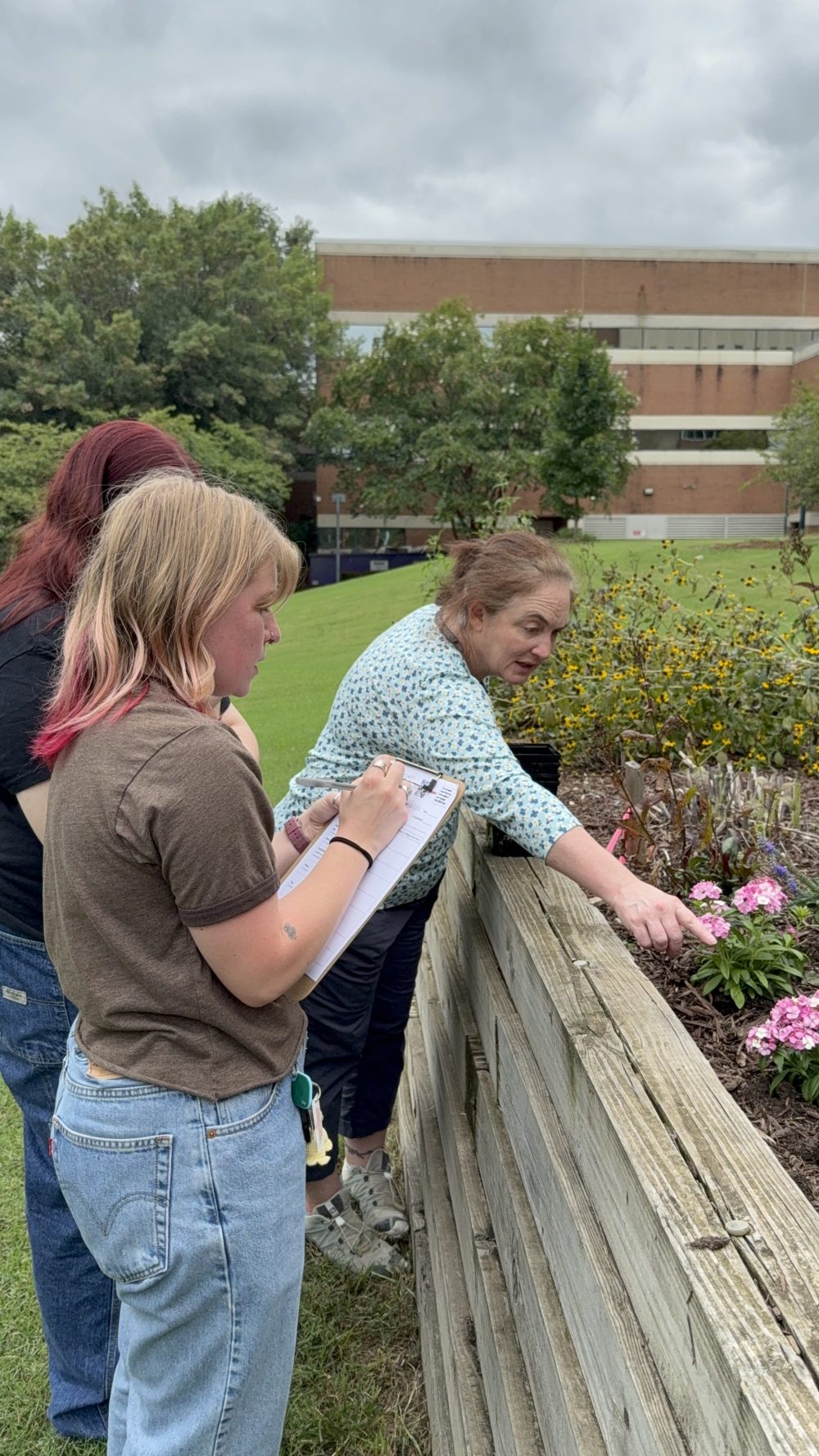
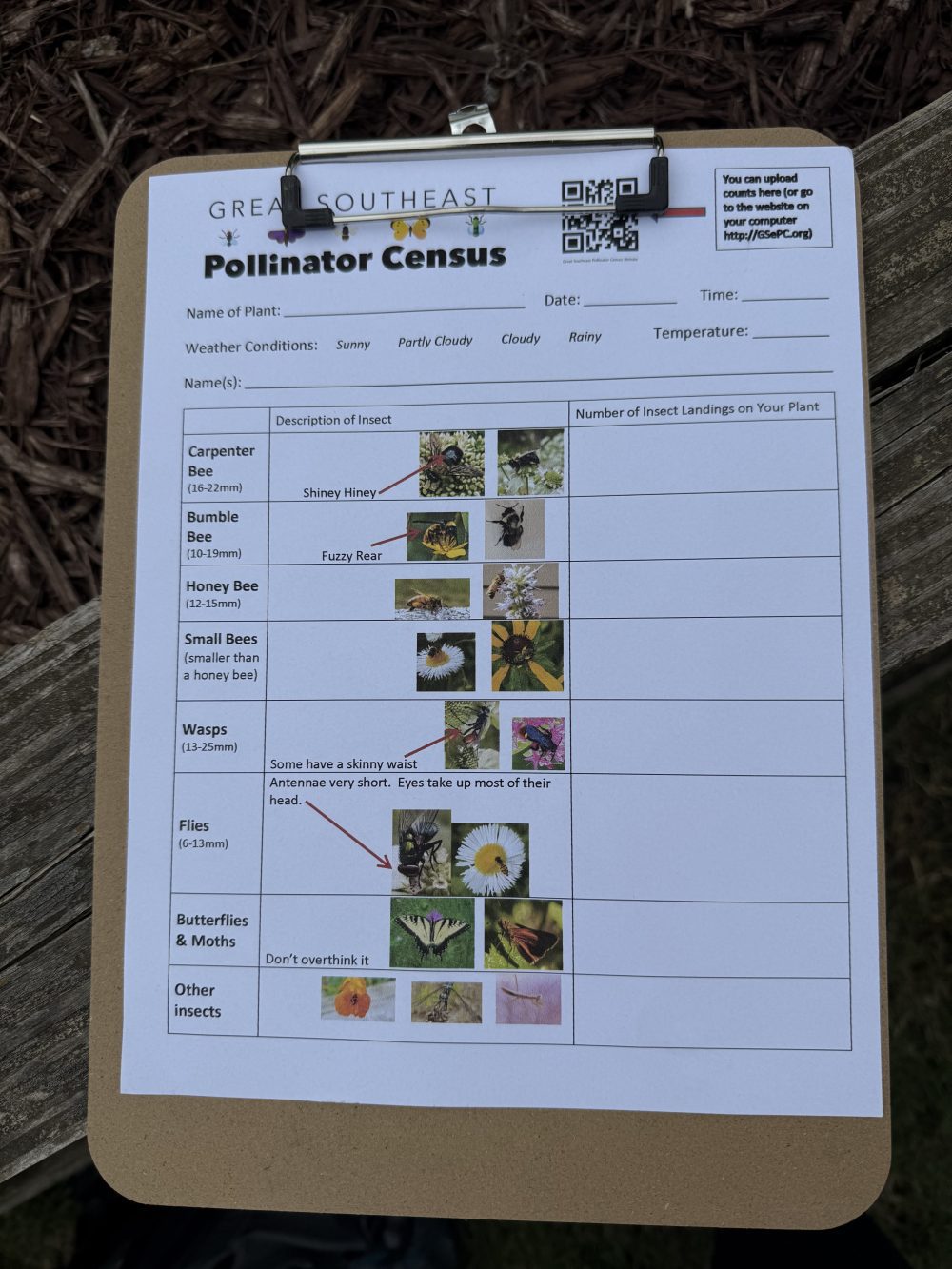
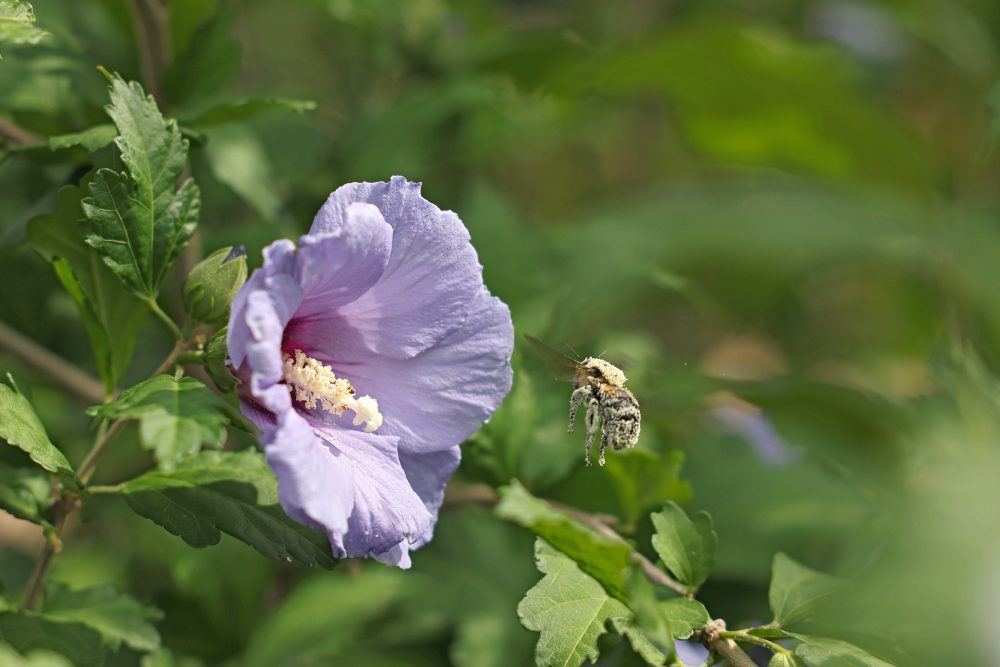
UNC Charlotte students joined other citizen scientists across Georgia, Florida, Alabama and North and South Carolina to participate in the Great Southeast Pollinator Census last weekend.
The goal of the census was to capture a point-in-time data set of the number and variety of pollinators, and the flowers that attract them. The census was organized across the southeast by the University of Georgia Extension, and led in North Carolina by the NC State Extension. More than 200 events were planned across the states to conduct the count. Census takers hope the data collected will inspire others to create sustainable pollinator habitats.
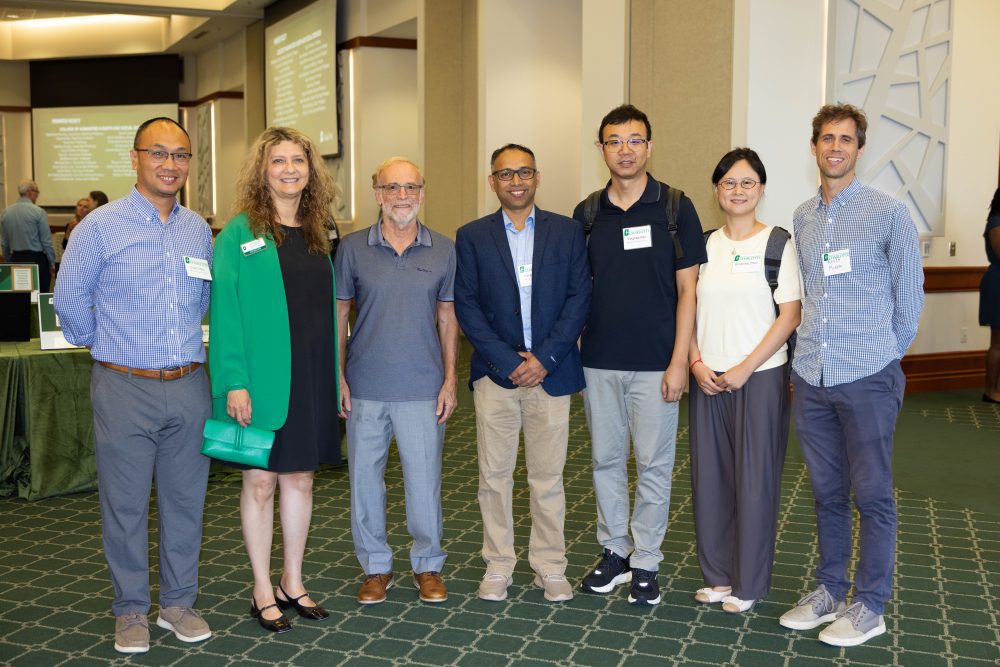
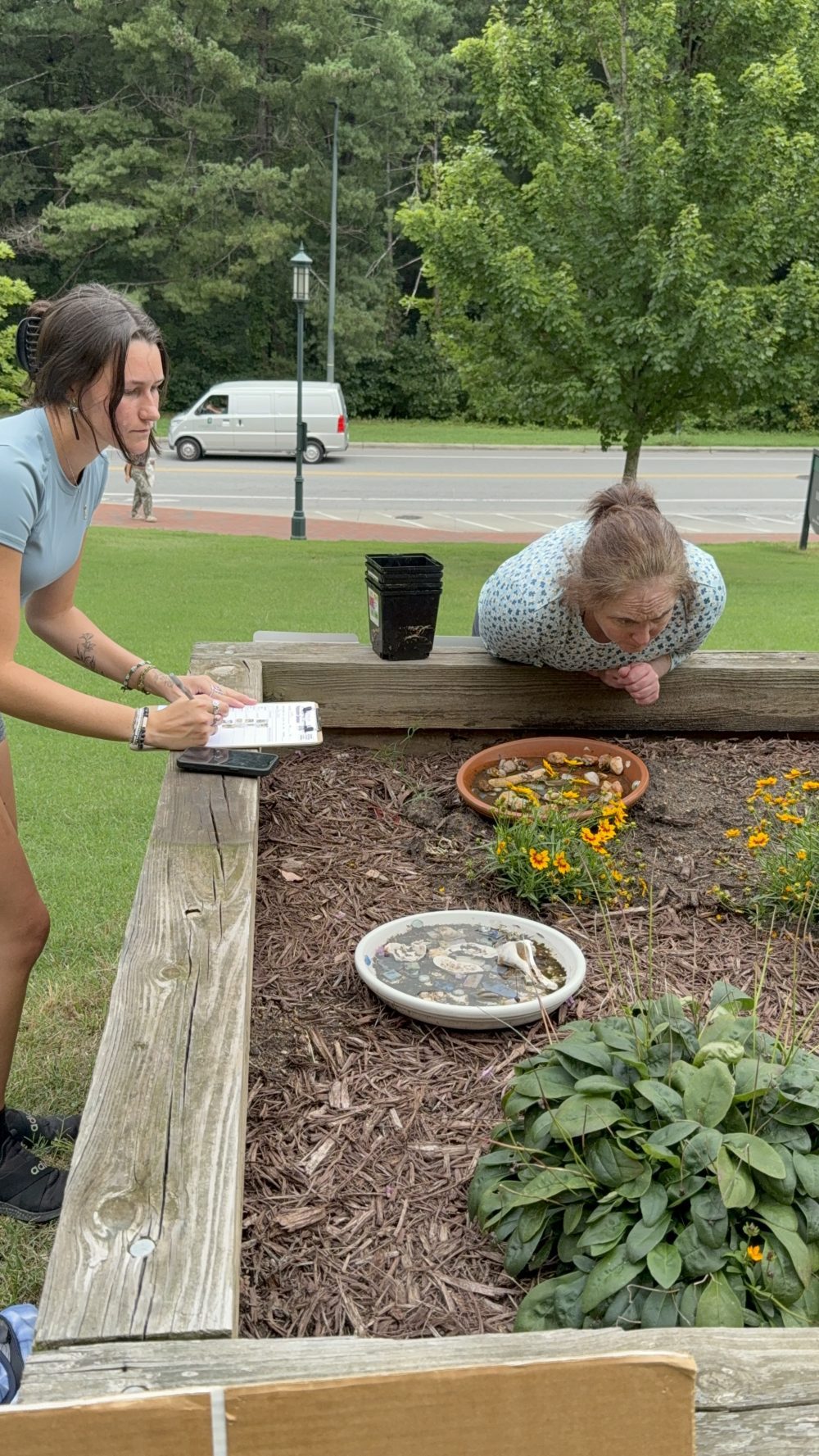
The campus event was led on Aug. 22 by Carrie Wells, associate teaching professor of biological sciences. She met the students in the afternoon at the Pollinator Garden, located behind McEniry, to count the things with wings.
Wells was excited to join other events across the region to participate in the count.
“Last year, my Pollinator Club students and I participated in the Great Southeast Pollinator Census for the first time, and it was such a great experience that we decided to do it again this year,” said Wells.
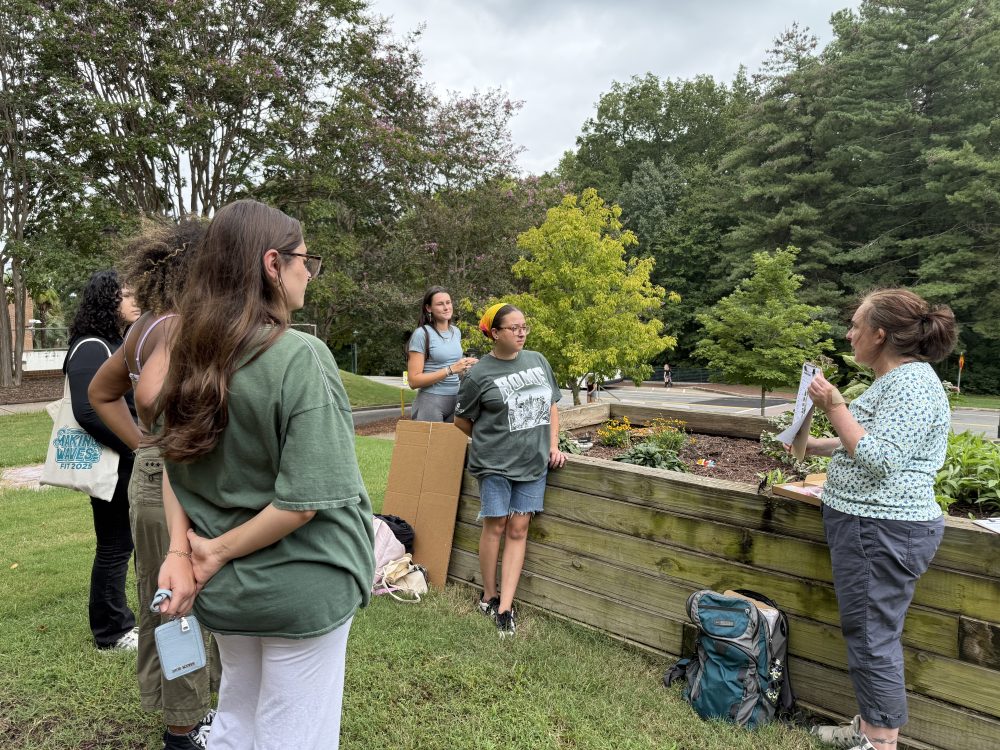
Zarah Rahman Blythe and Marie Spiridon, undergraduate students majoring in biology and leaders of the Pollinator Club, helped prepare the garden for the count earlier in the week and publicize the event.
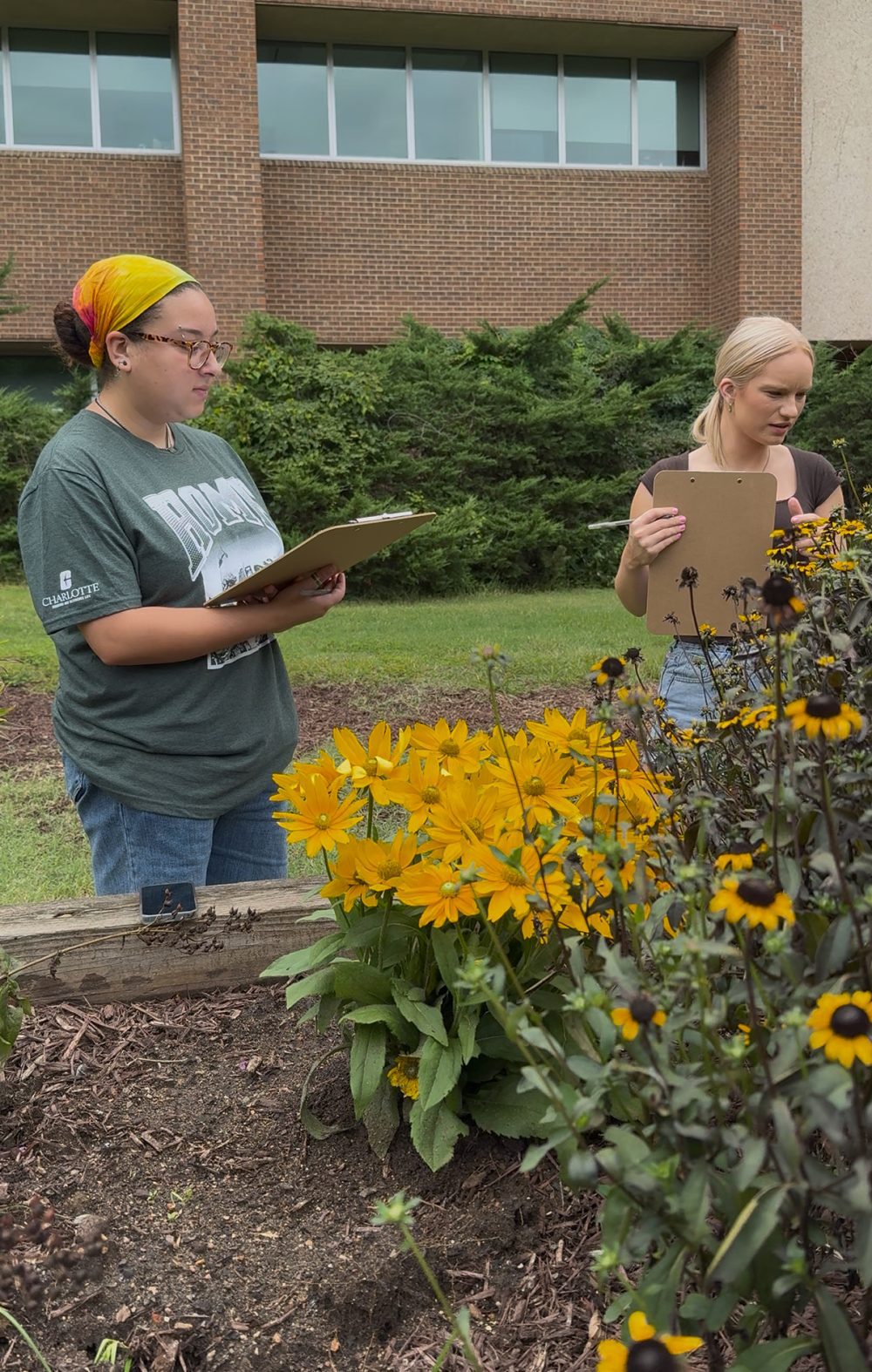
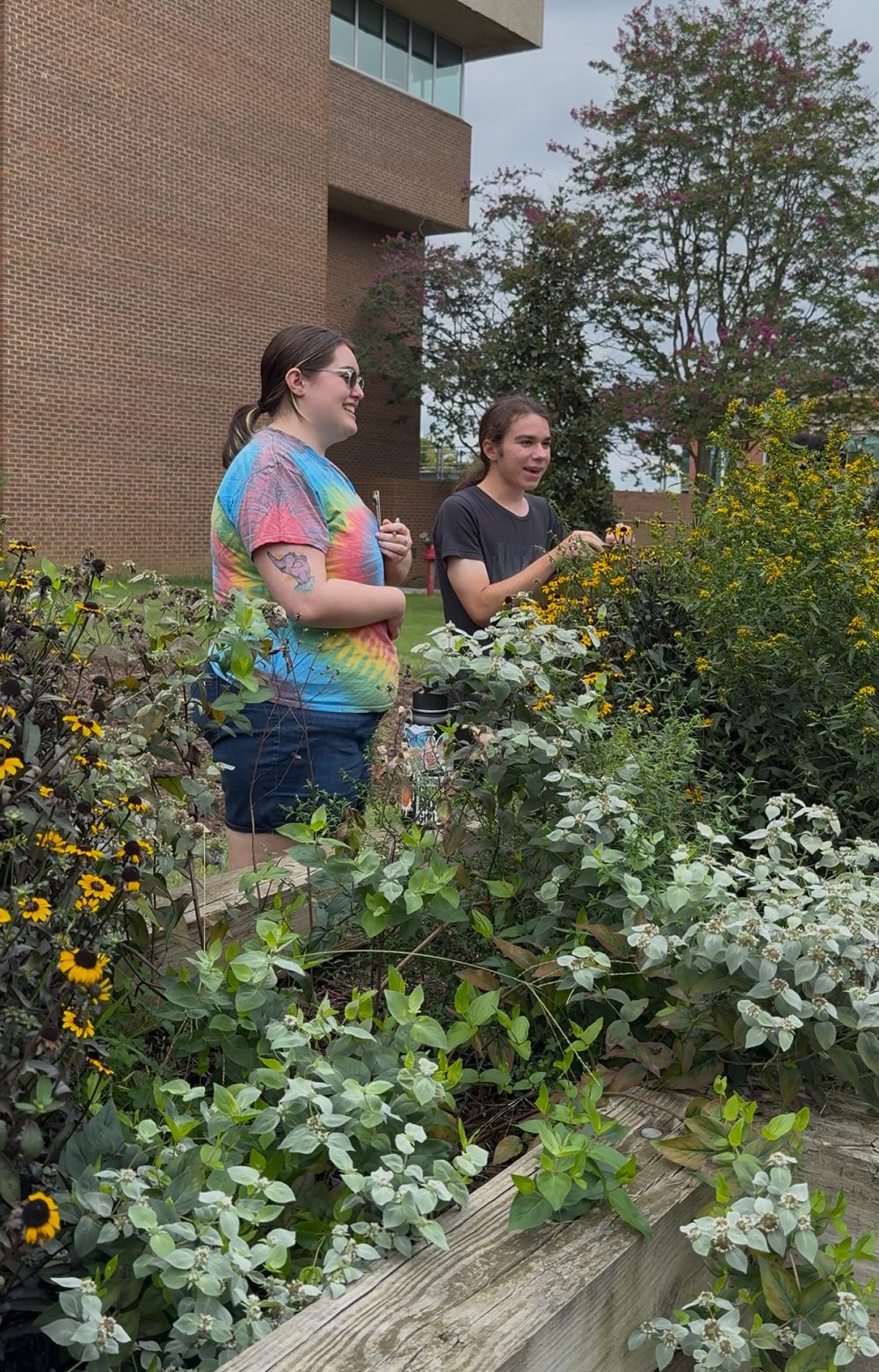
During the census, students paired off in teams and each picked an area of the garden to count the number of pollinators that visited the plants in a 15-minute window.
Sal DeAndrea, a doctoral student pursuing a degree in biology, helped the students to identify the various bugs that visited the garden, to ensure an accurate count for the census.
Wells sees the event as a way to connect with students on something meaningful, and a way to help them connect to each other.
“Because I teach online asynchronous courses, it can be hard to find new ways to connect with students outside of a screen,” said Wells. “This event, and others like it, gives us a chance to do just that — it’s an outlet to teach where the pollinators actually are and what they are doing to our campus environment.”
“I focused both my M.S. and Ph.D. research on butterflies, so I have a special place in my heart for sharing my love of pollinators with students, and a census in the garden we tend is the perfect way to do it,” said Wells. “It allows for a connection that no textbook can ever touch.”
Susan K. Michael Selected as Marshal for Charlotte’s Inaugural Summer Commencement
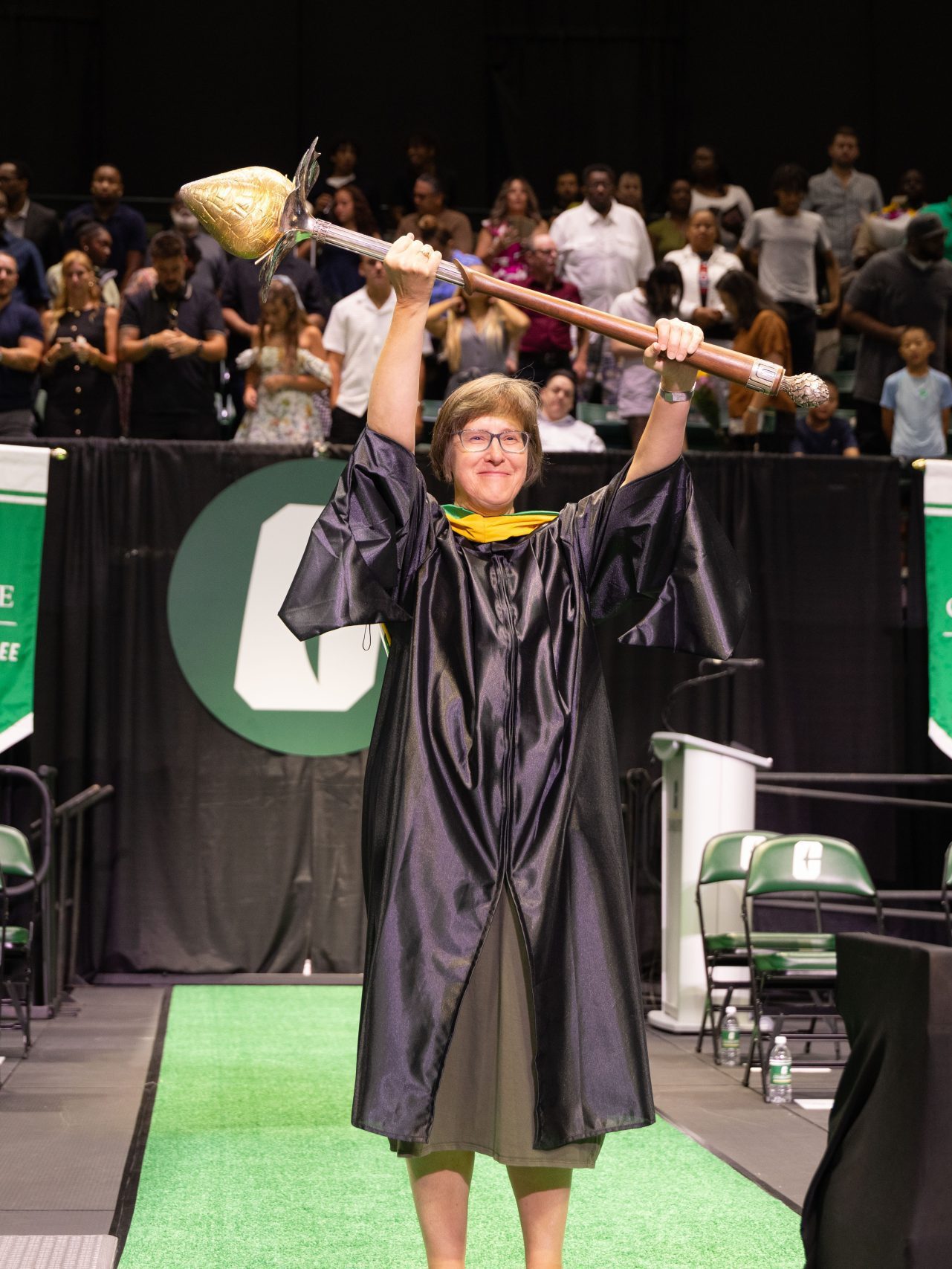
Susan K. Michael, senior lecturer of chemistry, was selected as the University marshal for UNC Charlotte’s first-ever summer commencement ceremony, held on Saturday, August 9.
Faculty are selected for this distinguished role based on their leadership and service to the campus community, and faculty excellence in their teaching and professional achievements.
She was recognized last year with the prestigious UNC Charlotte Award for Teaching Excellence, the top honor for teaching at the University.
Michael is also an alumna of Charlotte, earning a master’s of science degree.
Michael has taught full-time at Charlotte for 27 years, educating more than 10,000 students in introductory chemistry lectures and labs.
She has also been the face of the chemistry department to new students for the past decade, attending open houses, admitted student days, new student orientations and other recruiting sessions.

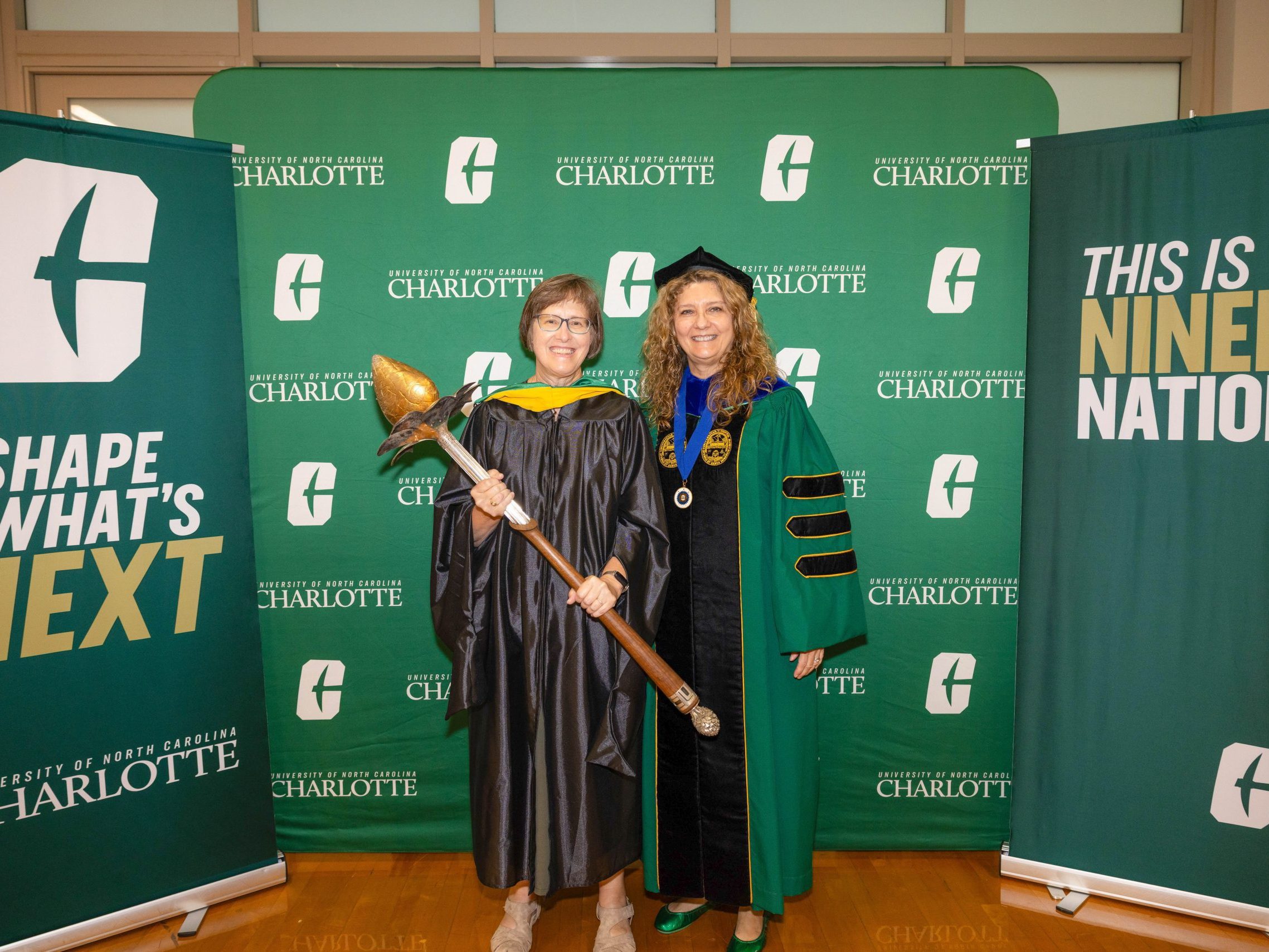
Bottom: Michael with Klein College of Science Dean Bernadette Donovan-Merkert.
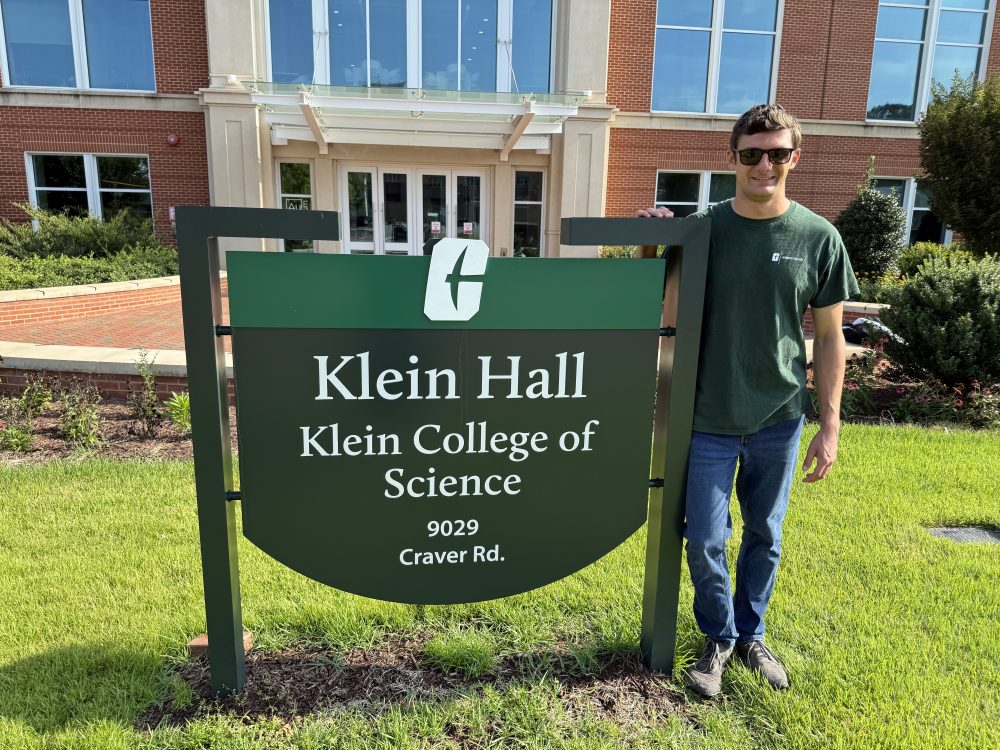
Ean Bass Earns Degrees for the Science Side of Motorsports
Ean Bass grew up in Mooresville immersed in motorsports, deciding to pursue mechanical engineering with the encouragement of his father who spent his career as a race car engineer.
Bass took college classes at Mitchell Community College during his junior and senior years of high school, so when COVID-19 began, it was easy to continue his coursework there to finish an associate degree in engineering. Bass realized that with one additional science class he could also earn an associate of science degree, so he took Organic Chemistry I.
“I had no clue what I was getting myself into, but I did surprisingly well. I got an A, so I thought to myself that this wasn’t that hard,” said Bass. “Then I took Organic Chemistry II, and I did it immediately afterwards in the summer session. That was pretty crazy to do in five weeks, and it was probably the hardest class I have ever taken, but I survived.”
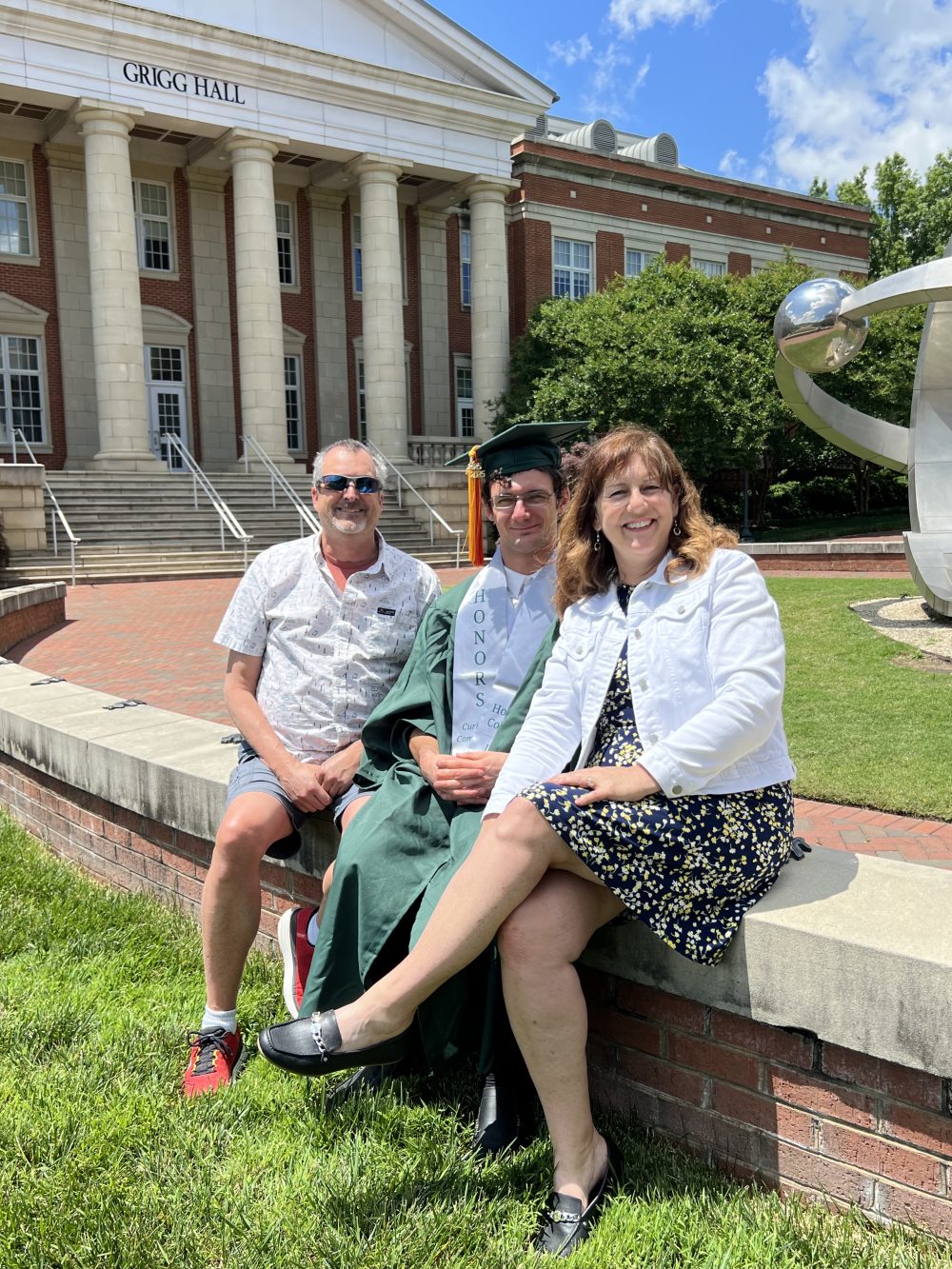
After completing both the AE and AS degrees, Bass transferred to UNC Charlotte and began taking engineering classes in the William States Lee College of Engineering. He crossed the stage in May with dual bachelor of science degrees in physics and mechanical engineering, with a motorsports concentration.
Yet, after spending his youth driving cars, he considered that he could expand his knowledge even further of the science side of motorsports, thinking of the chemistry classes he had completed and the doors it could open for him.
“I got it into my head that I might want to be a test driver as that’s what I grew up doing,” said Bass. “I realized later down the line that it would be advantageous for me to not only understand engineering and all the forces to go through the tires, but also the chemistry behind all the rubber compounds. There’s a whole separate world beyond modeling the tires — it’s making the compounds and designing the rubber. So those chemistry classes were the impetus for another degree.”
Three months later, a third degree
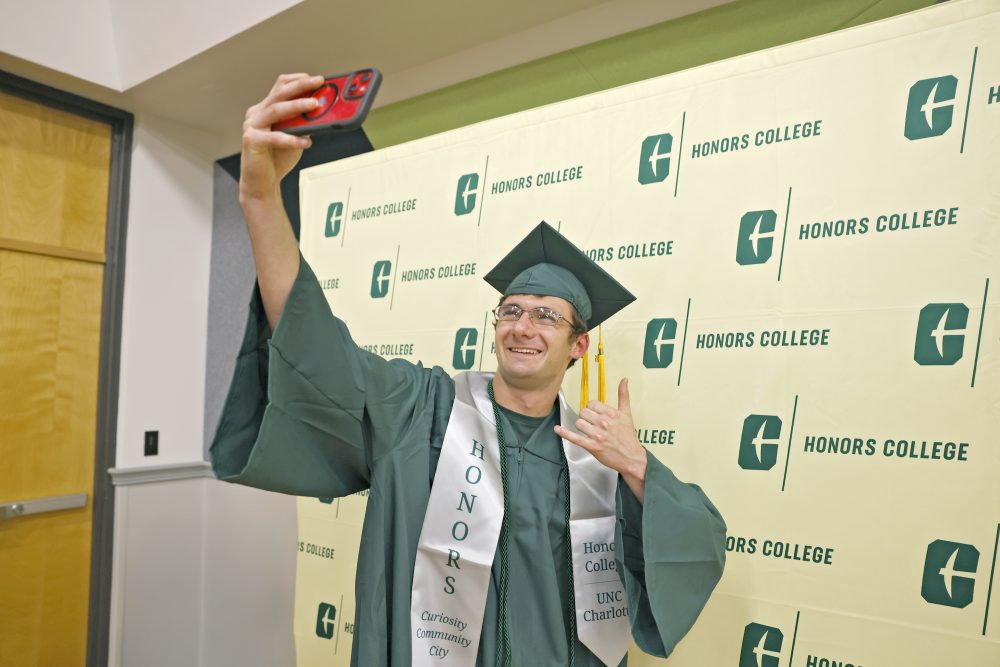
With the introduction of UNC Charlotte’s first-ever summer commencement ceremony, Bass found an opportunity that he hadn’t planned, and will be graduating with a third undergraduate degree a mere three months after he earned the first two.
This August, fueled by his desire to understand not only the engineering but science portion of the sport he loves, he is adding another degree from the Klein College of Science: a bachelor of arts in chemistry with a mathematics minor.
Bass really enjoyed his courses in chemistry and the science portion of his education, crediting faculty Eric McKenzie, Jessica White and Susan Michael for significant support as he worked to finish three degrees in such a compact timeframe. When he needed to juggle his class schedule and find a way to fit in electives and the last remaining classes, Bass said they “came to the rescue.”
“They were truly awesome as teachers and when the time slots for my classes didn’t line up. I’ve really gotten to know them well and realized there is so much advising they also do behind the scenes, especially when working with three different departments in two different colleges. I reached out for help and they went above and beyond for me. My advice to another Charlotte student would be to not take three degrees in the span of two years,” said Bass, laughing.
Where Science and Motorsports meet
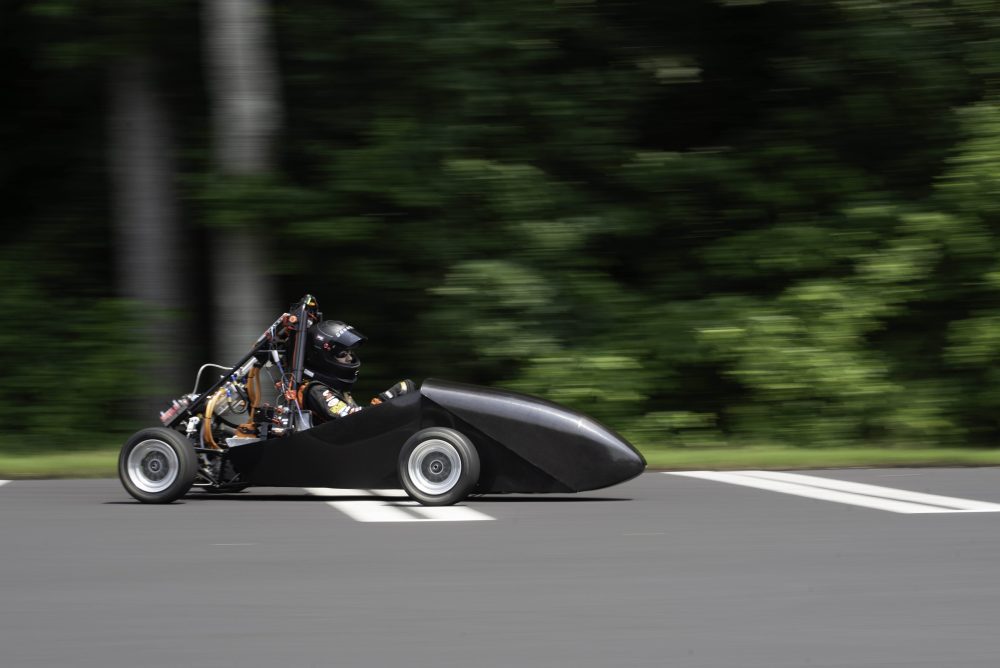
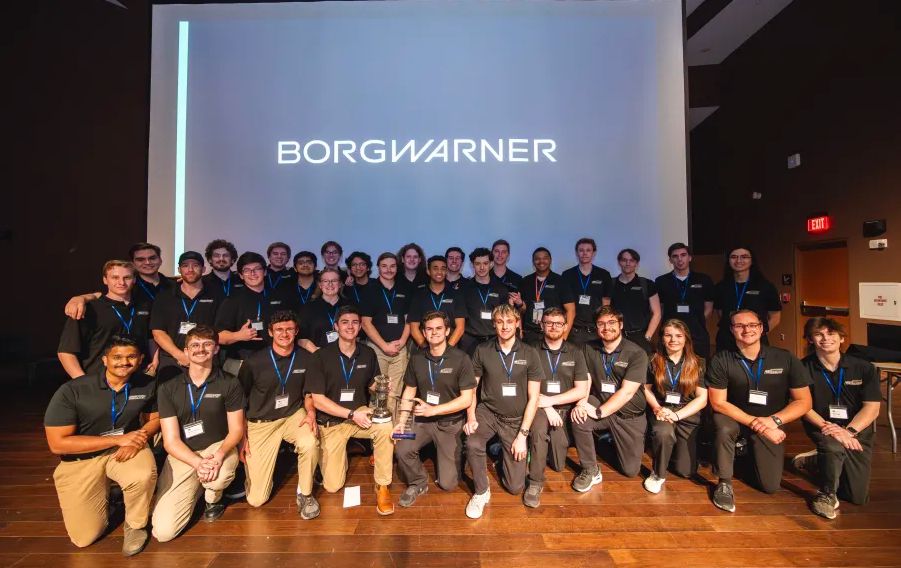
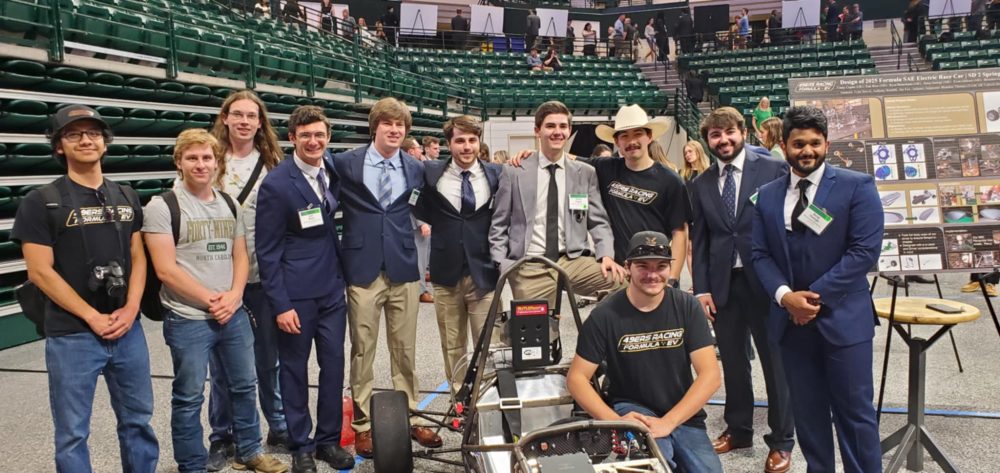
Bass took a lot of his engineering courses in the summer as he worked on the formula car team and filled his schedule with chemistry and physics classes in the fall and spring. He explored the overlap between motorsports and the physics and chemistry in the science of it.
“My background is racing. But after I started chemistry classes, I saw science in the batteries, tire compounds, combustion engines and what fuel composition you need to use,” said Bass.
Bass also helped conduct research in the BATT CAVE and saw firsthand the similarities and differences in the chemistry and engineering side of how batteries work.
“When we go over heat transfer in engineering and then we go over thermodynamics in chemistry, there is overlap and they’re very similar. You’re talking about the same subject but in two different ways,” said Bass. “I saw all my work from engineering again in chemistry, and from both sides it was just described differently, so it was very beneficial for my understanding.”
Bass is looking forward to flexing this interdisciplinary approach to help him explore the next step in his path. He has applied for graduate schools and jobs across a variety of industries from tires to rockets, and is willing to go where the opportunities might take him. Wherever he lands, he will be looking for the same things he loves and found at Charlotte — the culture, the people and the work of a great team.
WSOC-TV visits the Johnson Lab to uncover how much bacteria is living in reusable water bottles
Although reusable water bottles usually contain less bacteria than plastic water bottles, not cleaning them regularly can lead to exposure to potentially harmful bacteria. WSOC-TV Channel 9’s Erika Jackson visited the lab of Brittany Johnson, Ph.D., assistant professor in the Department of Biological Sciences, to test a variety of reusable water bottles for bacteria.
Johnson swabbed the lids, straws, and insides of the bottles, and then transferred the samples onto two plates that grow two types of microorganisms. The samples were incubated for 48 hours, and then Johnson presented the results, which varied based on how recently the water bottle was used, how often the user washed their bottle, and how thoroughly they washed it.
“As we start going through the water bottles that had been recently used or never washed, you’re going to start to see more and more colonies,” Johnson explained. “The more colonies we see, the more bacteria that was in that sample.”
The bacteria in water bottles can originate from the drinker’s own unique bacteria found in the mouth, but finding foreign bacteria is the most concerning, as it can make people sick.
“When you’re taking your water bottle with you to other places, like you take it with you to the bathroom, then there are germs in the bathroom and bacteria in the bathroom that get on your water bottle,” Johnson said. “Then you ingest those and that can be really harmful.”
Johnson’s findings were also featured on Yahoo!News, Boston 25 News, KIRO 7 News (Seattle), and WFTV (Orlando).
Watch the full segment on WSOC-TV.