“This journal cover selection gave us a rare opportunity to communicate the wonder that drives our research,” said Foley.
At the beginning of her college career, Erica Flores struggled with her confidence and belief that she deserved a “seat at the table.”
“I think most college students can relate to the feeling of imposter syndrome, especially being a STEM major, but being part of the lab has genuinely helped me overcome this feeling,” she said.
By developing meaningful connections with professors, mentors, classmates and her fellow researchers in the Truman lab, Flores has built a network at Charlotte that has empowered her to pursue her dreams wholeheartedly, even when they are challenging.
“Reaching out for that one opportunity that you thought was impossible can actually be possible and lead to a domino effect that results in great success,” Flores said. “Of course, nothing is linear; there will be ups and downs. However, the community and mentors you encounter along the way make it all possible and worthwhile.”
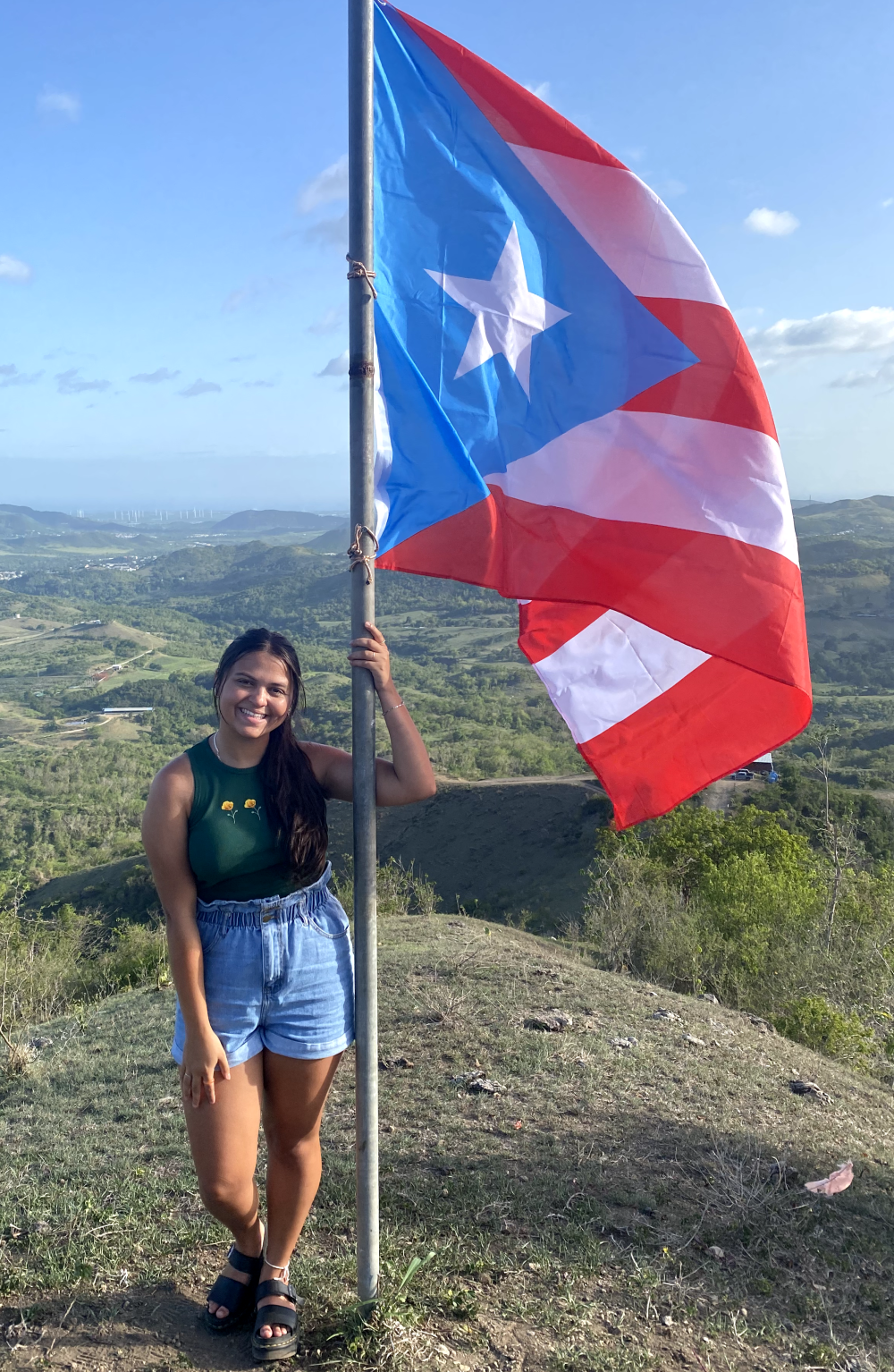
Flores grew up in Apex, North Carolina, where her parents moved from Puerto Rico for a job opportunity before she was born. Inspired by her older brother who graduated from UNC Charlotte, Flores knew she wanted to follow in his footsteps and was drawn to the university’s welcoming environment, where she felt she could not only belong, but thrive.
“I truly envisioned myself being in Charlotte and having that independence away from home, but being two hours away, still close enough to feel secure,” she said. “I was attracted to Charlotte because of its diverse campus, I just thought that it was a perfect fit for me.”
In 2023, Flores applied for the U.S. National Science Foundation’s Louis Stokes Alliances for Minority Participation (LSAMP) program, which offered research opportunities in STEM fields.
Flores initially wanted to join a biology-focused lab for the program, but found that the spots filled up too quickly. She was introduced to Banita Brown, Ph.D., associate professor of chemistry and associate dean for undergraduate student affairs in the Klein College of Science, who insisted that she still join the program. Brown encouraged Flores to work in the lab of Juan Luis Vivero-Escoto, Ph.D., professor in the Department of Chemistry.
“Honestly, without my participation in LSAMP, I don’t think I would have gained the experience that opened the doors for everything that has propelled me forward in my career,” said Flores. “Dr. Banita Brown was the first person that really got my foot in the door into research and was truly the catalyst for my academic and professional journey.”
Flores and Brown had only discussed the program over email during the application process, but Brown made sure to stop by Vivero-Escoto’s lab in-person to see how Flores was adjusting to the program.
“I remember feeling really nervous at the beginning of the program since it was my first real experience with professional development and my first step toward a career in STEM,” said Flores. “By the end of the summer, I was so grateful I took that opportunity. I learned the fundamentals of biology from a completely different angle and saw how they apply to major diseases like pancreatic cancer.”
“It has been an honor to know Erica and to see her advancements in research,” said Brown. “I am very proud of her accomplishments and wish her the best in her future endeavors.”
Through the LSAMP program, Flores gained foundational, hands-on experience in a research lab, which solidified her decision to pursue biology moving forward.
“I really cherished that experience,” Flores said. “But deep down, I knew I wanted to pursue something more biology-centered. Luckily, I soon received an interview offer from the Truman Lab, which became my home and my favorite place for the next two years.”
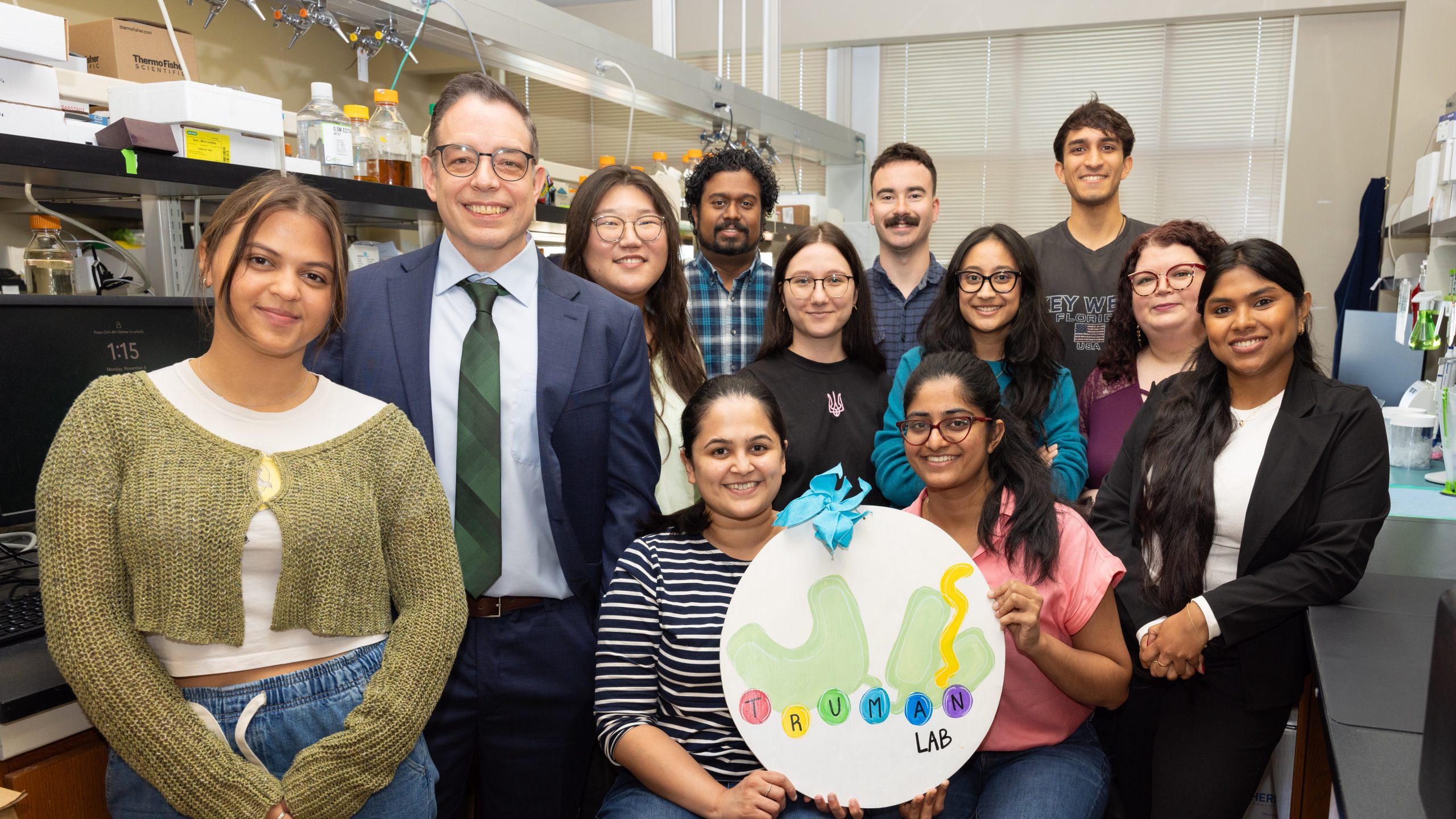
Flores joined the Truman Lab, led by Andrew Truman, Ph.D., professor in the Department of Biological Sciences, the fall of her junior year.
“I read some of his publications and was really interested in how his work affects cancer and different neurodegenerative diseases as well,” Flores said.
“Erica joined my lab in Fall 2023 and has since become one of our most dedicated student researchers. Working on projects ranging from purified protein systems to budding yeast, she has contributed to new insights into how proteins in different cellular compartments influence the response to heat stress,” Truman said. “Beyond her research accomplishments, Erica’s consistently positive attitude has brightened the lab environment. While we are sad to see her leave, we look forward to following her future successes!”
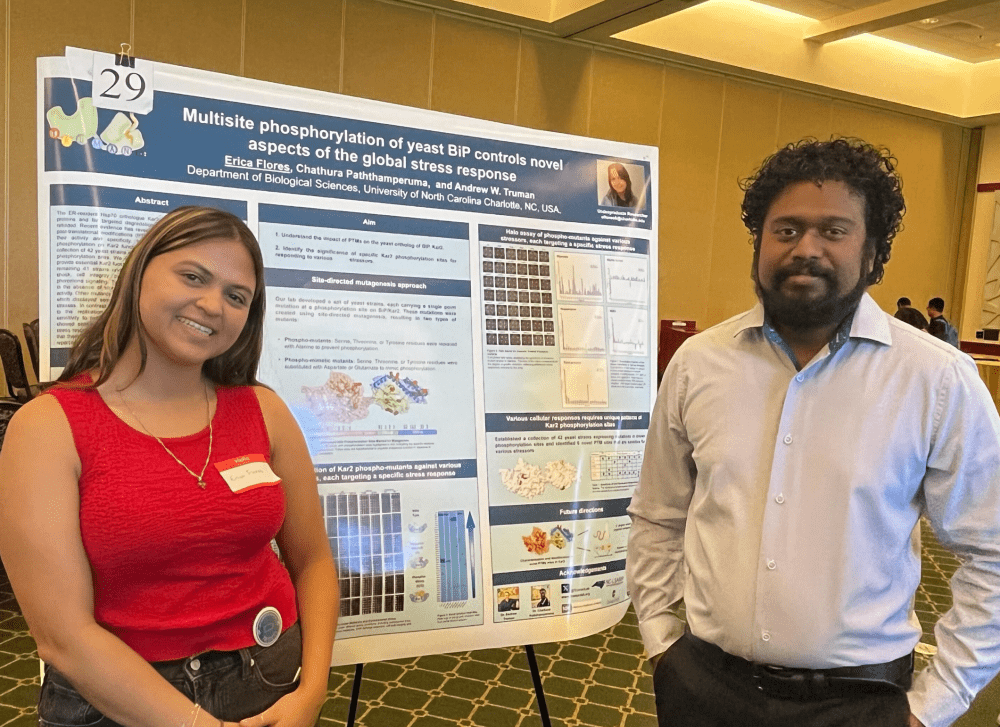
When Flores joined the lab, postdoctoral researcher Chathura Pathamperuma, Ph.D., became her mentor and she took on a leadership role in his project, “Understanding the Kar2 Chaperone Code.”
“What made working with him so special was that he genuinely wanted me to learn. He trusted me and after a bit of training, he stepped back and let me take the reins,” said Flores. “His style of mentoring challenged me in the best way and helped me grow exponentially as a researcher. I sincerely appreciate his trust and dedication to my learning.”
Flores continued the project by collaborating with Siddhi Omkar, Ph.D., another postdoctoral researcher in the lab.
“Siddhi is equally as remarkable,” said Flores. “She had a child not too long ago and is still committed to her work and is on the road to publication; truly superwoman behavior.”
This community has flourished due to the strong foundation of collaboration built by Truman, who truly cares about uplifting the researchers in his lab.
“What’s special about the Truman Lab is that all members of all levels of education share that remarkable quality: talented, humble, supportive, and genuinely down-to-earth,” Flores said. “Dr. Truman is the same way. This enabled a sense of community and understanding within the lab.”
Flores feels empowered by the other researchers in the Truman Lab, where women are represented in all levels of research, from undergraduate students up to postdoctoral researchers.
“It’s mainly women within the lab, so that is super cool to see women and women of color being represented in a STEM field,” she said.
Her main advice to current and future students is to make the most of the vast research opportunities UNC Charlotte has to offer.
“If anyone has even the slightest interest in research, I would absolutely recommend they pursue it. UNC Charlotte offers such great opportunities for students, and all students should make the most of them,” Flores said.

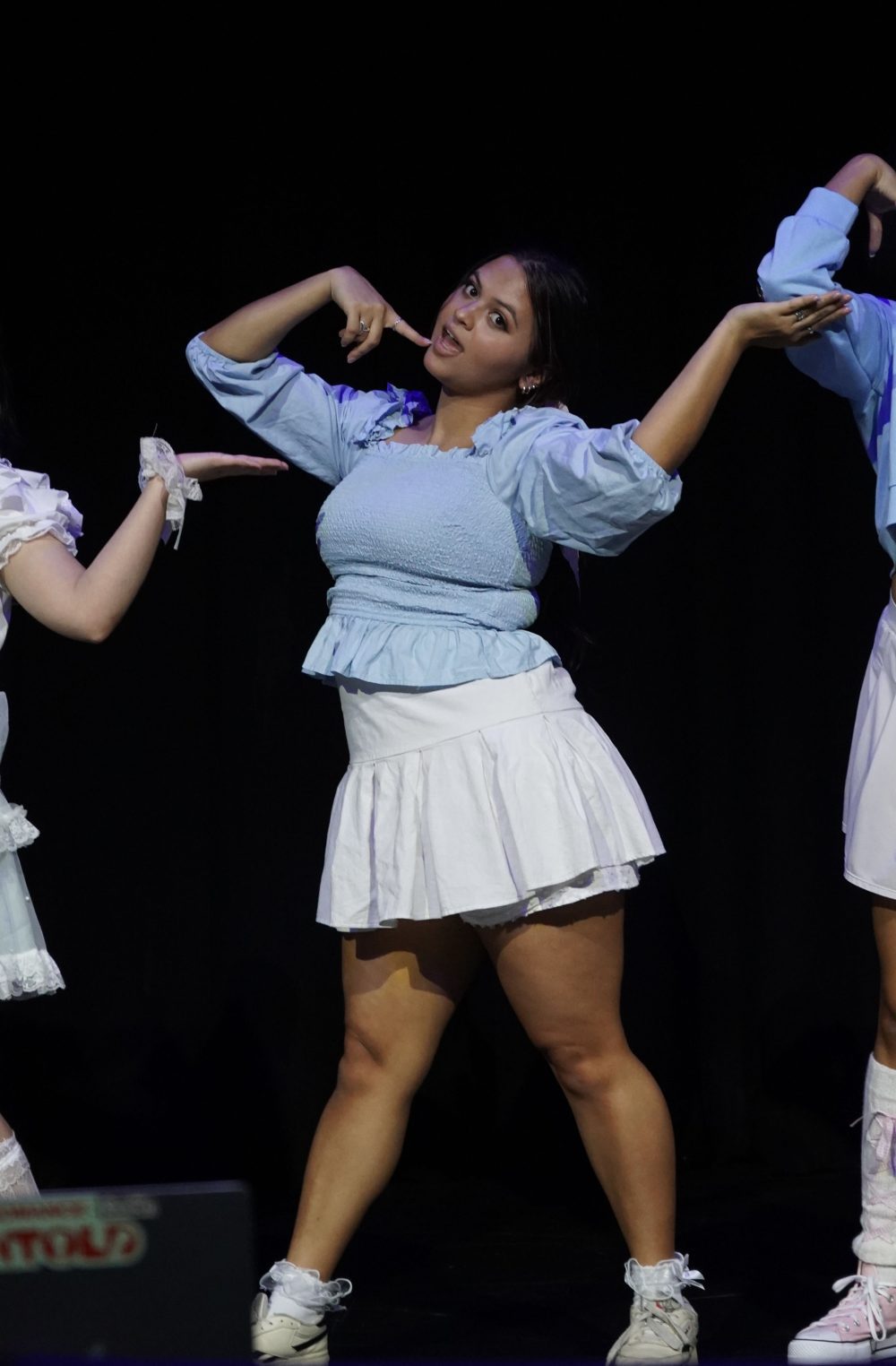
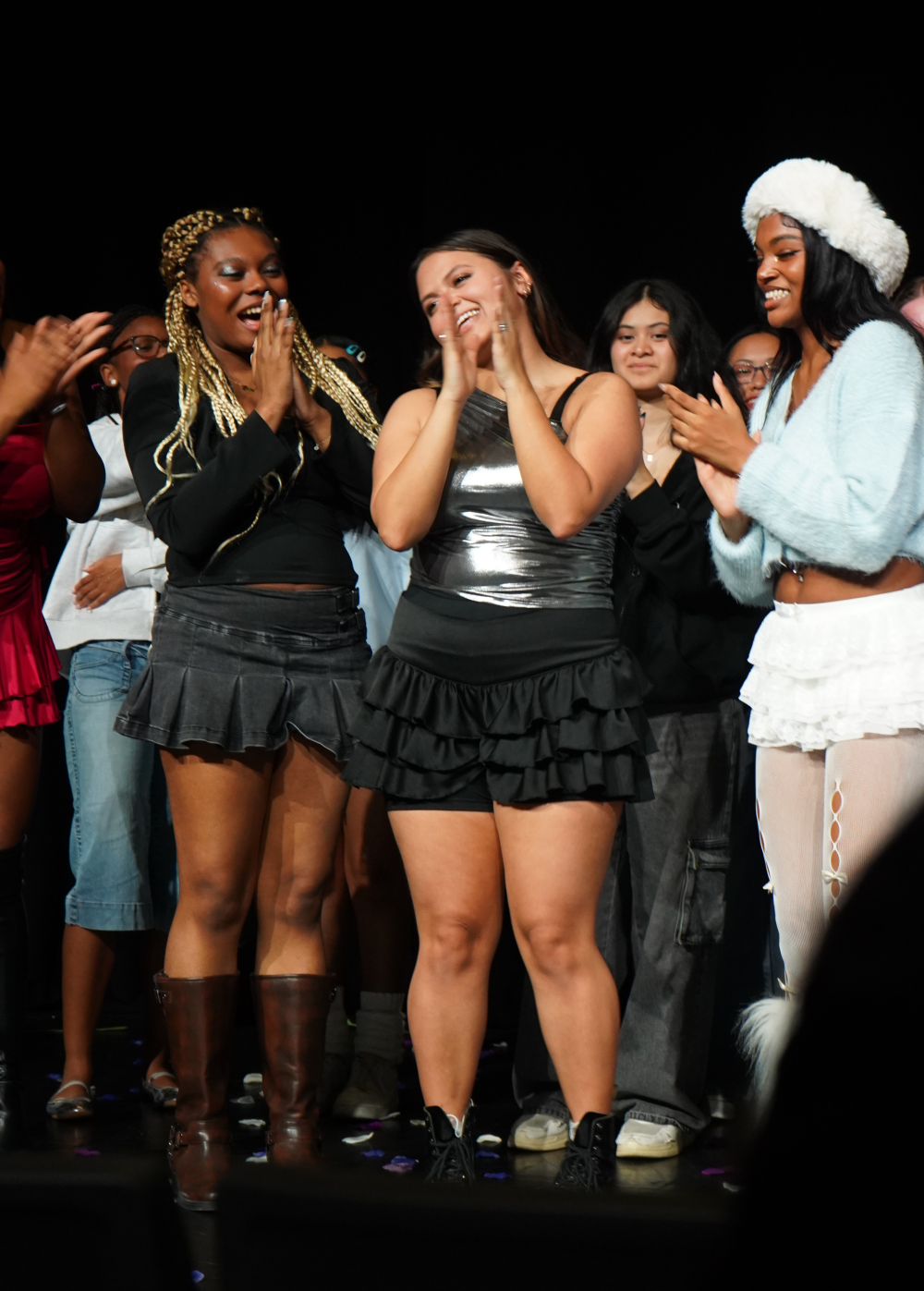
In addition to her impressive academic achievements and research in the lab, Flores enjoys expressing herself through her Korean Pop (K-pop) dance groups. She is a member of the on-campus Fine9 K-pop Dance Club as well as a local, independent K-pop dance group called FAN-C Dance Crew.
Both groups post K-Pop dance covers on their social media accounts and perform live dance routines at festivals and showcases, building confidence, creativity and teamwork through the synchronized choreography to popular songs.
On Sunday, Nov. 23 in McKnight Hall, Fine9 held their Winter Showcase. Flores participated in several dances, including XOXZ by IVE, Jellyous by ILLIT, Come Over by LE SSERAFIM, LA DI DA by Everglow, RUN2U by STAYC, and Body by MEOVV.
“I love Korean culture and dance in general. I did dance growing up, so I just love expressing myself through dance and also just physically exerting myself,” Flores said.

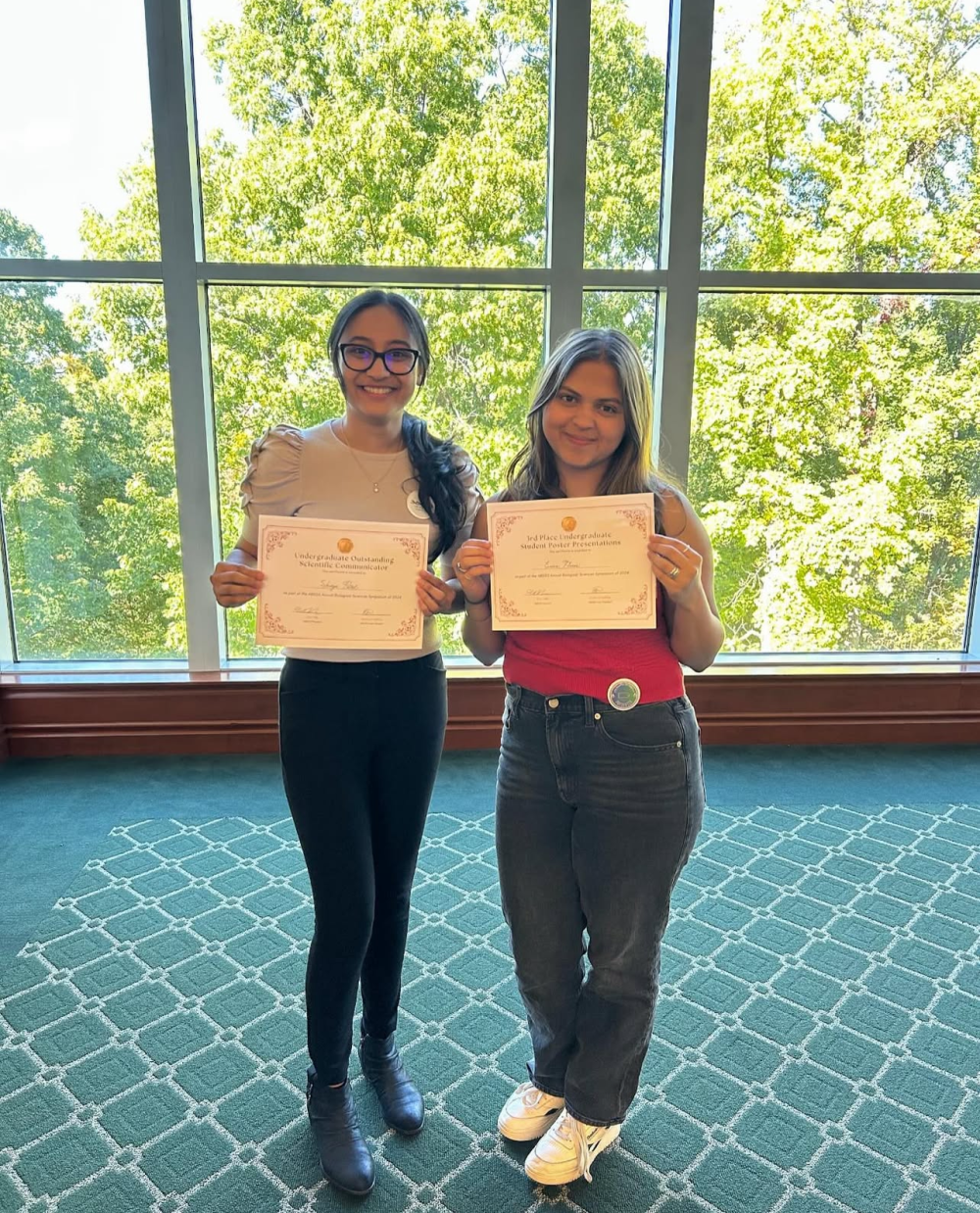
Flores has taken the skills she has learned from her great mentors and utilizes them to help other students develop their own research skills.
As a communications consultant for the Cell Biology Lab, taught by Michelle Pass, Ph.D., Flores helps students learn how to communicate their lab work effectively. Flores joins the course every other week to give a presentation on how to write lab papers, focusing on topics such as the materials and methods section.
“I really like the job because I feel like writing for me is a pretty daunting task because it can take a while to refine and can be overwhelming if it’s a long paper,” Flores explained. “So being able to help other students is really fulfilling.”
Flores has expanded her own skills in research communication through attending conferences and presenting her work.
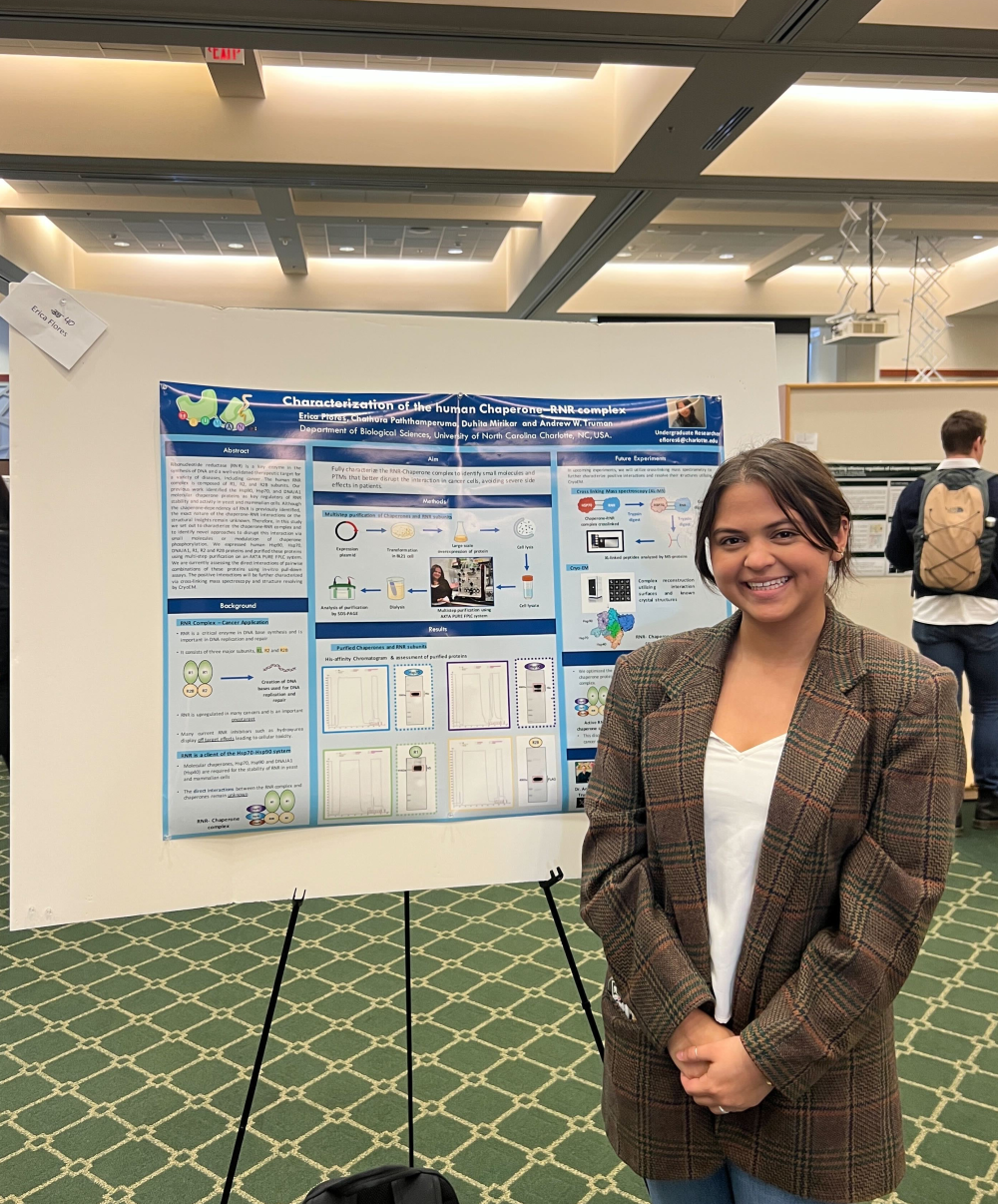
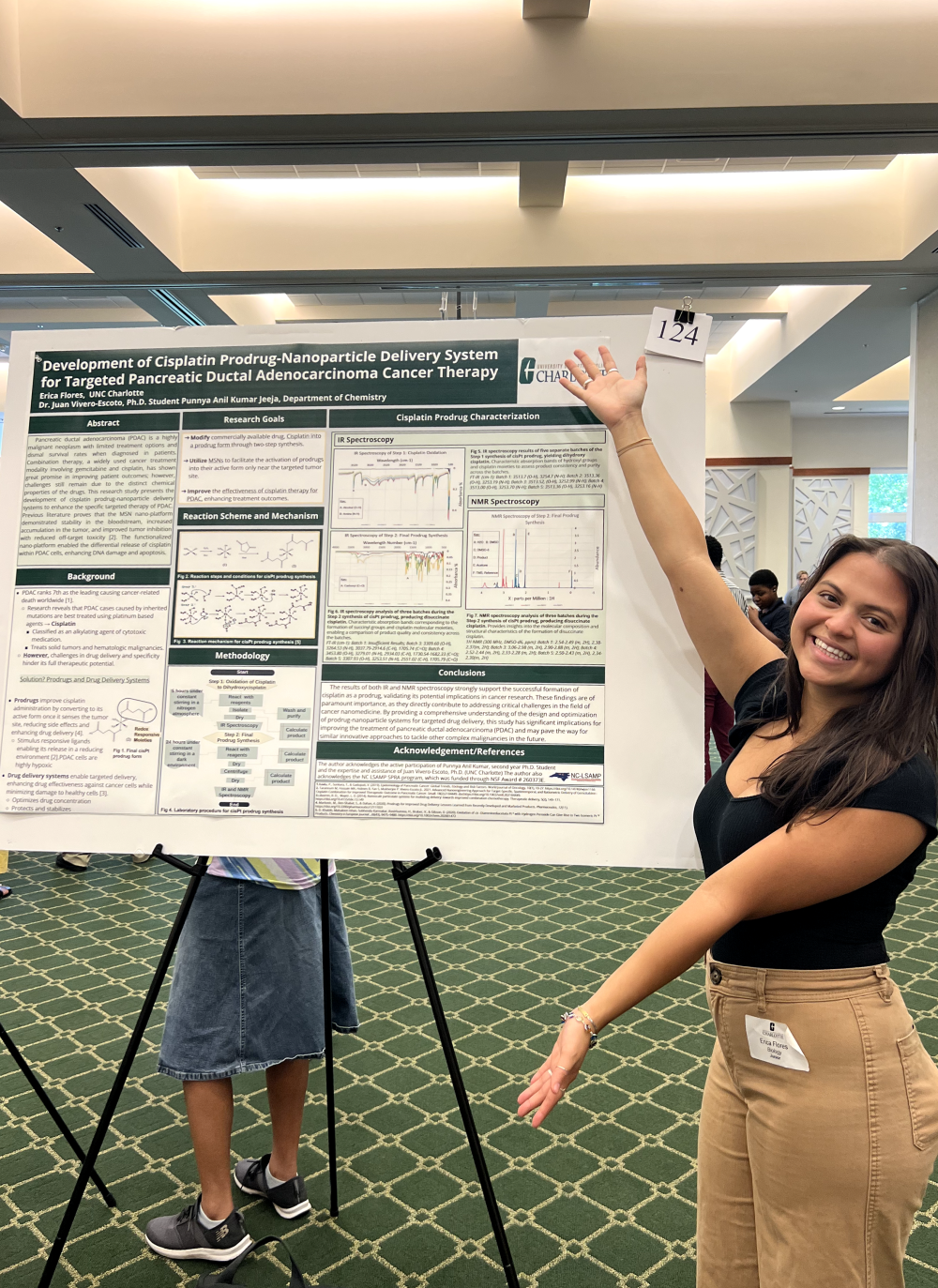
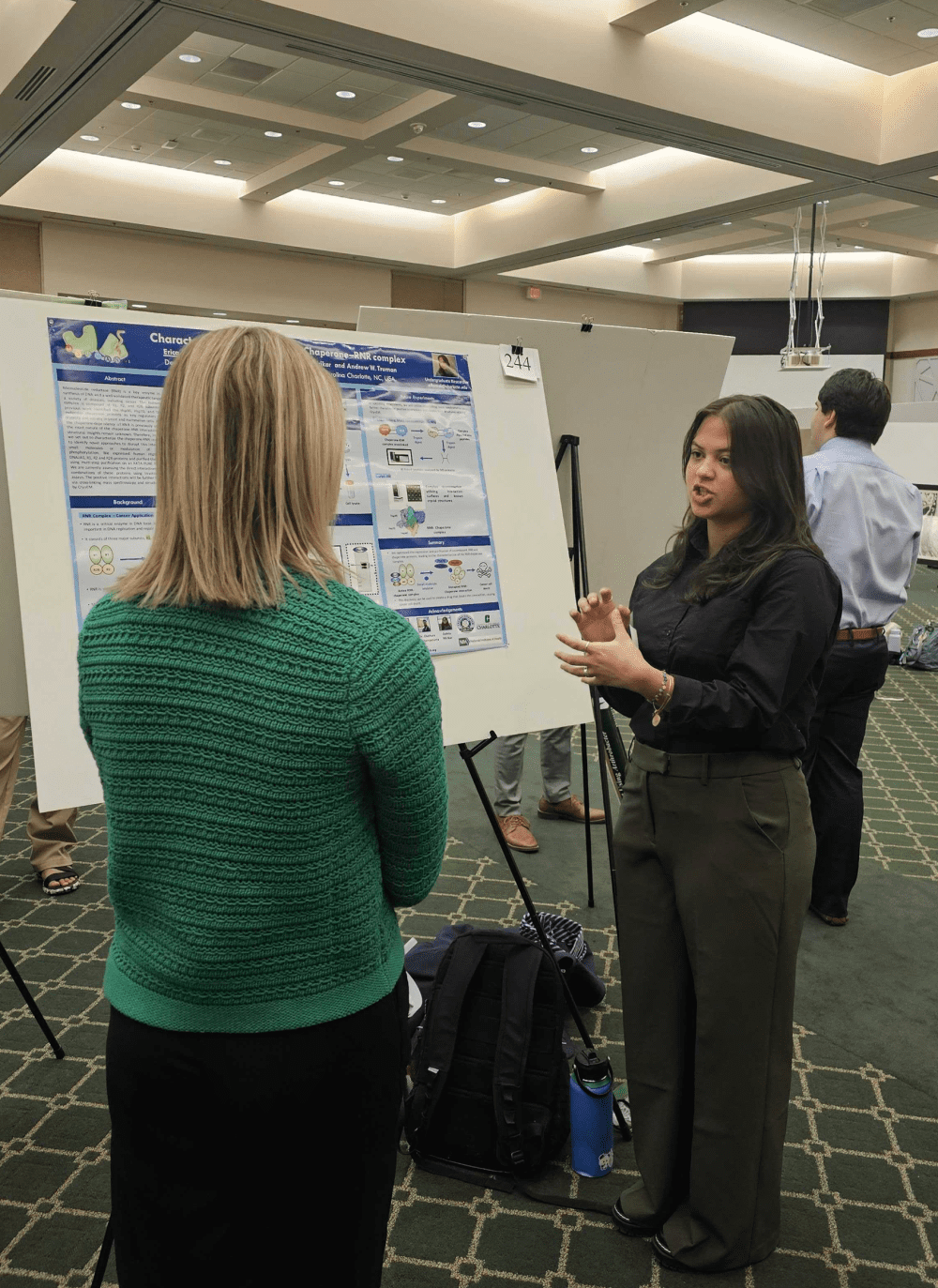
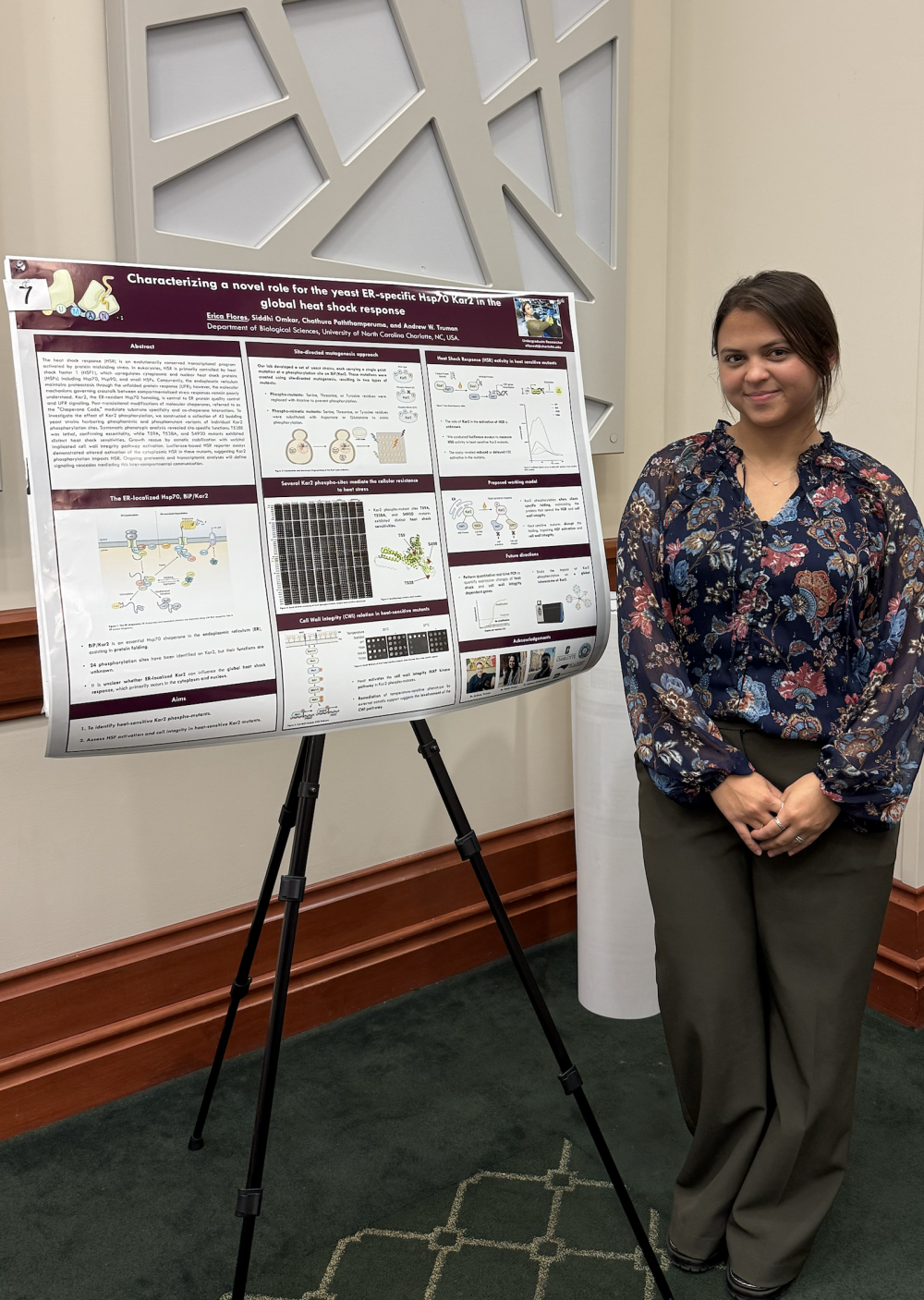
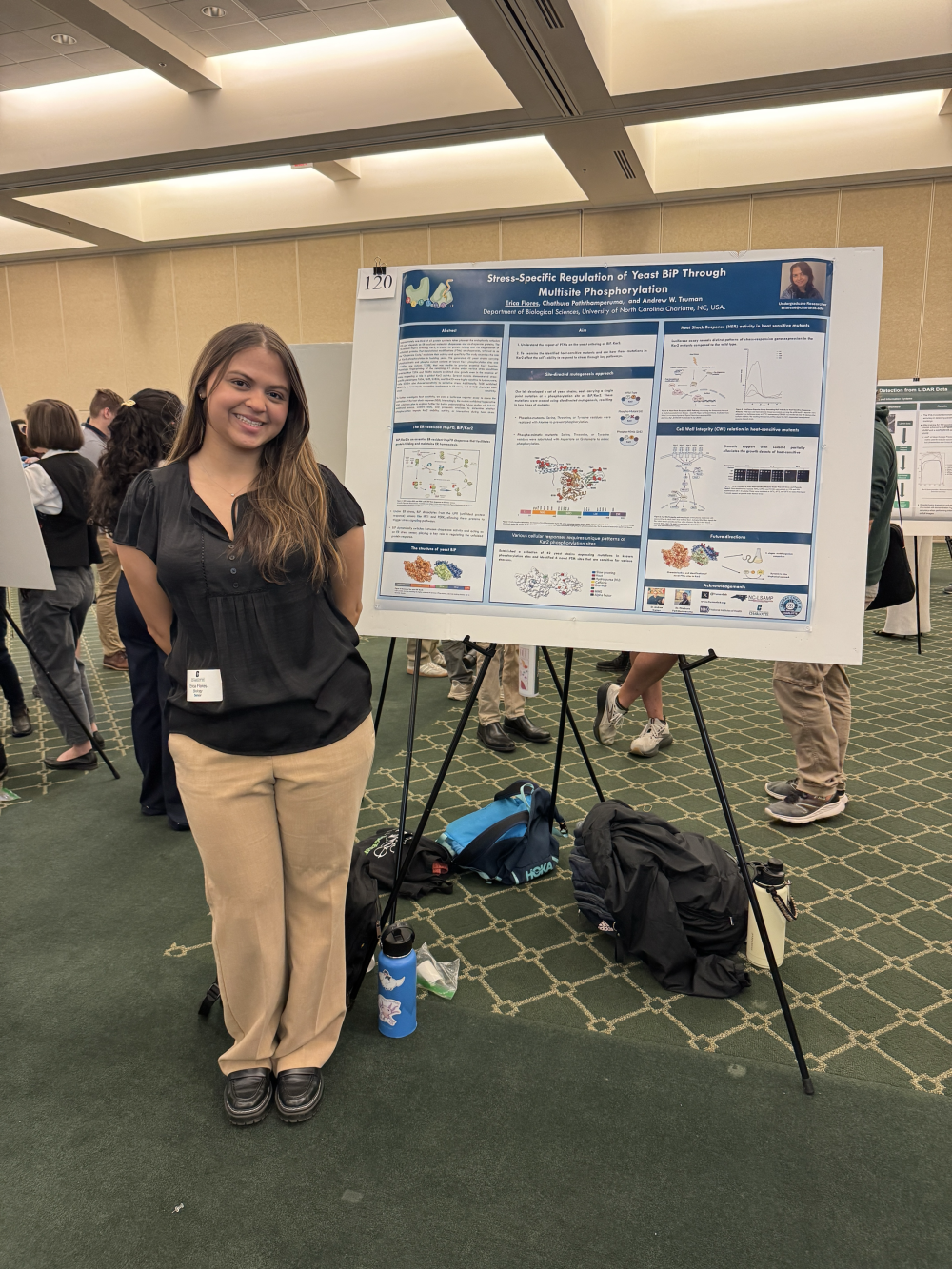
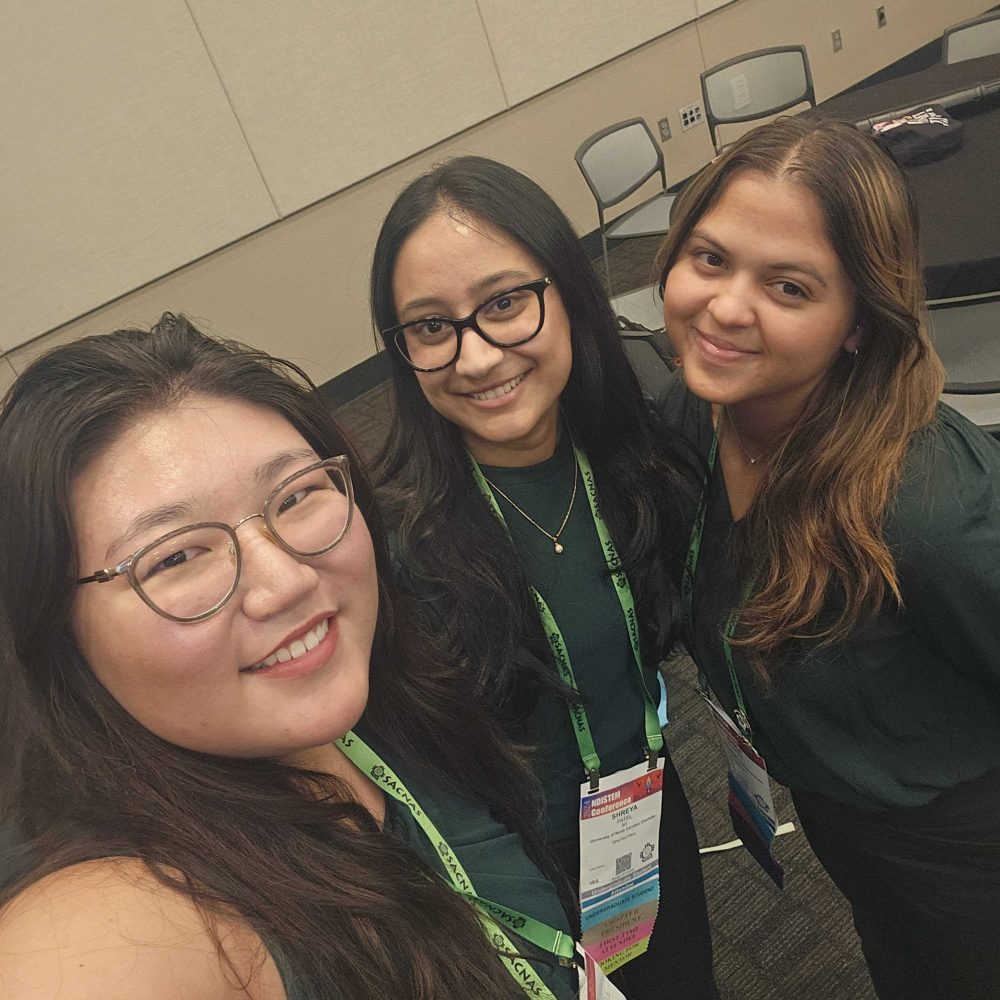
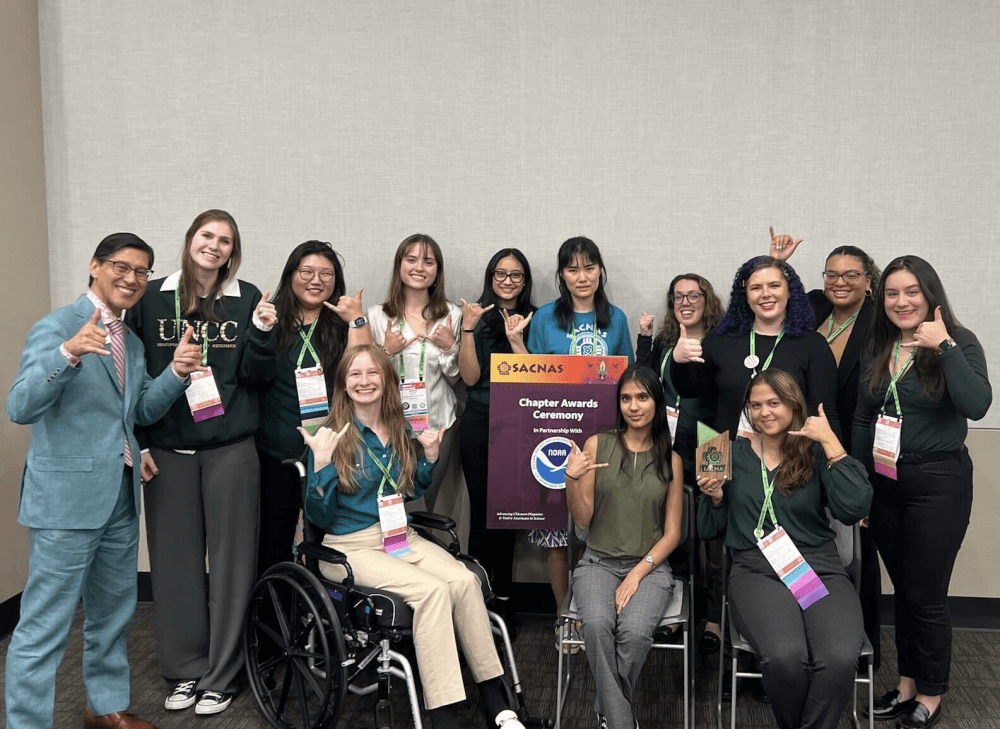
In 2023, Flores joined the Society for Advancement of Chicanos/Hispanics & Native Americans in Science (SACNAS), a student organization, after encouragement from Ashley Choi. Choi joined the Truman lab in 2022 and graduated last year.
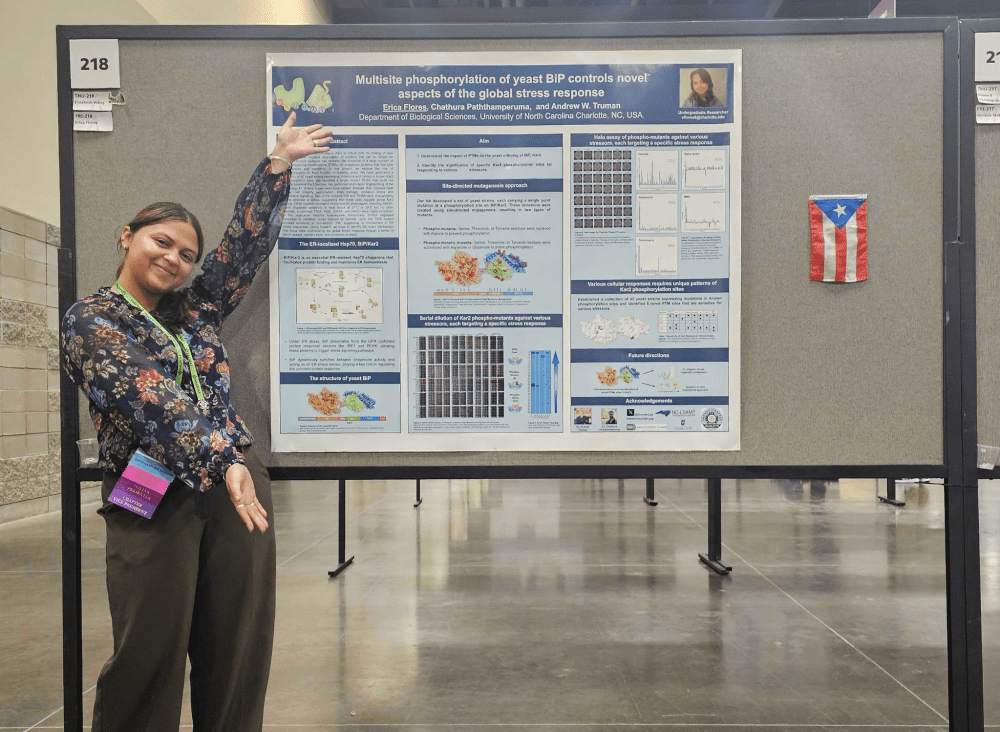
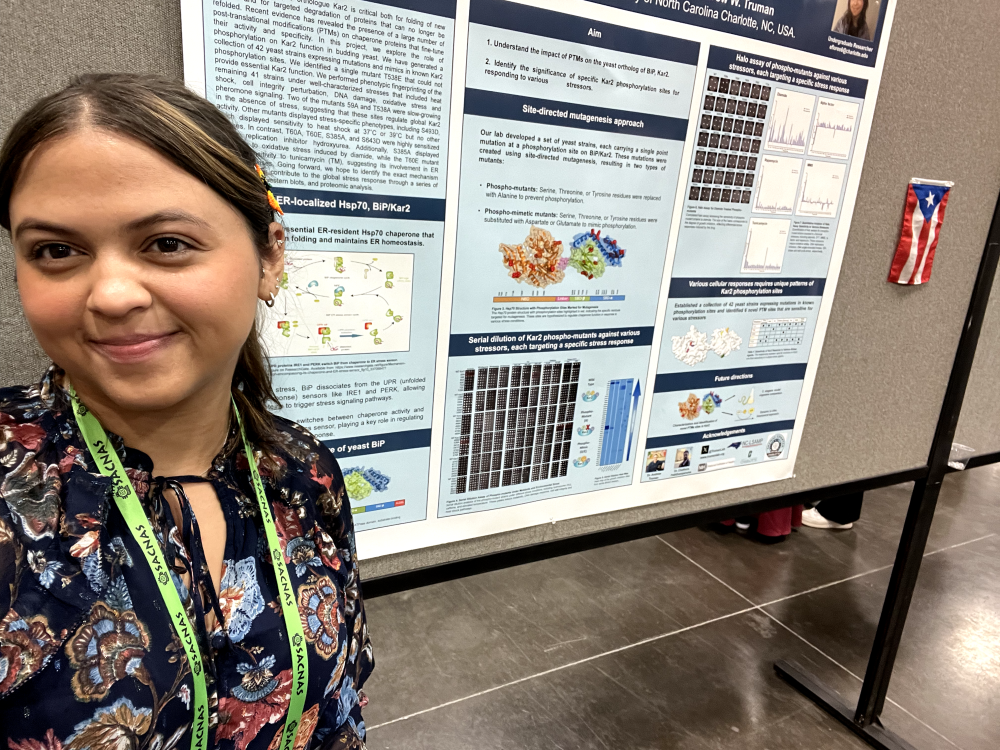
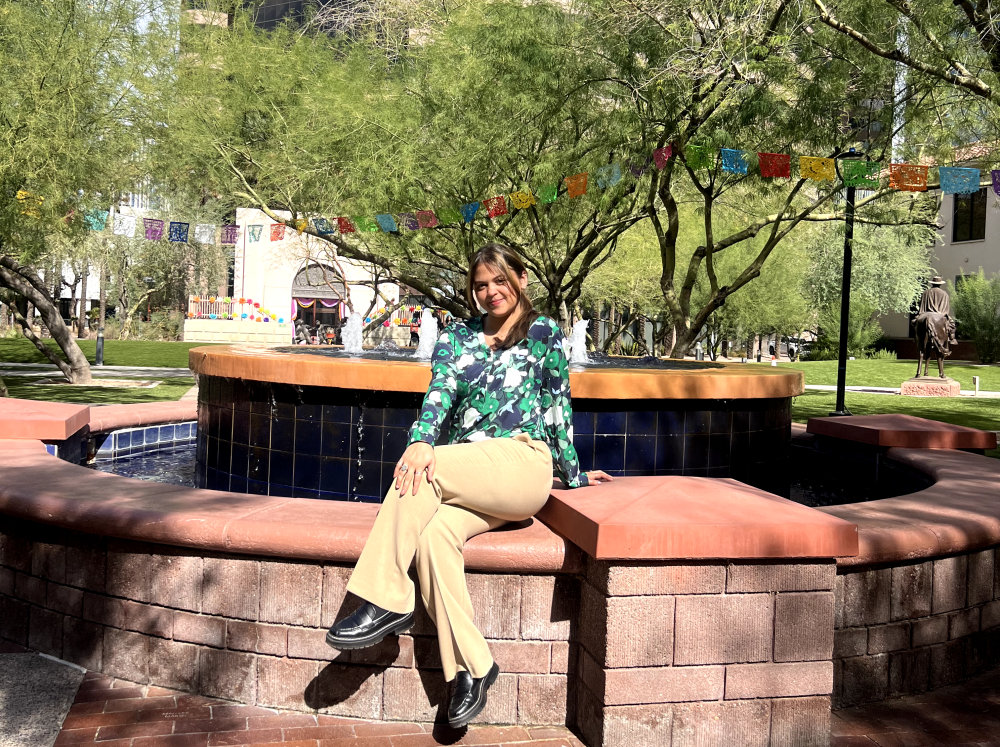
Flores took on the role of vice president in the fall of 2024 and was awarded the 2024 SACNAS NDiSTEM COLOR Travel Scholarship. The scholarship funded her travel and attendance for the NDiSTEM Conference in Phoenix, Arizona in October 2024, with over 5,500 other attendees ranging from college-level to professionals in the field.
As the leading multidisciplinary and multicultural STEM conference in the country, SACNAS NDiSTEM immerses attendees in cutting-edge research, professional development sessions, an academic and career exposition and multicultural celebrations and traditions.
“Having the opportunity to present at a conference, that’s also a diverse conference, and seeing people that look like me explaining their research is really empowering,” Flores said. “It gives me the confidence to pursue my career in STEM.”
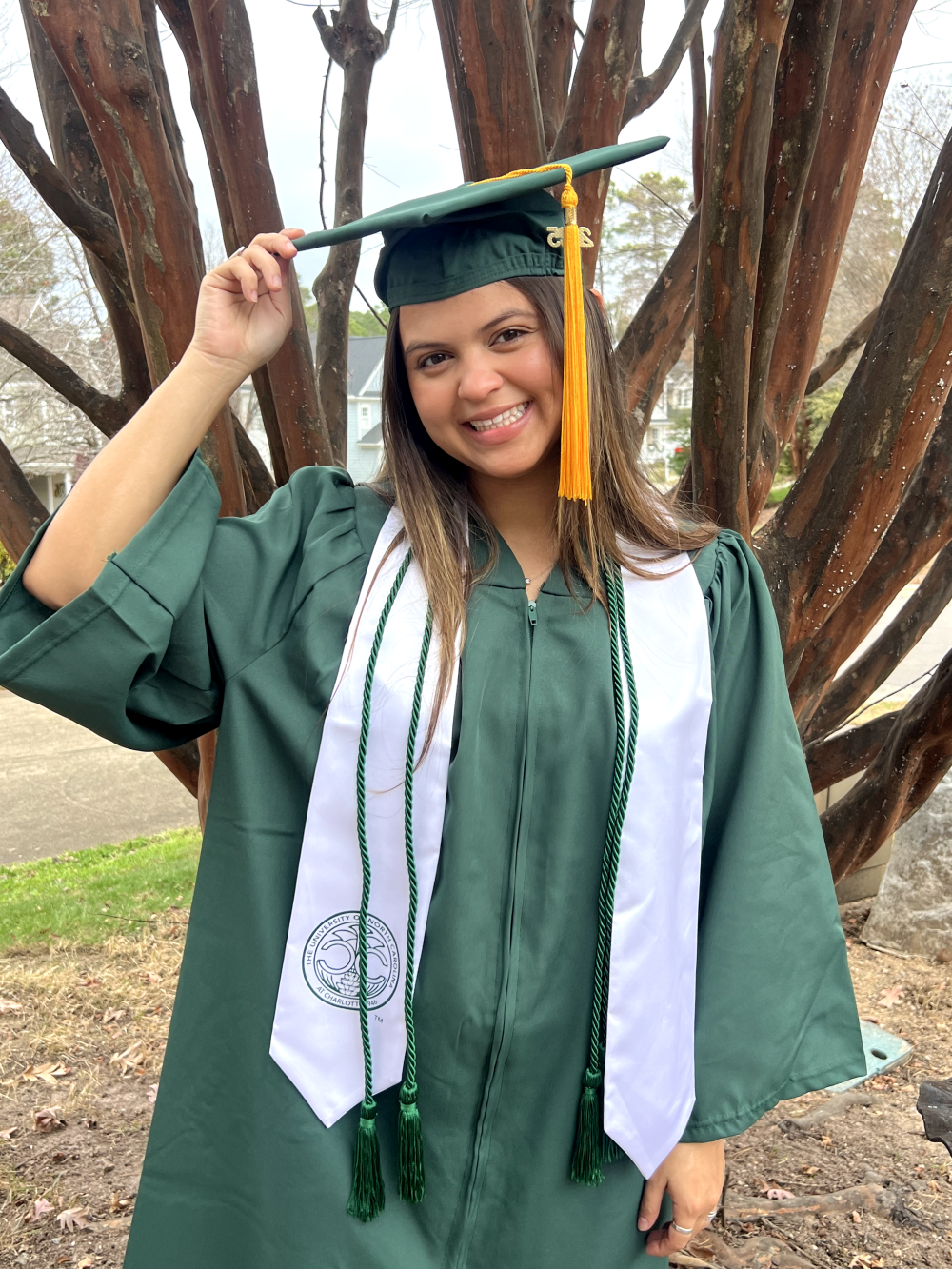
Flores is graduating this December with a major in biological sciences and a minor in public health.
In January 2026, Flores will start the Histotechnology Program led by Carolinas College of Health Science, part of Atrium Health. The 31-week program teaches students the skills for work in research and hospital settings, training students to pass the Histotechnology Certification.
After obtaining the certification, Flores is interested in pursuing a pathologists’ assistant training program. Pathologists’ assistants spend two years taking medical school level courses and completing practical rotations in order to provide surgical pathology and autopsy pathology services under the direct supervision of a board certified pathologist.
“There are only a couple programs in the United States, but there’s one at Duke,” Flores said. “I know it will be hard, but I think if I really commit that it could be a possibility.”
Her interest in pathology was solidified by how much she enjoys hands-on lab work and the satisfaction of understanding how things function at the structural and diagnostic levels.
“I liked the investigation of how things work the way they do and how we can apply that to the human body to make a real impact on people,” Flores said. “I found that pathology really blends patient care, lab work and investigation in a way that feels truly fulfilling.”
Flores knows that stepping away from the daily routine in the lab will be the most difficult part of graduating and leaving UNC Charlotte.
The lab has given her incredible opportunities to collaborate on groundbreaking discoveries and present at exciting conferences, but she will miss the daily interactions with her fellow researchers and friends more than anything else.
“I think what I’ll miss most are our weekly lab meetings. Each lab member takes a turn presenting their hard work and the status of their research. This way, we get to see how our projects overlap and help each other move forward with our research,” she explained. “Those small moments are what made the lab feel like a true community.”
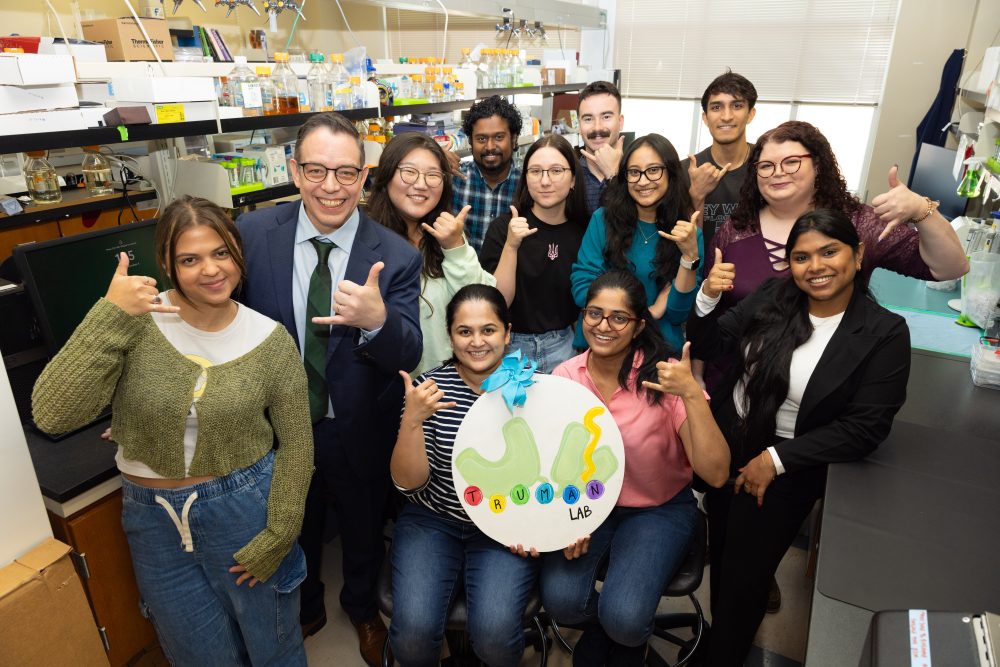
Truman Lab photos by Amy Hart.
Additional images courtesy of Erica Flores.
Patented nanomaterial technology developed at UNC Charlotte could soon improve the quality of drinking water.
Jordan Poler, Ph.D., has successfully passed filtration testing with his water purification system, paving the way for large-scale production on filters that remove forever chemicals and other contaminants from water.
Poler, a professor of chemistry in the UNC Charlotte Klein College of Science, is a leader in advanced water purification solutions, using a patented nanostructured filtration media developed by his team at the University.
The filters passed NSF/ANSI 42 and 61 Point-of-Use (POU) testing, which are industry-standard certifications that confirm the filters are both safe and effective for drinking water treatment.
The technology, developed through years of research in nanomaterials and membrane science, provides a new approach to removing contaminants from drinking water. Unlike conventional filtration media, the materials developed by the Poler team feature an engineered nanostructure that enhances selectivity and capacity while maintaining sustainability and lowering regeneration costs.
This important validation was made possible through support from the NCInnovation, which invests in North Carolina-based technologies with high commercial potential.
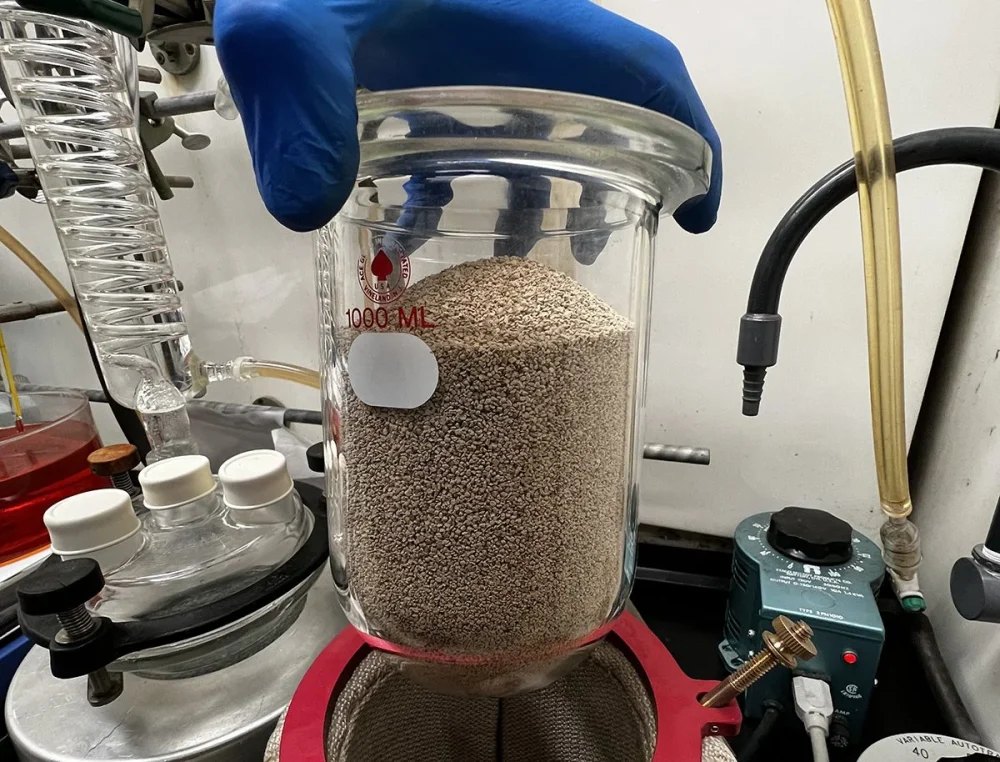
Goulston Technologies of Monroe, North Carolina, is an established specialty chemical manufacturer that is partnering with Poler’s nanXPure to scale up production with full manufactured certification, using industry-ready methods. Once manufacturing certification is complete, nanXPure will lead commercialization efforts from its headquarters in Huntersville, North Carolina, bringing a new generation of safe, efficient and sustainable purification filters to the global water treatment market.
“This milestone confirms that our materials meet the highest standards for safety and performance,” said Poler. “With the continued support of NCInnovation and our partners at Goulston Technologies, we’re positioned to deliver real-world solutions to one of the most pressing challenges of our time — access to clean water.”
To date, NCInnovation has awarded $18.8 million in funding across 25 projects statewide, 14 UNC System schools and multiple industries. In the Klein College, Pinku Mukherjee and Susan Trammell were awarded NCInnovation grants earlier this year. A new slate of awards will be announced in December 2025.
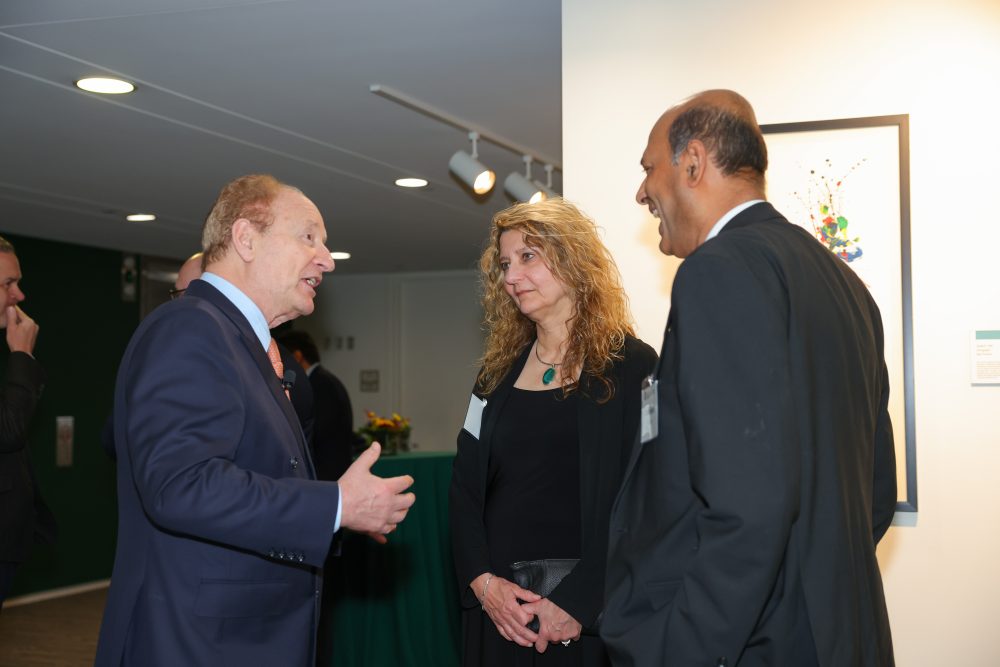
UNC Charlotte recognized 20 years of the nationally-ranked Mathematical Finance program with Nobel laureate Robert C. Merton helping to mark the occasion.
“I want to commend the remarkable achievement of the Mathematical Finance program,” Merton told the audience of 225+ at The Dubois Center at UNC Charlotte Center City. “I say remarkable not lightly. Establishing in less than one-quarter of a century the rankings, the development and the support that you have in this program may look easy to those who don’t know, but it’s a very difficult thing to do from scratch. You should take great pride and pleasure in this.”
The program was born two decades ago with support particularly from Bank of America and Wachovia, which later integrated into Wells Fargo. Cultivating corporate involvement and adapting curriculum to emerging needs have been essential to ensuring the program delivers the talent Charlotte needs, said Belk College of Business Dean Richard Buttimer.
“Our program’s interdisciplinary core has been critical to its versatility and its responsiveness,” Buttimer said. “The collective knowledge we have in economics, finance and mathematics and statistics in the Belk College and in the Klein College of Science continues to prepare our graduates to thrive in the rapidly evolving quantitative world.”
The emphasis of the two colleges on excellence in academics, research and engagement with employers has advanced the vitality of the Charlotte region, particularly in the nation’s second largest financial and banking center.
“The Klein College of Science and our Mathematics and Statistics Department are focused on shaping the future of scientific discovery,” said college Founding Dean Bernadette Donovan-Merkert. “We cultivate a spirit of inquiry that our graduates take into their careers, many of them in Charlotte.”
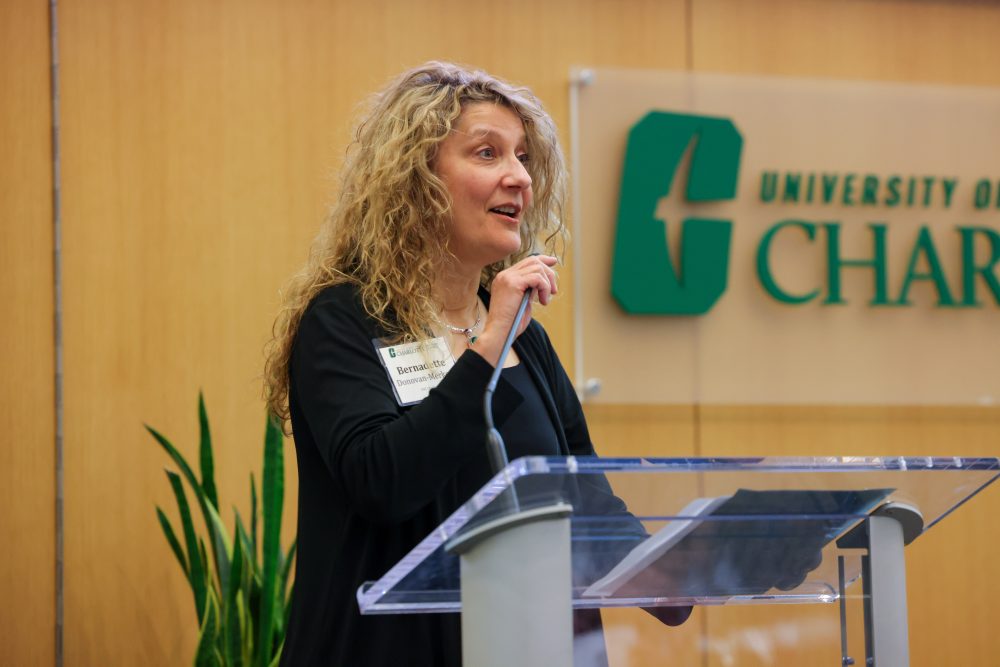
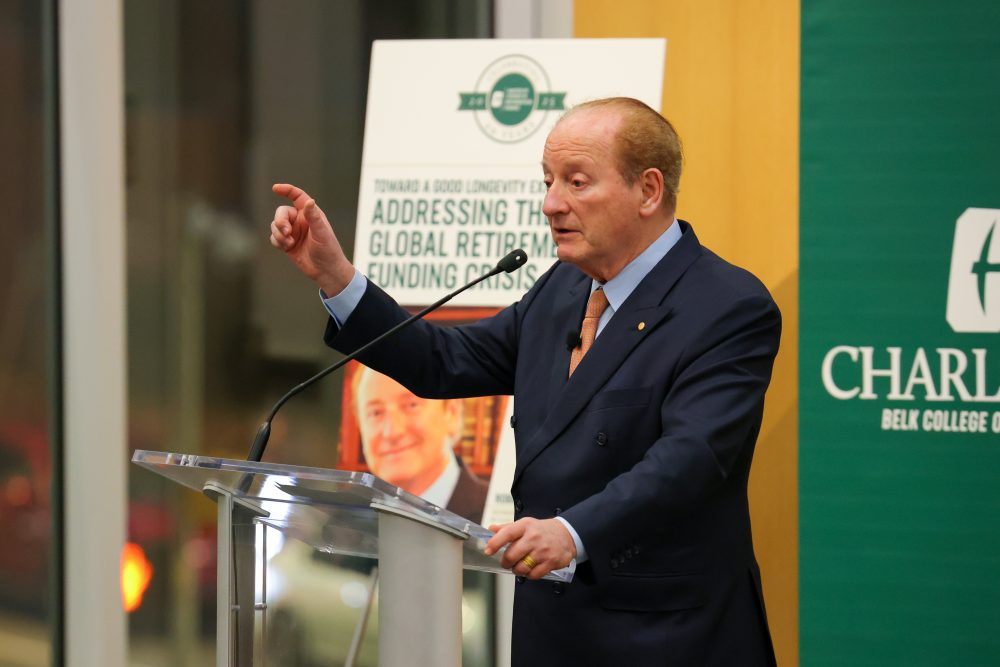
Attendees at the celebration tapped into their own spirits of inquiry, as Merton — a founder of modern finance and risk management — discussed a growing global and local challenge. Households today hold greater responsibility than in the past for decisions about retirement funding and associated risks. Yet, they often don’t have the knowledge or tools they need, Merton said. People and organizations need to shift their thinking and their approaches, he said.
Jordan Poler, Ph.D., professor in the Department of Chemistry, is the winner of the “Best Scientist” category of Queen City Nerve Critics’ Pick Winners: Best in the Nest 2025 list.
Poler has been recognized as a leader in advanced water purification solutions. At UNC Charlotte, his research group focuses on nanomaterials and membrane science, and they have developed a new approach to removing harmful contaminants from drinking water.
Conventional filters in water pitchers or under-sink systems may remove toxins such as perfluoroalkyl and polyfluoroalkyl substances (PFAS), or “forever chemicals,” from drinking water, but once they are tossed in a landfill the chemicals leach back into the environment.
Poler’s non-toxic materials can be packed into water filtration cartridges and used to remove pharmaceuticals, pesticides, arsenates, heavy metals and PFAS at the point of use, such as a tap water filter in the refrigerator.
Unlike refrigerator filters that must be replaced regularly, Poler’s materials can be regenerated and reused. He plans for customers to ship their used cartridges back in provided mailers, cutting down on plastic waste and keeping the PFAS and other toxins from reentering the environment.
Poler’s startup, nanXPure LLC, has partnered with a specialty chemical manufacturer, Goulston Technologies in Monroe, NC, to bring the filtration technology to industry scale.
The Poler Research Group at UNC Charlotte receives support from the NCInnovation Fund, which helps facilitate the commercialization of applied research from North Carolina universities.
Check out the full list of winners here.
Read Poler’s feature in the Coastal Review to learn more about his research.
A research article by the Foley Lab in the Klein College of Science has been selected as a cover of the Journal of Chemical Theory and Computation.
Research for the article, Modeling Strong Light-Matter Coupling in Correlated Systems: State-Averaged Cavity Quantum Electrodynamics Complete Active Space Self-Consistent Field Theory, was led by postdoctoral researcher Nam Vu and graduate student Kenny Ampoh under the direction of principal investigator Jay Foley, associate professor in the Department of Chemistry.
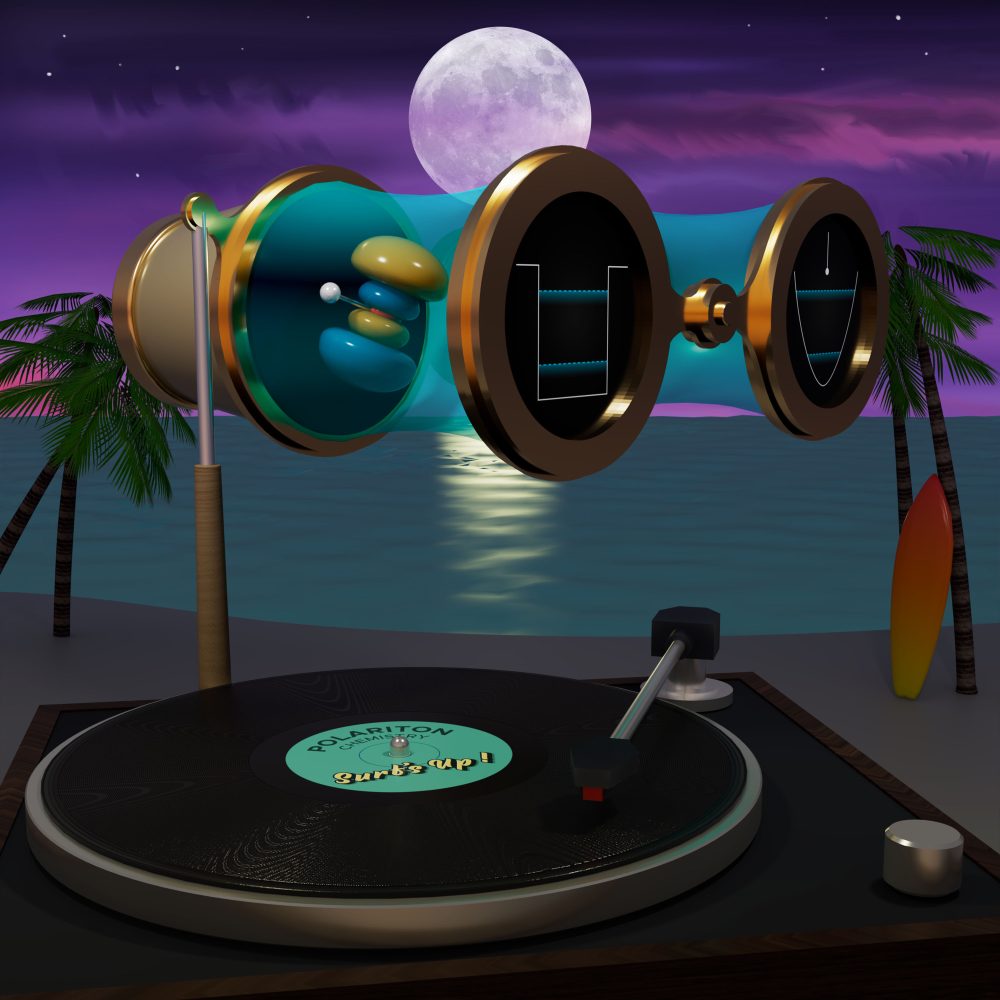
Both the cover graphic and the table of contents (TOC) figure in the abstract pay tribute to one of Foley’s creative heroes, Brian Wilson, the visionary songwriter and musical genius behind The Beach Boys.
The journal cover references “Surf’s Up” written by Wilson and Van Dyke Parks, while the TOC figure draws inspiration from the more widely known “Good Vibrations.”
“Being selected for the journal cover allows us to share what we find beautiful about quantum phenomena with a broader audience,” said Foley. “Brian Wilson passed away during this project, and the song “Surf’s Up” became a daily companion as I reflected on the impact his music has had on me. Over time, I started building associations between the poetic imagery of the song and the quantum phenomena we are working on.”
The cover image transforms the imagery from the song’s lyrics into a scientific metaphor, with the molecular and harmonic potentials becoming the “pit and pendulum drawn” through opera glasses.
A “quicksilver moon” brightens the quantum landscape above a beach scene featuring palm trees and a surfboard, while a record player plays “Surf’s Up!” below.
“Wilson spoke about his mission to explore beauty and joy through music, which resonates with me personally; I’m more animated scientifically by ideas that I find beautiful or mysterious than by potential utility,” said Foley.
“This journal cover selection gave us a rare opportunity to communicate the wonder that drives our research,” said Foley.
The Foley Lab works to further understand interactions between light and matter. For this research, they worked alongside Mikuláš Matouseǩ and Libor Veis at the J. Heyrovský Institute of Physical Chemistry, part of the Academy of Sciences of the Czech Republic, and Niranjan Govind from the Pacific Northwest National Laboratory.
“There is growing evidence that suggests that ‘strong’ interactions between light and molecules, which is achieved by confining them in nanoscale structures, can enable new chemical reactions and provide unprecedented control over molecular processes,” said Vu. “These structures concentrate light’s energy into extremely small volumes, making quantum features of light as striking as those of molecules, including vacuum fluctuations that can exert significant forces even in complete darkness.”
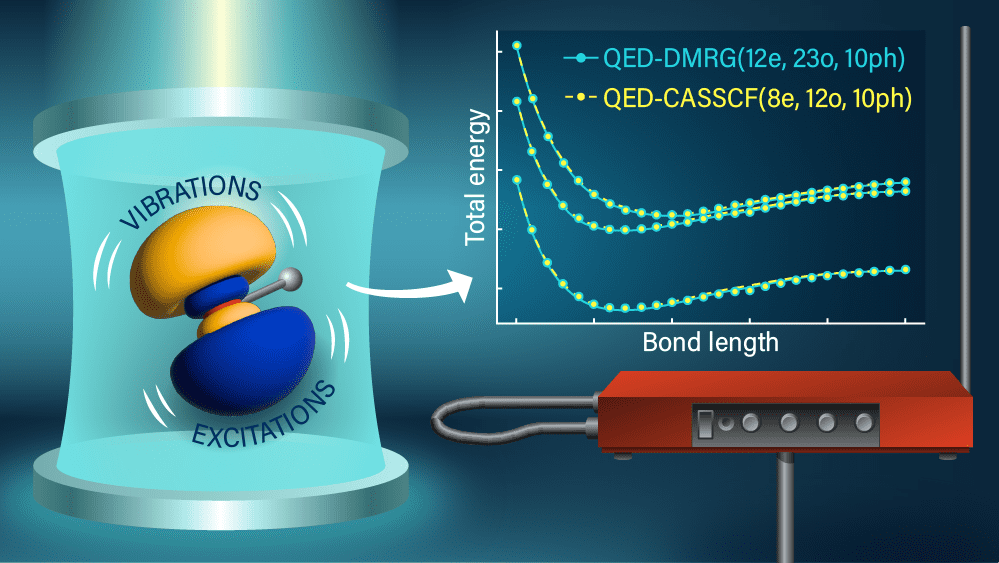
The interactions create quantum states called ‘polaritons,’ which are exotic hybrid entities of neither purely light nor purely matter. Experiments have shown that polaritons can make desired reactions proceed faster or steer them toward specific products. The “Good Vibrations” TOC graphic gives a nod to this process where the confined light gives molecules excitations, and the fundamental vibrations of the molecule are changed as a result.
“Our theoretical research helps understand these quantum phenomena and provides insights that experimentalists and engineers can use to design practical setups, potentially transforming the chemistry lab of the future to include specialized optical cavities alongside traditional equipment,” said Ampoh.
The Foley Lab wishes to gratefully acknowledge the support of the U.S. Department of Energy, the Department of Chemistry, and the Center for Innovation, Translational Research and Applications of Nanostructured Systems (CITRANS), which made this work possible.
Images courtesy of the Foley Lab.
After the naming of Klein Hall and the College last year, this year the Dean’s Office in the Klein College of Science declared Sept. 22-26 “Klein College of Science Week.”
KCOS observed the one-year anniversary with different events each day for networking, idea sharing and celebrating the research, community building and teaching within the College.
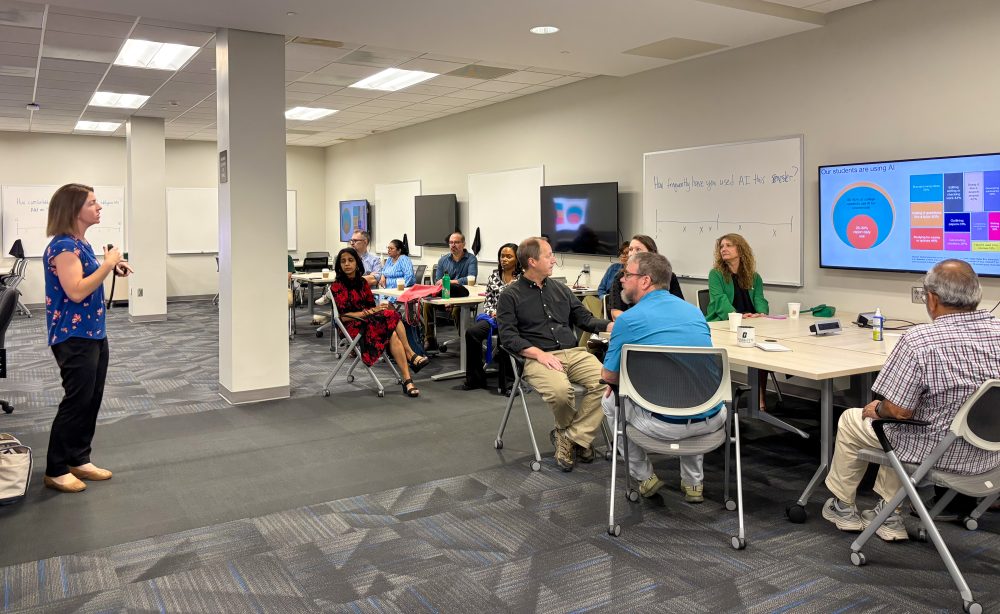
On Monday, Sept. 22, faculty and staff met up to exchange ideas over breakfast treats and morning coffee for the monthly event called The Innovation Brew, “where ideas percolate.”
Attendees answered poll questions placed around the room to start conversations with their colleagues about the topic of the day: artificial intelligence, and its use in classrooms and with their teaching.
Ellen Wisner, teaching professor of biological sciences, gave a presentation about how she uses AI with students in her courses, and offered best practice ideas for encouraging them to use AI in specific ways as a study tool.
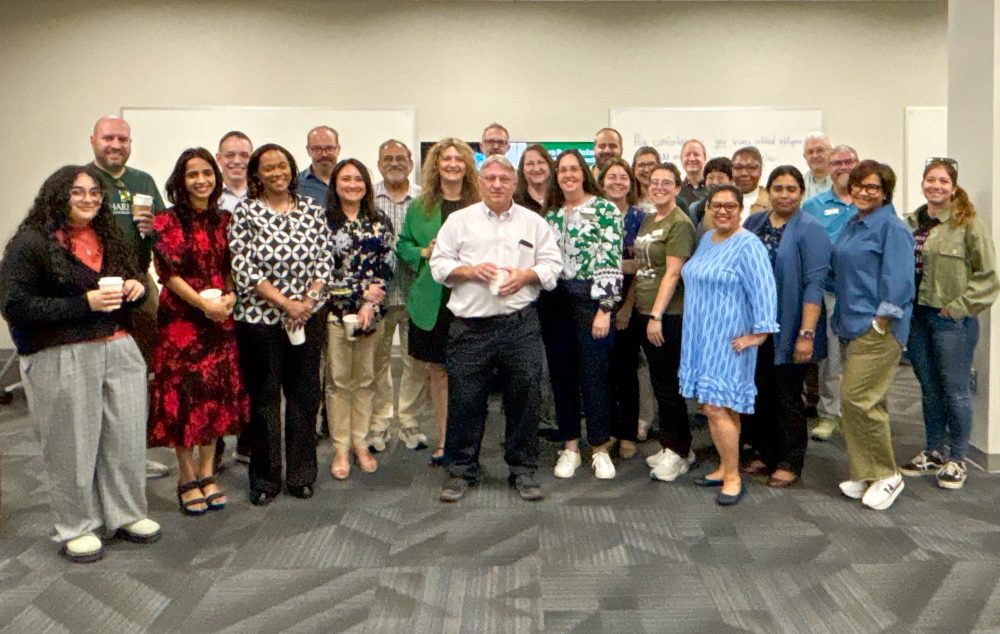
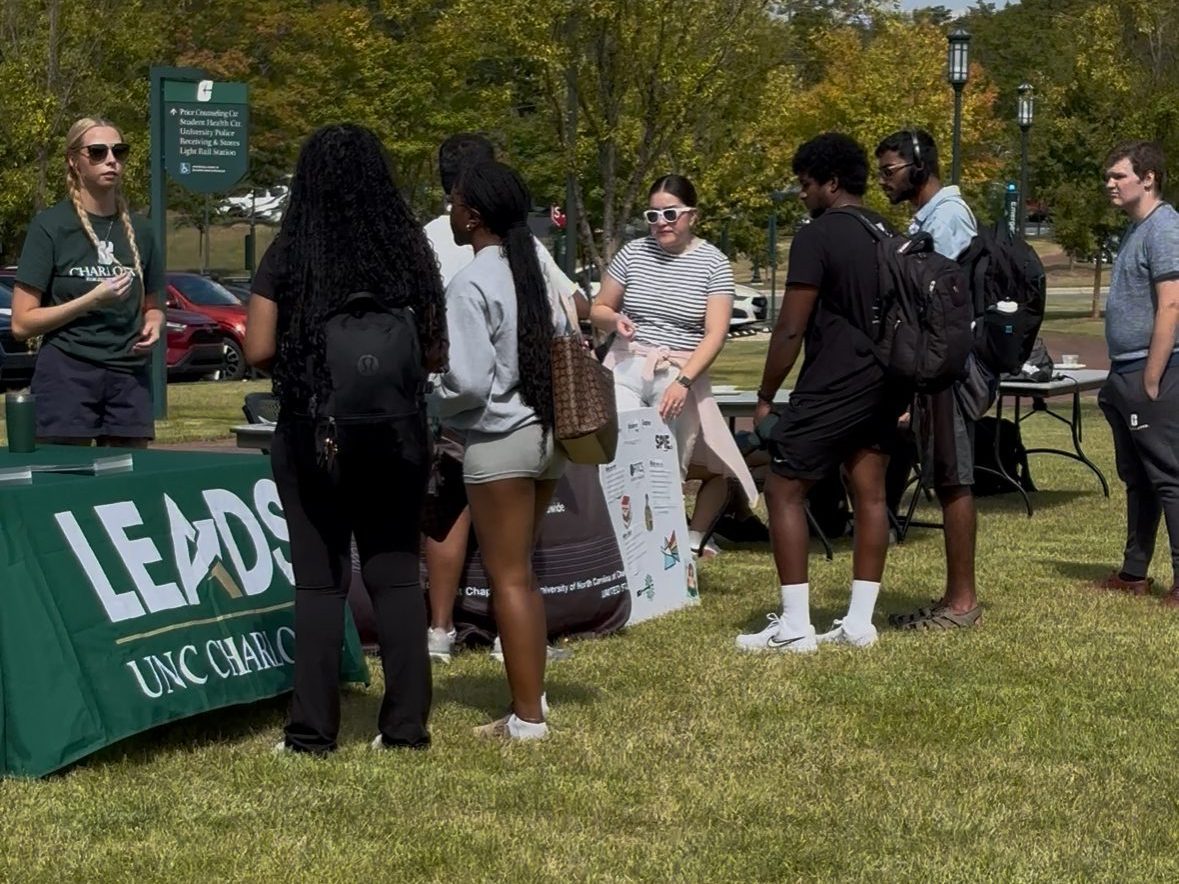
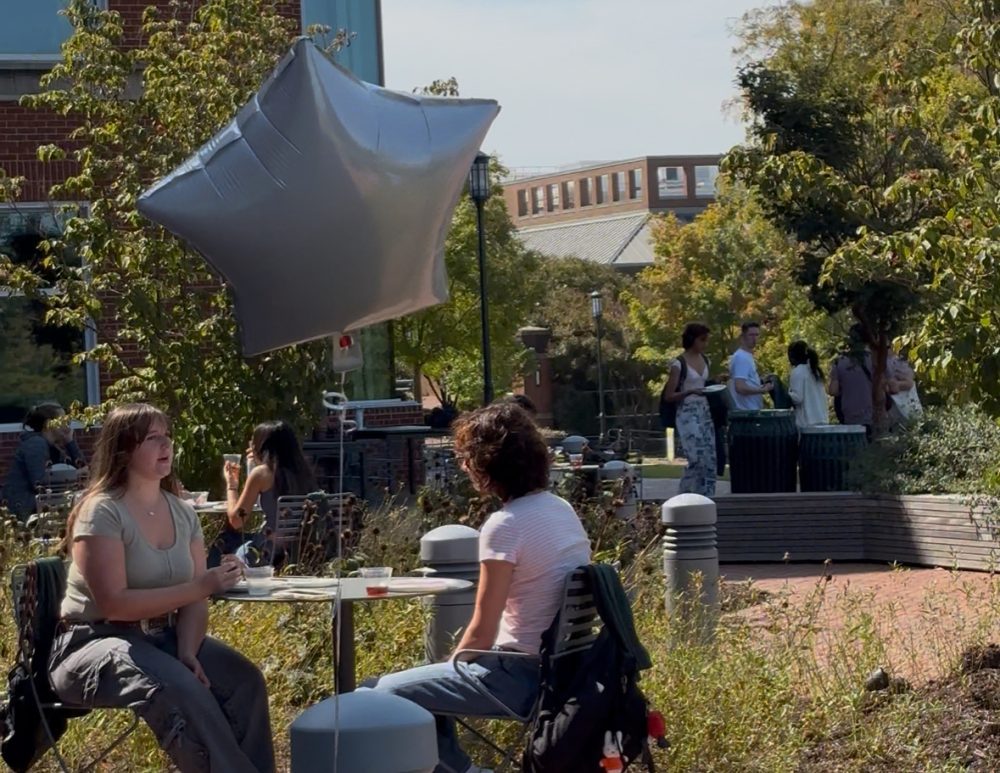
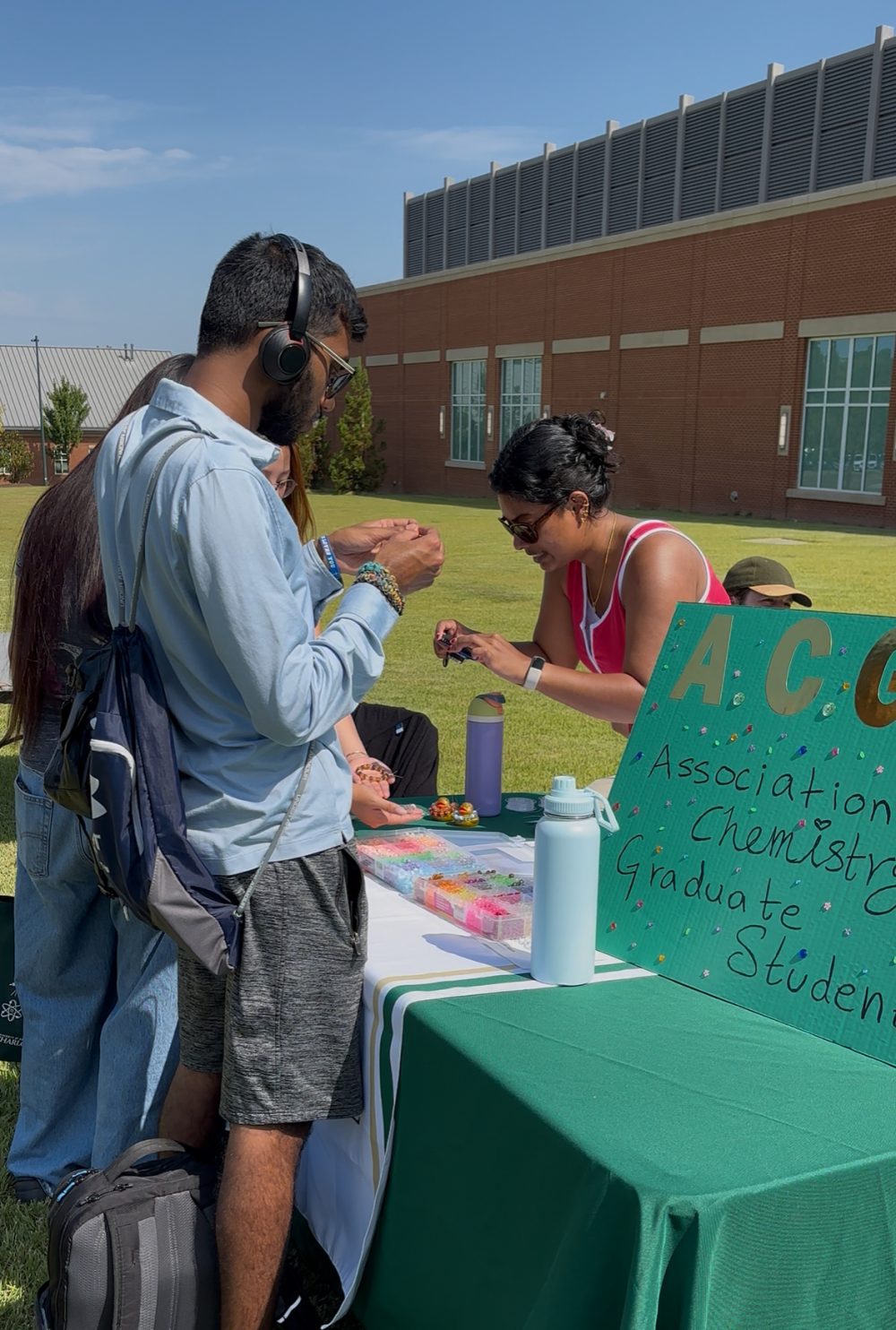
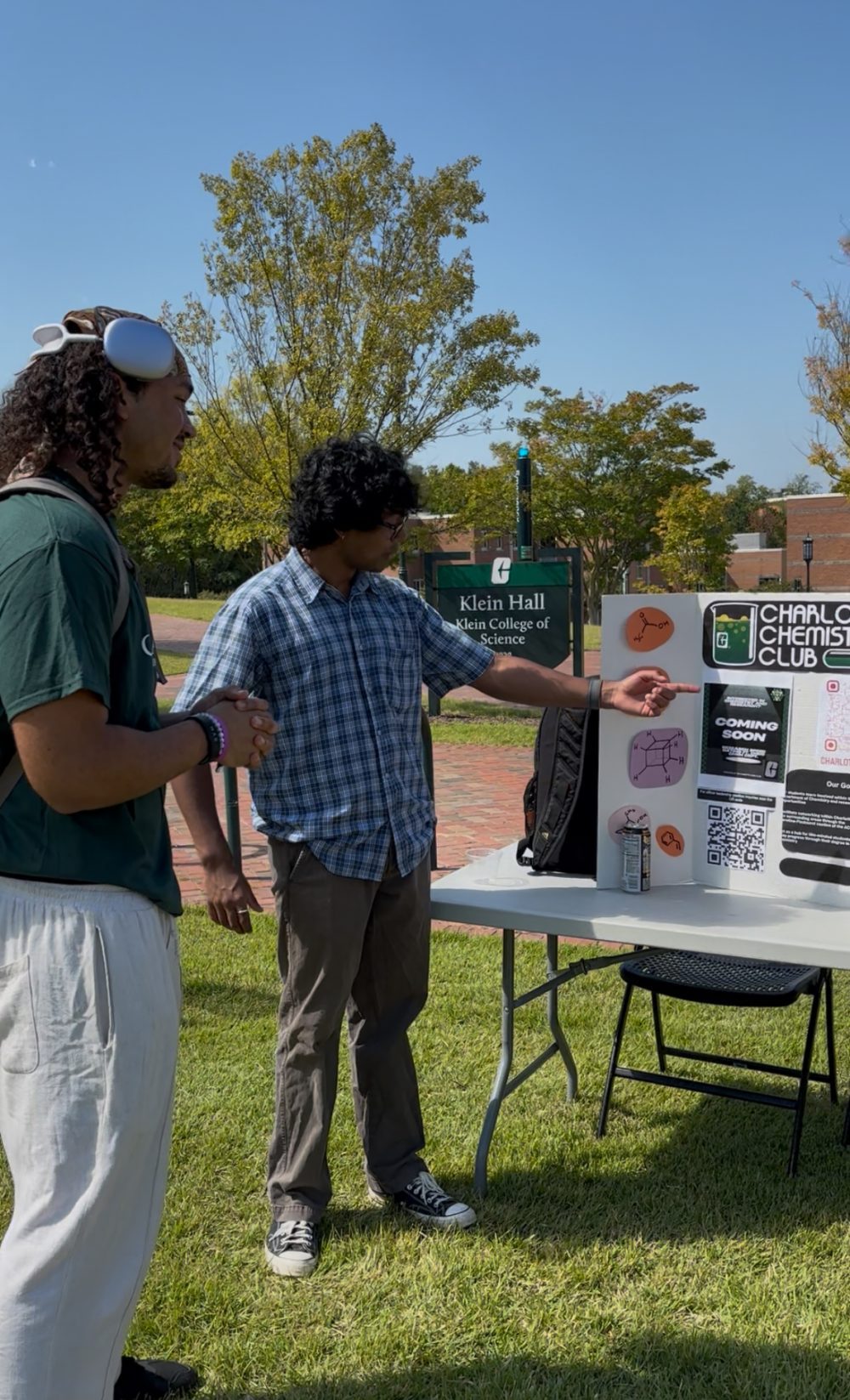
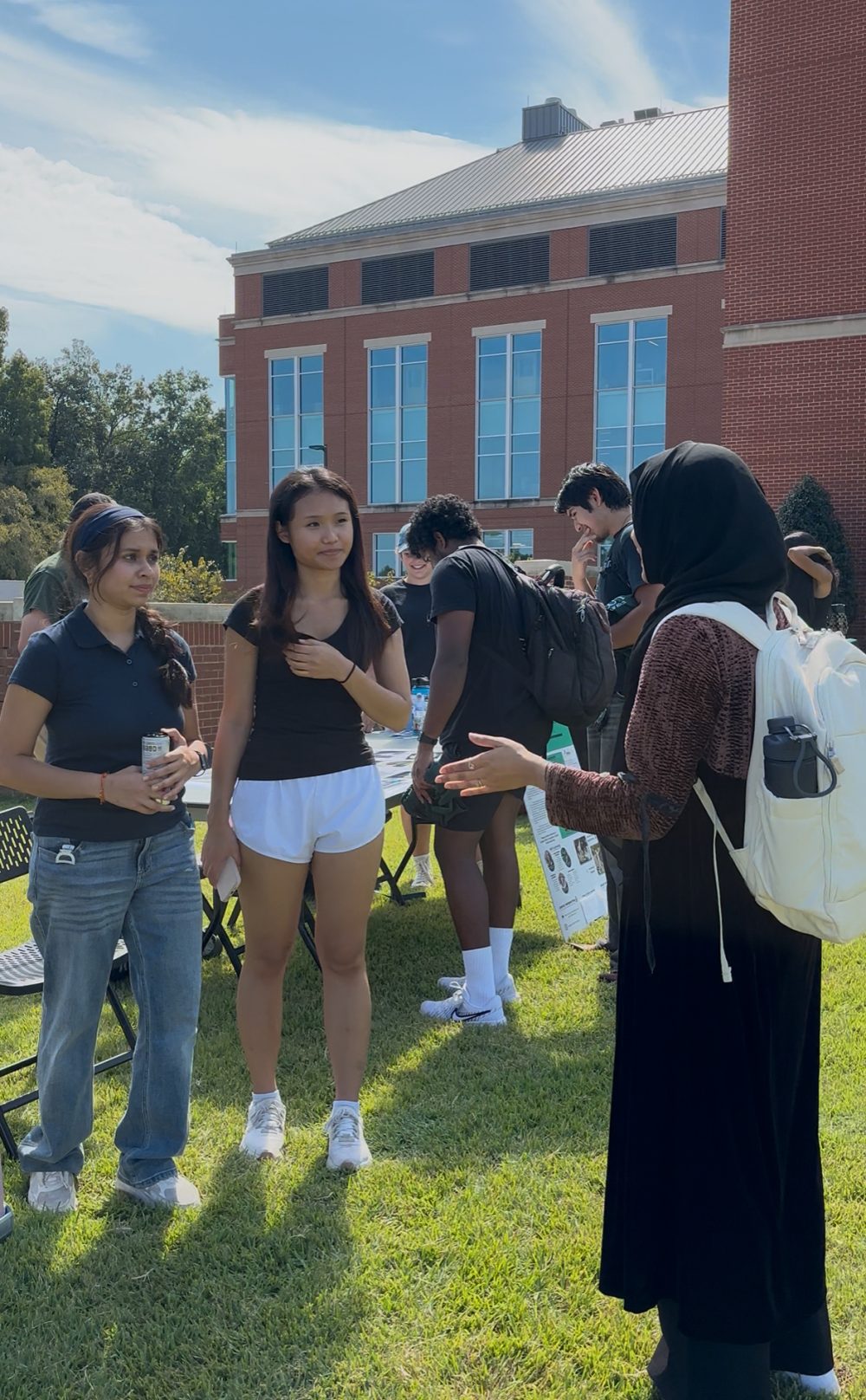
Hundreds of students gathered on the Klein Lawn on Tuesday, Sept. 23 for free pizza, KCOS t-shirts and giveaway items, and to learn more information about the variety of student organizations affiliated with the Klein College.
Students played games on the lawn and networked with KCOS faculty, staff and students.
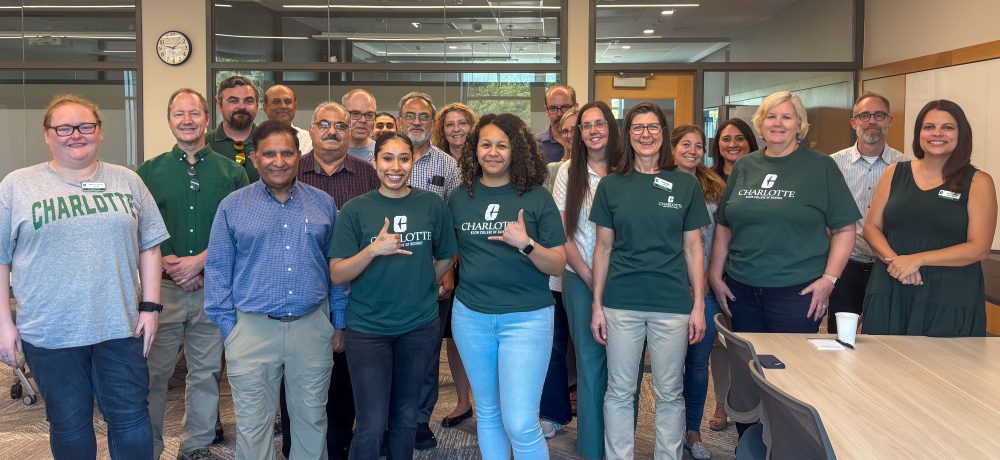
The Dean’s Office hosted a drop-in event on Sept. 24 to celebrate the one-year anniversary of the naming of the Klein College of Science and the dedication of Klein Hall.
The KCOS Dean’s Office provided some light snacks and drinks and faculty and staff reflected on the success of the past year while in their “Wear Green Wednesday” attire.
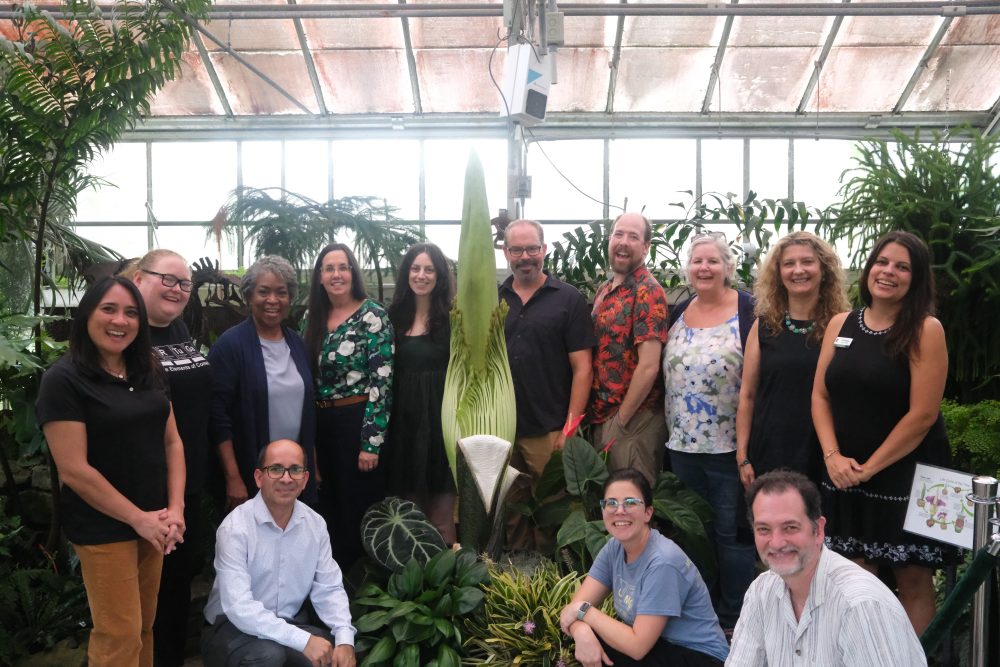
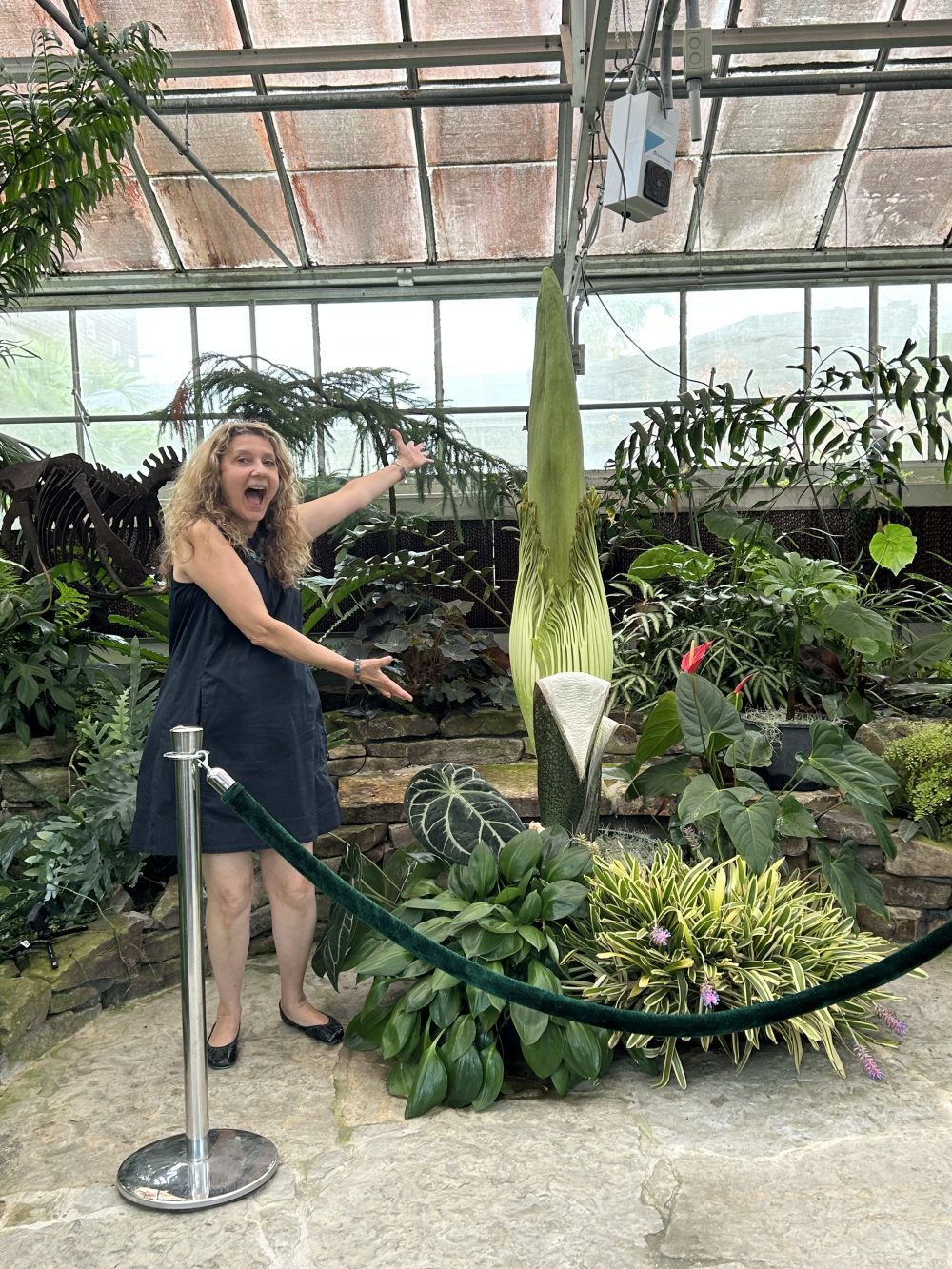
The weather on Sept. 25 shifted a planned tour and stroll through the Botanical Gardens to an afternoon in the McMillan Greenhouse. Attendees explored the wide range of plants housed within the various rooms, including the orchids, carnivorous plants, the tropical room and more.
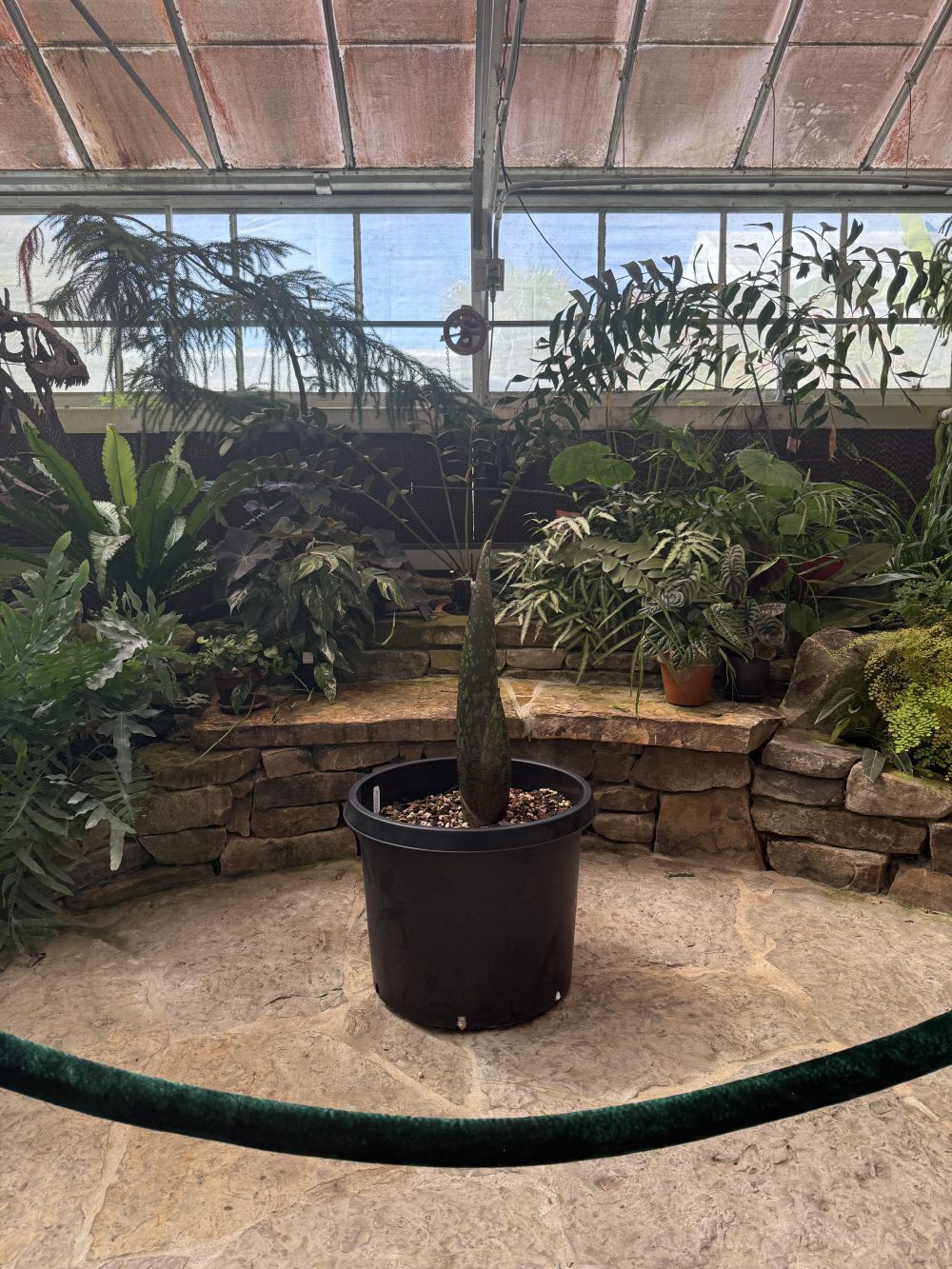
KCOS faculty and staff went to the Dinosaur Room to see Cadavera, a titan arum, often called a corpse flower. This visit was nearly a week before it bloomed, and on this day Cadavera was just over five and a half feet tall, as measured from the top of the soil.
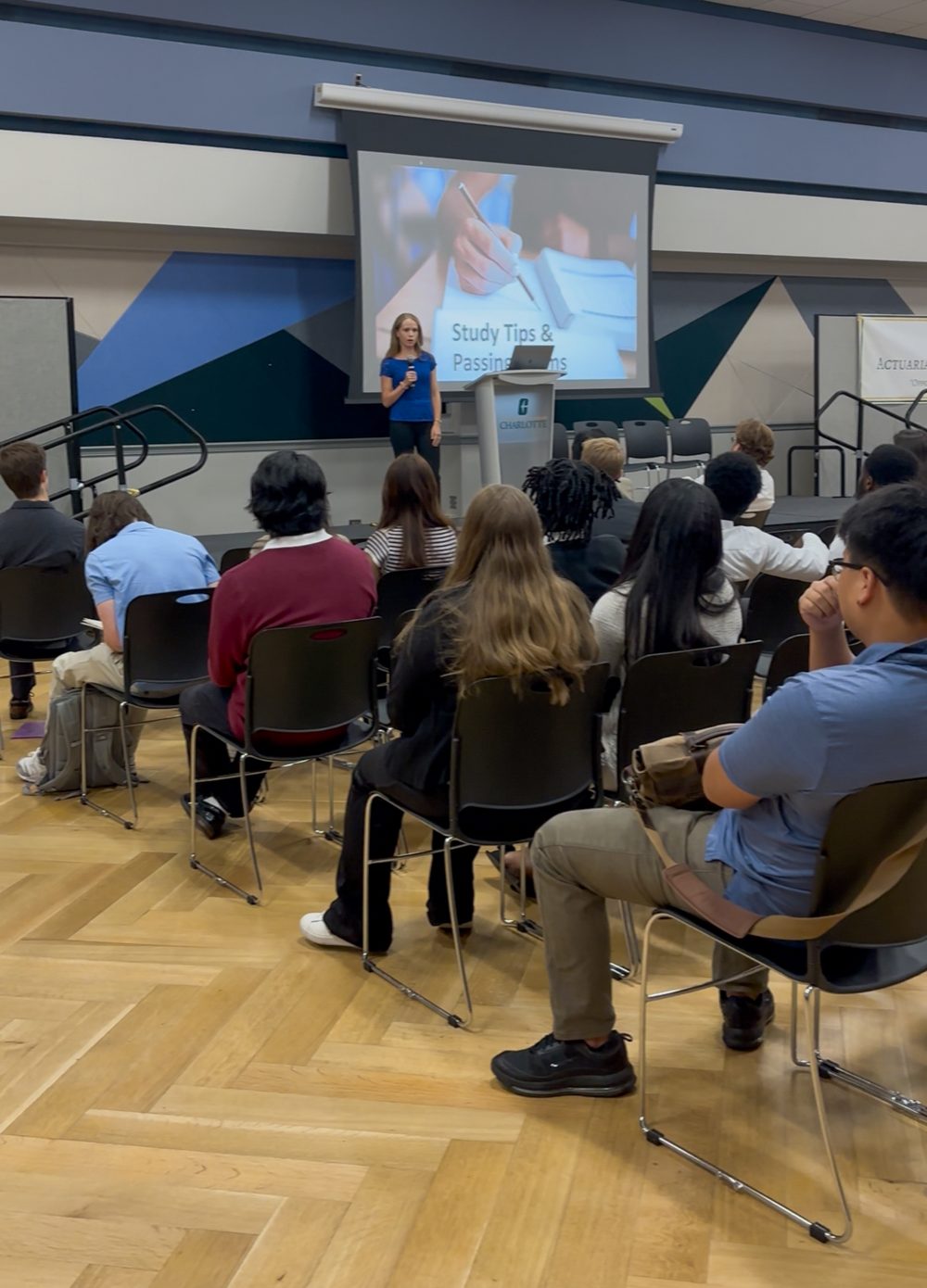
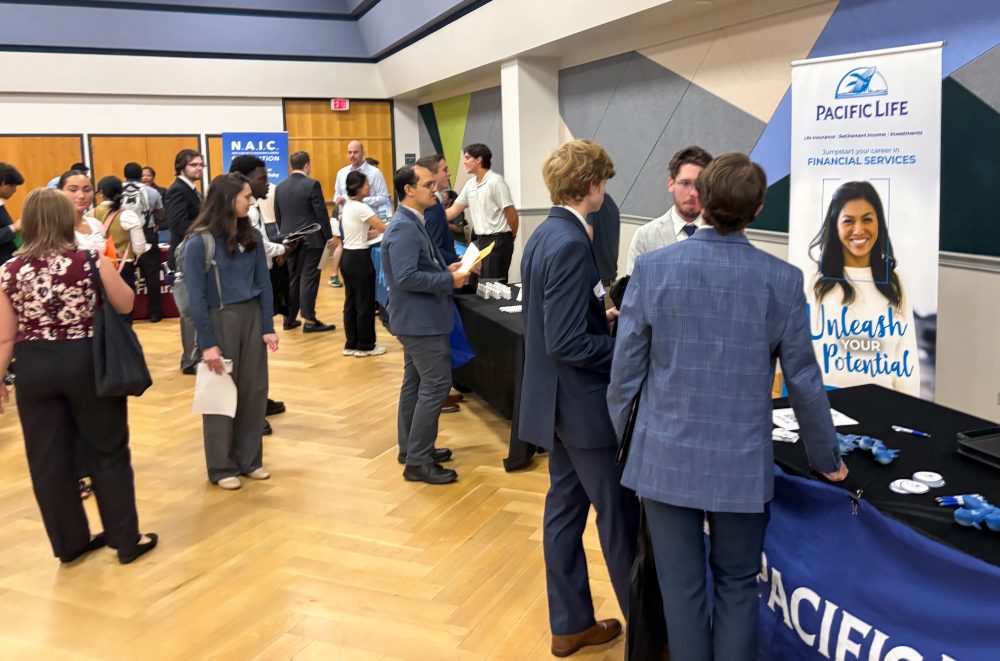
On Sept. 26, the Department of Mathematics and Statistics hosted the annual Actuarial Science Day for students to learn from alumni about the in-demand career opportunities and to connect with industry partners in the field.
Greg Gbur, Ph.D., professor in the Department of Physics and Optical Science, was among the experts interviewed for the BBC’s CrowdScience podcast episode, “Answers to even more questions.”
In this episode of CrowdScience, presenter Caroline Steel called upon experts to help answer bonus questions submitted by listeners. After listening to the episode “Why can’t my dog live as long as me?” a listener asked, “When cats fall, why do they always land on their feet?”
Gbur is the author of the book, “Falling Felines and Fundamental Physics” (Yale University Press, 2019), which explores this exact question. He traces the history of physicists perplexed by cats always landing on their feet, beginning with the first scientific paper in 1700.
“Scientists got this view of angular momentum that if you’re in free fall, and there’s nothing to twist against, then there’s no way you could turn over because that would be a change of angular momentum,” Gbur explained. “So they assumed that cats must be pushing off of something just at the moment they start to fall in order to get themselves starting to rotate.”
This could sometimes explain how cats are landing on their feet, but it’s not the main explanation. Cats can use different parts of their bodies to twist to complete the motion to land on their feet. This increases their ability to land safely, even when falling from large heights such as windows.
Studies have shown that cat injuries increase the higher the height of windows they fall from, up until about the 8th floor. From there, injuries actually begin to decrease dramatically.
“The best hypothesis is they realize they’re in trouble, they tense up and are a little bit freaked out. But then they reach terminal velocity at about the 7th or 8th floor,” said Gbur. “Then they feel their normal weight, they have a good sense of what way is up and down, and they’re able to have a few critical seconds to relax and absorb it.”
Danillo Augusto, Ph.D., associate professor in the Department of Biological Sciences, discussed his lab’s new $3.7 million grant from the National Institutes of Health (NIH) in The Charlotte Post.
The Augusto Lab is working on an immunomics project using new methodology and approaches to study human immune responses and autoimmune disease. The team is using a novel method of long-read sequencing technology, a first of its kind in how it examines complex portions of the human genome, and studying how it reacts with pathogens.
“I think my ultimate goal is to actually identify specific markers that are candid for specific [gene] therapy,” Augusto said. “I’m not a physician, but at least we want to find what could be used for better therapy for this disease. The other thing is being able to identify if there is an environmental factor. We know there is something in the environment that triggered the disease, but we want to know what. Is it a virus? Is it a pathogenic virus or non-pathogenic virus? So, understanding that could also be ways we can help prevention.”
The Klein College of Science invites you to celebrate with us as we mark the one year anniversary of the naming of our College.
KCOS students, faculty and staff are welcomed and encouraged to stop by any or all of these events held through the week.
Join us to meet your friends or make new ones and network with employees and students from KCOS.
9:05 – 9:55 a.m.
Mebane Hall 007 (updated location due to overwhelming interest!)
Join us for the inaugural KCOS Educational Innovation event, hosted by Tonya Bates and Kathy Asala, co-directors of KCOS Educational Innovation.
11:30 a.m. – 2:30 p.m.
Klein Field (grassy area adjacent to Klein Hall and Lot 16)
Free pizza, t-shirts and games. Student clubs and organizations will be be present so you can find opportunities to get involved. Enjoy food and fun with your KCOS family to celebrate our students.
1 – 2:15 p.m.
Klein Hall 115
Celebrate the anniversary of the naming of our college on Klein College Day. Stop in for coffee and networking.
4 – 6 p.m.
The Botanical Gardens are an important part of the Klein College of Science. Join us for a celebration in the McMillan Greenhouse!
(We are eagerly anticipating the bloom of corpse flower Cadavera.)
4:30 – 7 p.m.
UPDATE: As of Oct. 1 at 2:30 p.m., Cadavera is opening. The McMillan Greenhouse will be open extended hours for viewing (and smelling!) until midnight on Oct. 1. Visitor parking after 5 p.m. will be free in East Deck 1 and Lot 5. (Limited ADA parking is available in Lot 16A with a placard).
The UNC Charlotte Botanical Gardens team is awaiting the bloom of a fast-growing titan arum, often called a corpse flower due the pungent smell it emits during a bloom.
“Cadavera,” was recently named through a contest on social media and is projected by experts to bloom in the next three to 12 days. Once Cadavera blooms, it will stay open for a brief time, approximately 12 to 24 hours.
Amorphophallus titanum’s smell is often compared to rotting meat. The scent attracts pollinators such as beetles and flies to the plant. As Cadavera blooms, it will be at peak-stink for approximately 12 hours, with the smelliest time coming in the evening hours.
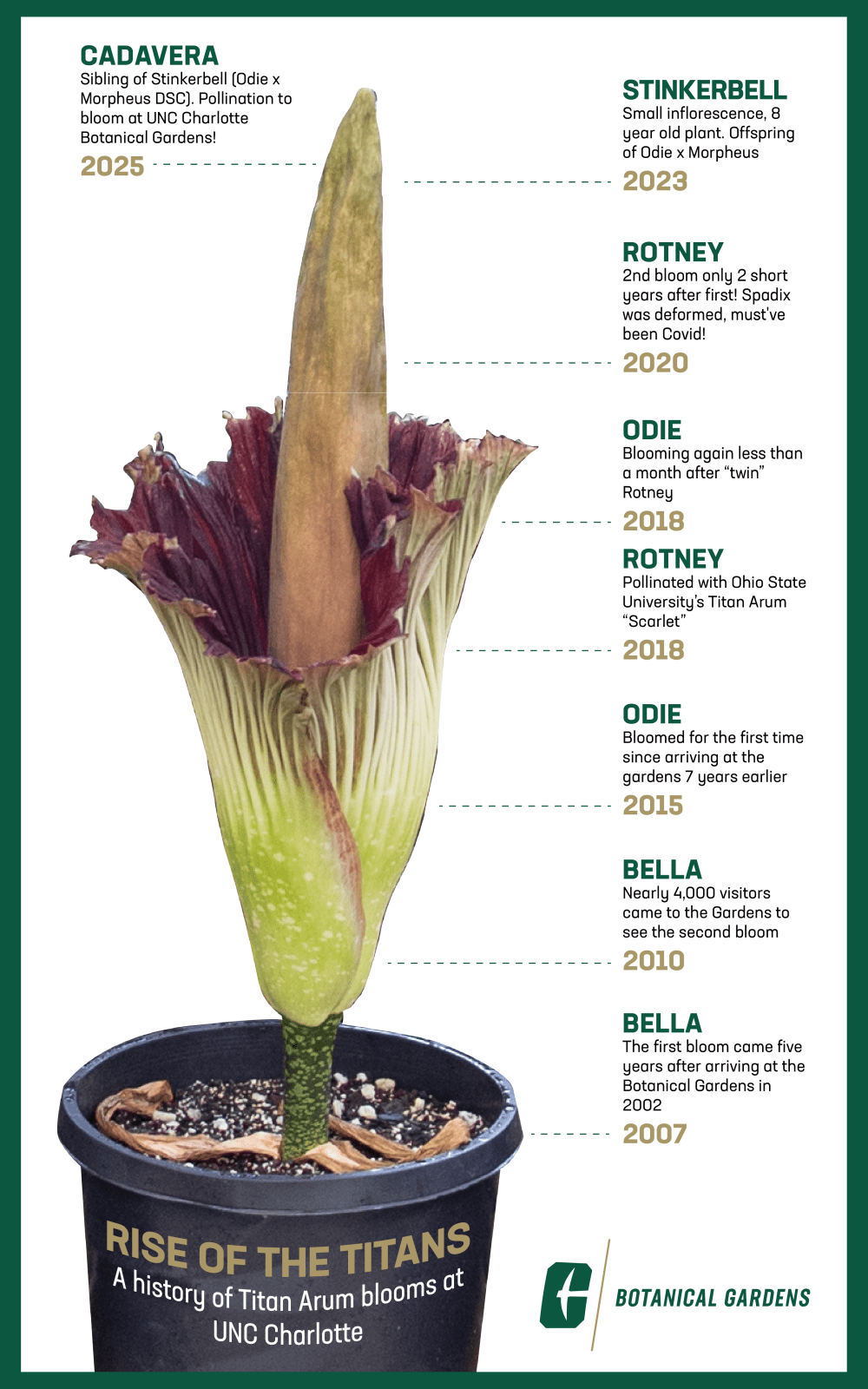
Likened to the watchful waiting of childbirth, the bloom is on its own schedule and has been growing steadily at the rate of at least one inch daily. The tropical plant is native to Indonesia and is the largest unbranched inflorescence in the plant kingdom, with the ability to grow up to eight feet or more.
Cadavera is behind a green velvet rope in the Dinosaur Room of the McMillian Greenhouse, which is open to the public and free to visit. Donations are welcomed.
“It’s very exciting and I love it when we have a bloom. We typically have livestream viewing available, and it’s so exciting to know that we will have people watching from all around the world,” said Tammy Blume, greenhouse manager. “They’re keeping an eye on it just like we are and I love that other people are enjoying it.”
The Botanical Gardens will announce extended visiting hours around the day of the bloom in order to allow the maximum number of visitors to see and smell Cadavera. A corpse flower bloom typically attracts thousands of visitors to the greenhouse. A video livestream is available.
Jeff Gillman, Ph.D., director of the UNC Charlotte Botanical Gardens, explained the importance of keeping the corpse flower in the gardens, despite its lengthy lifecycle and the large amount of space it occupies in the greenhouse. “People love it, and we want everyone to get excited about plants,” said Gillman. “It’s important for botanical gardens to study these plants for conservancy efforts.”
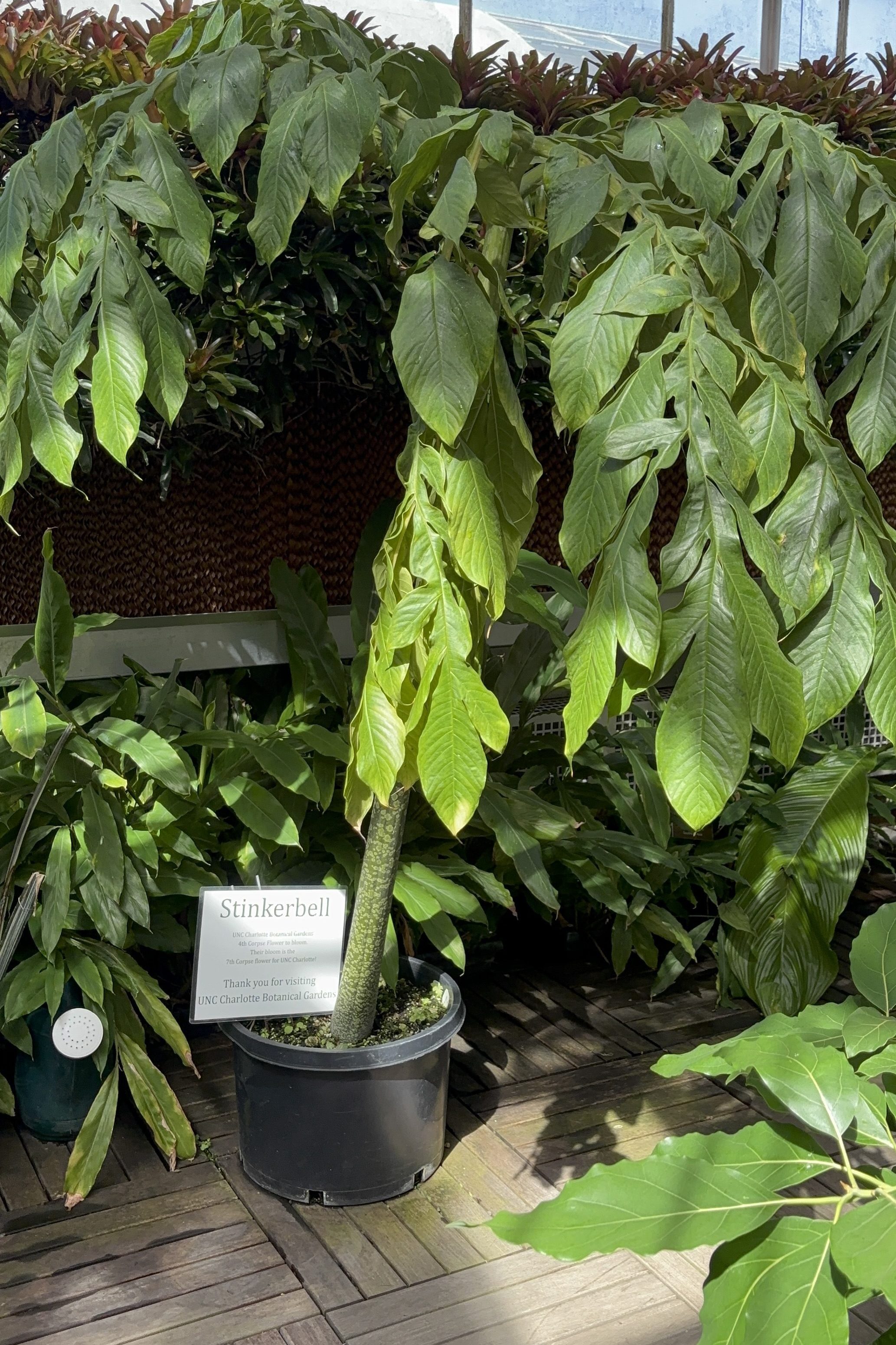
Cadavera is the sibling of “Stinkerbell,” which was the gardens’ last titan bloom in 2023. Now in its leaf phase, Stinkerbell is also available for viewing inside the McMillan Greenhouse.
This is the first bloom for Cadavera, which was pollinated from a seed in 2015 by the Botanical Gardens staff. Cadavera is the offspring of Odie, a previous titan arum in the McMillan Greenhouse, and Morpheous, a corpse flower from the Daniel Stowe Conservancy.
The McMillian Greenhouse on UNC Charlotte’s campus is located at 9026 Craver Rd., Charlotte NC, 28223. The greenhouse is open Monday through Friday, 9 a.m. to 4 p.m. with the closest visitor parking is in East Deck 1. Explore the interactive UNC Charlotte web map.