Dr. Pinku Mukherjee Wins O. Max Gardner Award 2015
Distinguished cancer researcher Pinku Mukherjee was honored with the O. Max Gardner Award – the highest faculty accolade given by the Board of Governors of the University of North Carolina.
The award, established by a provision in the will of Gov. O. Max Gardner, recognizes UNC system faculty members who have “made the greatest contribution to the welfare of the human race.” It is the only award for which all faculty members on the 17 UNC campuses are eligible. The honor, given annually since 1949, carries a $20,000 cash prize.
Mukherjee Honored With Board of Governors’ Highest Faculty Accolade
Distinguished cancer researcher Pinku Mukherjee was honored with the O. Max Gardner Award – the highest faculty accolade given by the Board of Governors of the University of North Carolina. She was presented the honor formally Friday, April 10.
The award, established by a provision in the will of Gov. O. Max Gardner, recognizes UNC system faculty members who have “made the greatest contribution to the welfare of the human race.” It is the only award for which all faculty members on the 17 UNC campuses are eligible. The honor, given annually since 1949, carries a $20,000 cash prize.
As the Irwin Belk Endowed Professor of Cancer Research at UNC Charlotte, Mukherjee is transforming the ways in which cancer is diagnosed and treated. She has designed innovative approaches to more accurately detect breast cancer early and is developing targeted therapy and imaging for pancreatic, ovarian and colon cancers. Her appointment is in the Department of Biological Sciences in the College of Liberal Arts & Sciences.
 To date, Mukherjee has published 65-plus peer-reviewed journal articles that have been cited or referenced more than 11,000 times. Her groundbreaking cancer research has produced one U.S. patent and has resulted in grants from the National Institutes of Health, the U.S. Department of Defense, and the Susan G. Komen Foundation totaling more than $3.5 million as principal investigator and more than $500,000 as co-investigator.
Mukherjee also is an astute entrepreneur. Using an innovative approach to cancer research as a basis, she and her team founded the biotechnology company OncoTab Inc. in 2011 (previously CanDiag Inc.). A UNC Charlotte spinoff, OncoTab Inc. develops and commercializes products that span the lifecycle of cancer, from initial diagnosis through treatment and recurrence monitoring. The company has an exclusive license to a patented technology platform that has successfully demonstrated diagnostic, imaging, and therapeutic capabilities with breast, prostate, and pancreatic cancers. The company already has won several awards including one from NCBiotech as well as the grand prize at the Charlotte Venture Challenge.
Prior to joining UNC Charlotte in 2008, Mukherjee was with the Mayo Clinic. She received her bachelor’s degree in microbiology from Bombay University, India, and her master’s and doctoral degrees from the University of London.
Behnam Pourdeyhimi, the Klopman Distinguished Professor of Textile Materials at North Carolina State University, also was named an O. Max Gardner Award recipient for 2015.
Traditionally only one winner of the award is named per year, but committee members were equally impressed with the work of Mukherjee and Pourdeyhimi, said Gardner Award Committee Chair Ann Maxwell. In addition to being world-class scientists and leaders in their fields, she said, the two are “outstanding teachers, unique mentors and tireless ambassadors for our state and our universities.”
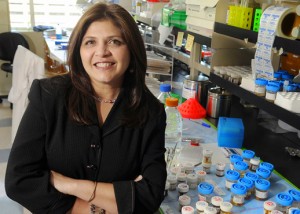
Pictured: Mukherjee in her lab with members of her team.
UNC Charlotte Hosts Science, Technology Events
The 2015 North Carolina Science Festival, a statewide celebration of science and technology, is again offering cool things for the public to experience from April 10-26. UNC Charlotte is ramping up its participation as part of the festival’s seasonal offerings. In addition to its traditional Science and Technology Expo (now in its fourth year), the University will offer a science activity series, science and society panel series, two award-winning science documentary films and a star party.
The always-popular Science and Technology Expo will remain the University’s grand finale, closing out the festival. It will be from noon to 4 p.m., Sunday, April 26, with activities including robotics, rocketry, virtual people, live animals, lab experiments, explosive chemistry, exotic plants, fire engines, race cars, boats and drones. The event is for the science-curious of all ages, featuring 100-plus hands-on activities and presentations in chemistry, physics, geology, computer science, engineering and biology developed by University personnel and a host of industry and community organizations.
REGISTRATION CLOSED: The UNC Charlotte Observatory’s night of expertly-guided star-gazing, during its second annual N.C. Science Festival Star Party at 8 p.m., Friday, April 24 is sold-out.
As the festival opens on Friday, April 10, the UNC Charlotte College of Arts + Architecture and UNC Charlotte’s Urban Institute invite the public to the Projective Eye Gallery, located in UNC Charlotte Center City, to explore an environmental issue going on in their own neighborhoods and backyards as the gallery’s ongoing “Keeping Watch” initiative presents “City of Creeks.” Works by artists Lauren Rosenthal, Stacy Levy, Marek Ranis, and Nancy Pierce explore Charlotte waterways in diverse media and from a range of perspectives – geographic, scientific, aesthetic and spiritual. A host of College of Liberal Arts & Sciences students, faculty and alumni also have provided research for the effort. The exhibition runs through June 17.
On Saturday, April 11, UNC Charlotte’s Graduate School will host the University’s annual Graduate Research Symposium: explore the world of University research, as seen through the work of graduate researchers – scholars and scientists at the beginning of their professional careers in expanding human  understanding. The day-long symposium (Atkins Library, 9 a.m. to 4 p.m.) features poster sessions where the researcher explains the work he or she has conducted, as well as a program of research presentations.
On Friday, April 17, the College of Computing and Informatics will present “Inside the Design Studio,” an interactive design studio tour from 8 to 11 a.m., in Woodward Hall, Room 308. Touring one of the University’s most innovative learning and research labs, visitors will learn about the innovative ideas generated by students designing new interactive systems for the kitchen. Each semester, the Interaction Design Studio develops and integrates novel technologies in gesture, speech and tangible interaction to design new ways of interacting with the environment. This semester, the studio is working with the design innovation manager at Electrolux to focus on a better collaboration between people and appliances for interactive food preparation, intelligent food storage and minimizing food wastage. Visitors will be invited to explore the lab and critique student efforts. Advance registration is required.
With a nod to the N.C. Science Festival’s 2015 theme of “science and music,” UNC Charlotte is capping off its list of interactive events with a free concert, “Tape, Loop, Delay: Science, Technology and Contemporary Percussion Music.” In this event, percussionist Scott Christian will explore the science of sound and the role of new technologies in contemporary concert music, with a performance-demonstration that features music for percussion and live and recorded electronics. The concert, which is free and open to the public, is scheduled for 12:30 p.m., Friday, April 24 in PORTAL Building, Room 102.
Continuing with the goal of making festival offerings engaging, event planners have modified the University’s traditional faculty lecture series into “Science and Society Panel Discussions,” featuring talks on controversial (and sometimes confusing) science and technology issues, led by noted researchers in the field. All events in the series are free and open to the public.
The first event in this series is at 7 p.m., Monday, April 13, in EPIC Building, Room G256, and is entitled “Humans and Technology: Conflict or Convergence? UNC Charlotte and the Watson Story.” Following the example of IBM’s “AI” Watson, the p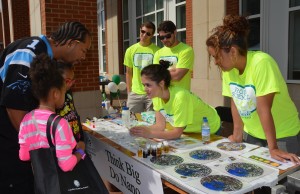 anel will explore data science possibilities and potential problems to help the audience understand the promises and challenges of a field of research that is literally working to mold the technological future of humanity. The panel will feature UNC Charlotte data analytics researchers Mirsad Hadzikadic, Wlodek Zadrozny (a researcher in the Watson Project) and Diane Fodell.
“Controversies and Concerns: Agricultural Biotechnology and GMOs” is a panel discussion on the publicly contentious (and often poorly understood) issue of genetically modified organisms and their use in food, medicine and in the environment. This event will be led by two prominent biotechnology researchers, UNC Charlotte biologists Kenneth Bost and Kenneth Piller. They will lead a conversation about GMOs current use in medicine and agriculture, their future potential and public fears. The panel is scheduled for 7 p.m., Wednesday, April 15, in the Bioinformatics Building, Room 105.
Concluding the series, in a discussion that is sure to be of interest to teachers, administrators, coaches and every parent of a school athlete, will be “Controversy and Concerns: Concussions in Sports.” This panel-led presentation and discussion will examine the risks of concussion injuries in sports, the science of brain trauma and the social issues involved. The expert panel features College of Health and Human Services researchers Erik Wikstrom, Tricia Turner and Bret Wood. The event is scheduled for 7 p.m., Tuesday, April 21, in the Bioinformatics Building, Room 105.
The University’s Science Film Series will focus on award-winning documentaries about science in the news.
The two-film mini-festival opens with a screening of “Shored Up” at 7 p.m., Monday, April 20, in the Student Union Movie Theater. The film is a documentary about climate change and sea level rise – an issue of some concern in North Carolina. According to the producers, “’Shored Up’ is a documentary that asks tough questions about our coastal communities and the relationship to the land. What will a rising sea do to our homes, our businesses, and the survival of our communities? Can we afford to pile enough sand on our shores to keep the ocean at bay? In Long Beach Island, New Jersey and the Outer Banks of North Carolina, surfers, politicians, scientists and residents are racing to answer these questions.” A panel discussion featuring environmental science and earth science researchers Scott Hippensteel, UNC Charlotte; Alex Glass, Duke University; and Andrew Coburn, Program for the Study of Developed Shorelines, Western Carolina University, will follow.
The film series concludes with a documentary about the biggest news in physics for years: “Particle Fever” at 7 p.m., Wednesday, April 22, in the Student Union Movie Theater. A documentary about the hunt for the Higgs Boson, “Particle Fever” is both about science at its geekiest and most romantic.
All events are sponsored by UNC Charlotte in association with the N.C. Science Festival. University sponsors include UNC Charlotte Research and Economic Development. Charlotte-Mecklenburg Schools is a community partner, and WCNC TV is the media partner. Support has been provided by the University of North Carolina General Administration through a grant administered by the N.C. Science Festival.
Words: Jim Hathaway
Images from 2014 events: Lynn Roberson
Little Sugar Creek image: Nancy Pierce
Levine Scholar, Biology Major Named Newman Civic Fellow
Junior biology major Sarah Whitmire has been named a Campus Compact Newman Civic Fellow, one of 201 students honored with this national award for investing in their communities through service, research and advocacy.
A Levine Scholar, Whitmire is minoring in music and public health sciences. She is pursuing her medical education, engaging in health research and volunteering in related organizations, all to prepare her serve vulnerable populations in ways that improve the quality of their lives.
“While the reasons for volunteering might be different from person to person, I’ve always felt a strong drive to use my skills to improve the lives of those with the fewest resources,” she said. “Volunteering has solidified my reasons for choosing this path, which will provide a means for me to make a lasting impact in any community.” Whitmire’s ultimate plan is to become a physician.
She has conducted research on campus and in the community, including at Carolinas Healthcare System. She began volunteering three years ago with the non-profit clinic affiliated with the Salvation Army Homeless Shelter, which serves women and children in the Charlotte-Mecklenburg area. The clinic promotes self-sufficiency by providing free healthcare.
“In addition to working directly with the residents, I’ve participated and initiated multiple health-related projects at the shelter to promote health, to provide education, and to encourage preventative measures,” she said. “One of my most significant accomplishments was creating a research project with the goal of providing a self-sustainable way for this high-risk population to control their blood pressure. Throughout the 500 plus hours of working there, I’ve developed leadership and civic engagement skills that will be applicable for the rest of my life, in addition to developing many unique friendships.”
Whitmore has always been driven to understand the intersection between the patient, the protocol, and the system, UNC Charlotte Chancellor Philip L. Dubois said. “The two-year relationship she has developed with homeless women in her community-based research project in Charlotte has equipped her to make a difference in the lives of the people for whom she cares, and to witness firsthand the challenges people face in accessing health education and services,” Dubois said. “Ms. Whitmire’s understanding of the patient at a human level positions her to take this integrated perspective into her graduate student and professional life, as she continues to explore the multiple facets of health interventions and service delivery.”
Named in honor of Frank Newman, one of the founders of Campus Compact, the Newman Civic Fellow award is sponsored by the KPMG Foundation. Newman Civic Fellows share as a collaborative group their ideas and other information to further their work.
Campus Compact is a national coalition of more than 1,100 college and university presidents who are committed to fulfilling the public purpose of higher education. As the only national higher education association dedicated solely to campus-based civic engagement, Campus Compact promotes public and community service that develops students’ citizenship skills, helps campuses forge effective community partnerships, and provides resources and training for faculty seeking to integrate civic and community-based learning into the curriculum.
Unraveling Cystic Fibrosis Puzzle, Researchers Draw From the Personal
In a recent article in the Journal of Clinical Microbiology, lead author Joshua Stokell – a post-doctoral researcher in biology – and a team from the University of North Carolina at Charlotte describe an unusual, single-patient study and an important finding that may point to an immediate cause of CF exacerbations.
The study found sudden growth of a specific bacterium, Burkholderia multivorans, preceded periods of acute illness. While B. multivorans has been known as a common pathogen in the lungs of CF patients, it is far less abundant than another pathogen, Pseudomonas aeruginosa, whose populations did not show significant changes prior to the life-threatening episodes.
Stokell’s co-authors on the paper are UNC Charlotte biologist Todd Steck and UNC Charlotte bioinformaticians Anthony Fodor, Malcolm Zapata, Raad Gharaibeh and Timothy Hamp.
Stokell and his colleagues were able to implicate B. multivorans thanks to a detailed genomic and metagenomic analysis of a unique, extensive collection of lung sputum samples taken twice-weekly over a three-year period.
“This study represents the most intensive sampling of a single CF patient to date,” the article notes. “Our study was based upon the assumption that a detectable shift in the bacterial community precedes a pulmonary exacerbation. Testing our assumption required a longitudinal study to reveal the relationship between disease progression, occurrence of a pulmonary exacerbation and various components of a bacterial community, such as the change in diversity, richness, or the abundance of specific members of the microbiota.”
“Most studies that you look at collect one pre-exacerbation sample, one during exacerbation and one during periods of stability,” Stokell noted. “With that kind of study, it’s hard to get an idea of how changes are occurring because those are more like cross-sectional analyses. Our focus was to look at how these changes are occurring generally, and in order to get some sort of baseline information we have to check changes frequently over time.”
Stokell Draws From Personal Insights
In discussing the work, Stokell is somewhat shy about mentioning that the unusually extensive sampling and analysis was only possible because of the willing contribution of an unusually cooperative patient: himself.
Because Stokell was both the researcher and the study subject, the team gained unparalleled access to the subject’s life history and medical records, providing critical context. “We have all kinds of patient background information,” Stokell noted, “so we can associate the changes in bacteria with the occurrence of an exacerbation and also with when antibiotics are administered.”
Chronic diseases like CF are often daunting puzzles that require an extraordinary amount of research effort to understand — the long-term interaction between the human body’s dynamic systems and the disease can be extremely complex, even when there’s a relatively simple initiating cause, such as a genetic defect. Consequently, researchers studying such diseases need an extra amount of commitment and passion to struggle with the intricate complexities involved.
In Stokell’s case, the commitment and passion came naturally because the disease is personal. Steck, whose lab Stokell now works in, was Stokell’s mentor in college and in graduate school. Steck observed that the experience of having cystic fibrosis played an important role in developing Stokell’s initial general interest in biology and in leading him to the line of research that he is now pursuing.
Stokell Begins Research As UNC Charlotte Student
As a master’s student at UNC Charlotte, Stokell took a class in bioinformatics from Anthony Fodor, where students had to come up with projects involving metagenomic analysis of bacterial populations. Stokell recognized that this might be an important research area relevant to his own disease, so he chose lung bacteria in cystic fibrosis, with himself as a research subject. Once engaged, he found that the interaction between CF and the human microbiome is difficult to unravel, but his personal connection to the disease kept him motivated.
The current study still does not answer all the questions raised by Stokell’s class project, though he has now done both metagenomic analysis (which allows cataloging the full range of bacterial populations by finding variants of the 16S rRNA gene) and whole-genome sequencing (on a small group of bacterial varieties) on three year’s worth of steady sampling.
In addition to identifying Burkholderia as a key pathogen, the team found that richness and diversity of bacterial communities decreased over time, while the overall abundance of bacteria increased, perhaps due to ongoing antibiotic treatment and the steady progress of the disease. However, those changes are not associated with the disease’s damaging flare-ups.
“There were no changes in the metagenomic sequencing and the relative abundance of bacterial communities that were specifically associated with the occurrence of exacerbation,” Stokell said.
“Nothing that occurred within two weeks prior to the exacerbation indicated this is what is causing the individual to become ill,” he said. “We did see treatment effects for richness and diversity — we saw those decreases during antibiotic treatment. And over a three-year period, bacteria continued to increase in abundance. But when we looked at specific pathogens, Burkholderia was the one that showed an increase in abundance prior to exacerbation. So we can speculate that that was the initiator of the exacerbation.”
The next step, the researchers say, is to do further study on a larger group of patients. Stokell and Steck have received grants from NIH and the Cystic Fibrosis Foundation that will allow them to do that. If findings in a larger sample support the pattern Stokell has found in himself, treatment of Burkholderia specifically may be an important target in managing the damaging effects of the disease.
Challenges Lie Ahead for Stokell
Though significant research problems undoubtedly lie ahead, the real challenge for Stokell perhaps is the personal one he faces in the progress of his own disease. Though he has struggled all his life to maintain his health, at age 35 Stokell is now in late stage lung disease and will need a lung transplant sometime in the near future.
“I’m being considered for a double-lung transplant at Duke University Medical Center,” Stokell said, explaining that this entails not just a complex operation but also three months of pre-operation preparation and six months of recovery on-site, not to mention expensive medications he will be required to take for the rest of his life. The difficulty of his situation is not limited to surviving until the transplant and enduring the medical realities.
“Undergoing a transplant is not only difficult because of the surgery; the associated monetary costs are quite high,” he said. “Typically, individuals in my situation are required to raise money prior to the surgery.”
To raise the funds for transplant-related expenses, Stokell will work with the Children’s Organ Transplant Association (COTA), a 501(c)3 not-for-profit organization that receives donations to assist with transplant-related expenses. The goal for the COTA campaign in honor of Stokell is $75,000.
With the cost of a transplant often exceeding $500,000, many transplant families are unable to shoulder the financial burden of such a procedure. The organization’s priority is to ensure that a transplant does not financially devastate a family. One hundred percent of all funds raised are used for patients’ transplant-related expenses.
Anyone interested in making secure credit card donation can do so online through a website COTA has established: www.COTAforJoshuaS.com. Donations also may be mailed to the Children’s Organ Transplant Association, 2501 West COTA Drive, Bloomington, Indiana, 47403. Checks or money orders should be made payable to COTA, with “In Honor of Joshua S” written on the memo line of the check. Fundraising proceeds will benefit COTA in honor of Stokell to assist with transplant-related expenses.
“My hope is that I can spread the word about my need for a transplant and the financial needs I have associated with it,” Stokell said. “My transplant pulmonologist is guessing that I won’t need a transplant for six months. However, because of the unpredictable nature of this disease at such a late-stage, that time could be quickly reduced or hopefully, extended.”
Team Creates Solar-Responsive Design Material for National Contest
A team of six UNC Charlotte students, led by chemistry faculty member Michael Walter and architecture faculty member Mona Azarbayjani, has created a solar-responsive design material that transforms windows into environmentally-responsive surfaces that can simultaneously provide shade and convert sunlight into usable electric energy.
They received honorable mention accolades with their design in the People, Prosperity, and Planet Student Design Competition for Sustainability held by the U.S. Environmental Protection Agency in Alexandria, Virginia, April 10-13.
In the fall of 2014, the UNC Charlotte team received a $15,000 grant to develop a project to address an environmental challenge found in the developed or developing world. They will present their proposal to compete for a P3 Award for grant funding up to $75,000 to further the project design, implement it in the field, and move it to the marketplace. A mixture of undergraduate and graduate students, the UNC Charlotte team includes two students from the Department of Chemistry and one student from the Department of Physics and Optical Science in the College of Liberal Arts & Sciences and three students from the School of Architecture in the College of Arts + Architecture.
With their project design, the unique nature of the material reacts to the intensity of the sunlight striking the window. Excess solar energy is then converted to electricity instead of heating the interior of a building. This material can be incorporated as a very thin layer on a glass surface, which can be used in different parts of the building’s exterior, such as skylights, façades, windows, or curtain walls.
“The purpose of this project is to lower the energy consumption of the building and to have it become more sustainable,” Walter said. “The buildings in the United States are one of the biggest areas where energy is wasted. They contribute so much to the increase in CO2. Think about the energy needed for lighting, heating and cooling.”
 The project could revolutionize the use of glass in homes, buildings, and even automobiles. Here’s how it works: Micro-sized, wire-shaped solar cells are embedded in a thin film of clear, heat responsive plastic material. The film can be put on the surface of an existing window, or between panes when windows are manufactured. The plastic absorbs the heat that the sunlight produces and reacts by expanding, which causes the nearly invisible wires to bend, and in turn causes the window to become tinted. This allows the solar cells to absorb more visible light, increasing the efficiency of the window as a solar panel, which can help feed the building’s energy needs. Once the window cools, the plastic and the wires will return to their original positions
In October, the UNC Charlotte team received a commendation from Governor Pat McCrory. “I would like to congratulate UNC Charlotte on being awarded this grant,” McCrory said. “Innovation and cutting edge projects like these are the best of what North Carolina is about and will undoubtedly impact our environment and future in a positive way.”
In addition to the initial grant from the EPA, the project has been funded by university grants from the Energy Production and Infrastructure Center (EPIC), the Department of Chemistry, and the School of Architecture.
“I feel very lucky to be a part of this effort and in energy research,” said undergraduate physics major Jennifer Kassel, who is part of the Walter Research Group. “Knowing that my time and effort is contributing to the field of sustainability, something I am proud to be a part of, is very fulfilling. I love the projects I get to work on and getting to explain them to anybody who will listen. Also, getting to work with a professor who is very passionate about his work and other students who feel the same makes for a great environment.”
This is not the first time an interdisciplinary team of UNC Charlotte students has conducted research and design in solar energy and sustainability practices for a national competition. Led by Azarbayjani, a group of more than 40 students competed in the 2013 Solar Decathlon, sponsored by the US Department of Energy.
“One of the core objectives of the Solar Decathlon was to turn ideas into research,” Azarbayjani said. “Throughout the competition, we wanted to embrace all aspects of sustainability and the built environment. That’s where the idea of a responsive building envelop was born. This idea then served as a vehicle for our exploration in the P3 competition.”
Since 2004, the P3 Program has provided funding to student teams in all 50 states and Puerto Rico, committing over $10 million to cutting-edge, sustainable projects designed by university students. Nationally the grants were awarded to 42 teams of college and university students this year. Other North Carolina schools receiving the grant include Appalachian State University and North Carolina A&T State University.
Image: Students presenting at competition
Mathematical Finance Program Ranked in Top 25 Nationally
UNC Charlotte’s Master of Science in Mathematical Finance program in late 2014 was ranked No. 25 in the country by Financial Engineer.
This is the first national ranking for the Mathematical Finance program, which currently enrolls more than 100 students. The 2015 rankings are calculated based on a series of factors, including average GRE scores, starting salaries and bonuses, undergraduate GPA, acceptance rates and the number of employed graduates.
UNC Charlotte’s Mathematical Finance program is a joint program of the Department of Mathematics and Statistics in the College of Liberal Arts & Sciences and the Departments of Finance and Economics in the Belk College of Business. The city of Charlotte is the second-largest financial center in the United States.
The Master of Science in Mathematical Finance program at UNC Charlotte is designed to prepare students to pursue careers in finance. Increasingly firms of all types, but especially financial institutions, investment banks, commercial banks, insurance companies, investment funds, commodity firms, regulatory agencies and rating agencies, among many others, rely upon highly sophisticated finance models and tools to identify, measure, manage and hedge risk. The advent of these models has triggered the emergence of a new discipline, Mathematical Finance. This new discipline, sometimes also referred to as “financial engineering,” “computational finance,” or “quantitative finance,” requires professionals with extensive skills in both finance and mathematics.
The Mathematical Finance program draws upon faculty from three departments within UNC Charlotte: the Department of Finance from the Belk College of Business, the Department of Economics from the Belk College of Business, and the Department of Mathematics and Statistics from the College of Liberal Arts & Sciences. In addition, faculty members from the College of Computing and Informatics and the Department of Business Information Systems & Operations Management in the Belk College of Business are involved in teaching several concentration courses. The program also invites highly experienced executives from the Charlotte-area to teach several concentration courses.
Financial Engineer publishes rankings for financial engineering, financial mathematics, quantitative finance, computational finance and mathematical finance graduate programs in the United States.
Alumna Strives to Inspire Those Seeking Science Careers
As women and people of color strive to advance in scientific fields, UNC Charlotte alumna Sandra Orimilikwe hopes to inspire others with her experiences.
“I am a living testament that women and African Americans can look to when pursuing or considering a science career,” said Orimilikwe, who earned her bachelor’s degree in biology in 1999 and now works as a Scientist II in Immunohematology Product Support at Ortho Clinical Diagnostics Company in New Jersey.
Her passion for science has driven her to seek hands-on learning experiences, and academic degrees, while finding time to encourage others to do the same. “I feel I am having a positive impact on women and African Americans who are pursuing or considering a career in the sciences, through encouragement to not see science as a difficult subject, through early exposure to someone like me with a science career and by offering hands-on experience,” she said.
Ties to Science Started Early in Life
Orimilikwe’s connections to science began in her family home. “I come from a family of healthcare professionals, so it was a no-brainer that I would follow in my family’s footsteps,” she said. “My mother is a registered nurse and my father is a retired university professor, and they both introduced me to the medical field.”
When Orimilikwe was 7, her parents had returned from her birth city of Washington, D.C. to their native Nigeria. Orimilikwe started her college education in Nigeria at The School of Medical Technology at the University of Nigeria Teaching Hospital. “I was fresh out of high school, so I had to learn about taking responsibility for studying hard and asking the professor questions when I was confused,” she said.
She later found opportunity in New Jersey at Mercer Community College, where she earned her associate’s degree in medical laboratory technology. When transitioning from Nigeria to the United States to continue her studies, she found similarities in the environments and the strategies she had to follow to succeed.
She next traveled to UNC Charlotte, where she earned her bachelor’s degree in biology-medical technology. Orimilikwe said she was attracted to UNC Charlotte because of the excellent science degree programs, professors and location. She gained the most knowledge from her classes related to the topics of immunology and genetics, and she has applied in her jobs the knowledge she gained.
Orimilikwe Augmented Studies With Lab Work
Orimilikwe found employment at the Carolinas Healthcare System working in its lab as a medical lab technician, balancing school and work. “It was focus and determination,” she said. “When I look back, I cannot believe that I juggled between school and work. It was hard.”
Following graduation, she continued to work at Carolinas Healthcare Systems for a few more years, before joining Ortho Clinical Diagnostics. She currently conducts blood bank product failure investigations, completes research to develop new processes through feasibility studies and performs cost improvement projects on methodologies, processes and products and systems. She is also responsible for preparing technical reports, which include quantitative analysis, summaries and protocols.
“My career as a scientist started in hematology and evolved from there,” she said. “To me, hematology is an interesting area of medical technology that helps to diagnose different blood diseases through the studying of different cells of the body.”
The hardest part of her job comes when she is analyzing product failures. “During product failure investigations, I (sometimes) am not able to detect why a product or raw material did not meet its acceptance criteria,” she said. “I have to continue researching and brainstorming until I find the root cause and then devise a conclusion.”
Orimilikwe might be far from UNC Charlotte but she has never lost touch with her 49er friends. While living in New Jersey, she has discovered a New York City alumni chapter and has met other 49ers. She also has contributed to support scholarships and other UNC Charlotte efforts. She encourages current students to recognize the array of opportunities available and to work for them.
“All one needs to do is first study very hard, enroll in internship programs for introduction into different science fields, look for job fairs and network, because this will help when seeking for employment,” she said. “Use social media such as LinkedIn to reach to a lot of employers. Also, seek out for advice any UNC Charlotte alumni who went through the same program and are employed by a great employer. If one chooses to go back to school after obtaining an undergraduate degree, don’t wait. Just go for it.”
Words: Darien Talley, CLAS Student Communications Assistant
Image: Courtesy of Sandra Orimilikwe
UNC Charlotte Hosts International Meeting on High-Capacity Optical Networks
Researchers from around the world gathered at UNC Charlotte in December for the 11th annual IEEE International Meeting HONET-PfE, to share knowledge about high capacity optical networks and enabling technologies.
During the three-day event, speakers provided more than 80 technical presentations to attendees from the United States, Saudi Arabia, Pakistan, Korea, Jordon, UAE, Egypt, Australia, Japan, Canada and New Zealand. Hosts were the Charlotte Research Institute and EPIC (Electric Power Infrastructure Center) at UNC Charlotte, with support from the Department of Physics and Optical Science in the College of Liberal Arts & Sciences.
The HONET annual meeting brings together researchers from academia, industry, and government in a setting of high-level yet still informal technical interchange. It alternates between venues in the developed and developing world. Previous meetings have been held in Pakistan, US, UAE, Malaysia, Egypt, Saudi Arabia, Malaysia, Turkey, Cyprus and previously at UNC Charlotte.
Building from an initial core focus of optical and communications networks, the meeting’s scope has grown to include such diverse areas as big data, solar energy, distributed energy networks, smart-grid technologies, photonics, and semiconductor material science. The intent is to use the opportunity of technical interchange conference to build inter-personal collegial relationships with a goal of promoting mutual understanding across cultural and geographic boundaries.
UNC Charlotte Provost and Vice Chancellor for Academic Affairs Joan Lorden provided welcoming remarks, joined by Conference General Chairs Glenn Boreman, chair of UNC Charlotte’s Department of Physics and Optical Science and director of UNC Charlotte’s Center for Optoelectronics and Optical Communications; and Ian T. Ferguson, vice provost and dean of the College of Engineering and Computing at Missouri State University.
Steering Committee Chairs M. Yasin Raja of Physics and Optical Science, and S.M.H. Zaidi, dean of the National University of Sciences and Technology School of Electrical Engineering and Computer Science, Islamabad, also joined the provost in opening ceremonies.
IEEE Xplore will publish the papers that were presented and the proceedings. The12th annual HONET will be hosted by the National University of Science and Technology (NUST) at Islamabad, Pakistan on December 21-23, 2015, with the theme consistent with the International Year of Light (IYL’2015) [ http://honet-ict.org ].
Speakers from UNC Charlotte included Mirsad Hadzikadic, professor and director of Complex Systems, Johan Enslin, professor and director of EPIC, Michael A. Fiddy, professor and director of the Meta-materials Center, Raphael Tsu, distinguished professor with Electrical and Computer Engineering, Yong Zhang, Bissell Professor with Electrical and Computer Engineering, Asis Nasipuri, professor and interim chair of Electrical and Computer Engineering, and Badrul Chowdhury, professor with Electrical and Computer Engineering and EPIC.
The notable list of presenters included Rajendra Singh, distinguished professor, Clemson University; Hussain T. Mouftah, distinguished professor, Ottawa University; M. Ilyas, dean and professor, Florida Atlantic University; Colin J. McKinstrie, Applied Communication Sciences, New Jersey; Karen R. Forsten, director, Power Delivery & Utilization EPRI; and Alex Gurary Pr. Dev. Engineer, Veeco Corporation.
Additional notable speakers from other institutions and industry were Benjamin Klein Optics and Photonics (Group Chair) Georgia Tech; Nikolaus Dietz, professor, Georgia State University; Arindam Maitra, Principal Tech-Lead, EPRI; Thomas M. Fenimore, technology development manager, Duke Energy; Arshad Mahmood, project director, NILOP, Islamabad, Pakistan; and Young Min Song, GIST and Pusan National University (PNU), Republic of Korea.
Pictured: Glenn Boreman, Yasin Raja, Joan Lorden, Ian Ferguson
Freshman Gains Insights in Research Stint at David H. Murdock Research Institute
Freshman chemistry major Brandon Furr has wrapped up a four-month stint as the first UNC Charlotte intern in the In Vitro Sciences Laboratory at David H. Murdock Research Institute, having gained hands-on research experience and clarity about his future.
“As I am leaving my internship, I am definitely interested in exploring research further going into the future,” Furr said. “I know I would like to go into healthcare, probably pharmacy. I am currently in the process of applying to a couple of summer programs geared towards research and medical-healthcare to give me more exposure.”
After he completes his undergraduate studies, he plans to pursue graduate studies. Furr, a University Honors student, proved himself in the lab and picked up the tasks quickly, said his supervisor, Senior Research Associate Lisa Dewey.
“Brandon’s resume really spoke to us,” Dewey said. “He was a really strong student in high school, and has a really strong desire to learn about the industry.”
The lab provides biochemistry, biology, immunology and clinical chemistry services. Furr entered client samples and specimens, which include body fluids encompassing but not limited to blood, plasma, serum, urine, and cell culture supernatant into FreezerPro inventory management software.
“They needed a lot of help entering and sorting the different samples into their database,” Furr said.
“My internship ended on Dec. 19 at the end of the semester,” he said. “I learned a lot while I was at my internship. I basically had to learn the whole FreezerPro inventory management software that DHMRI uses to keep record of all their samples. I was surprised that I learned it so quickly because the software can be quite confusing and frustrating due to all the steps involved and the attention to detail.”
Furr also discovered how busy the institute and lab are, with a variety of projects and clients. Yet, amidst the bustling environment, he found the opportunity to work in a focused manner in a lab. As a self-described introvert, that appealed to him.
Majoring in chemistry with a concentration in medical technology, Furr has long been interested in research. He had graduated with honors in summer 2014 from Mt. Pleasant High School in Cabarrus County. During his time there, he took pharmacy technician classes and earned certification as a pharmacy technician.
“I’ve always been interested in drugs and how they interact with the body,” Furr said. “Working here teaches you analytical skills, and gives you a behind-the scenes look at everything that goes into research.”
Furr also is a recipient of the Jason Bonsall Promising Potential Scholarship at UNC Charlotte. This scholarship, founded in 2012-13 by UNC Charlotte student Jason Bonsall, supports a new freshman in the College of Liberal Arts & Sciences whose full potential has yet to be realized as a result of financial restrictions, academic/learning challenges or both.
The David H. Murdock Research Institute is located on the NC Research Campus in Kannapolis. The institute provides a multidisciplinary approach integrating genomics, analytical sciences, cellular sciences and bioinformatics to accelerate research and development of companies, institutions and researchers throughout the world as well as the NCRC’s university, corporate and healthcare partners.
Words: Seth Allen, Student Communications Assistant
Image of Brandon Furr in UNC Charlotte lab: Lynn Roberson, College Communications Director