Rare Titan Plant Blooming at McMillan Greenhouse
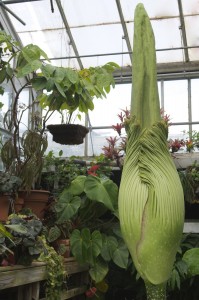
Odie, the rare Titan Arum tropical plant at UNC Charlotte Botanical Gardens, began unfurling around 12:30 p.m. on Friday, July 17, 2015. The McMillan Greenhouse will be open to visitors who want to see — and smell — this botanical rarity on Friday until 7:30 p.m., on Saturday from 8:30 a.m. until 7:30 p.m. and on Sunday from 11 a.m. until 6 pm. The bloom likely will close on Sunday, as it stays open for a very short time. Parking is free, as is admission to the Botanical Gardens and McMillan Greenhouse, located on the main UNC Charlotte campus at 9090 Craver Road, Charlotte, NC 28262.
Bella, the University’s initial Titan Arum, bloomed in 2007, a first for the Carolinas. It bloomed a second time in 2010 before it died. The Botanical Gardens purchased two new plants in 2008.
The Titan Arum produces the largest unbranched flowering structure of any known plant. Few gardens can grow the plant, because it needs such specialized attention to temperature, humidity, fertilization and water. The plant is native to Indonesia, where it grows in the rain forests of Sumatra. Its blooms smell so close to the aroma of carrion that its name means corpse flower. Some describe it as the worst smelling flower in the world.
When the Botanical Gardens’ first Titan Arum flowered, more than 4,000 people visited the campus.
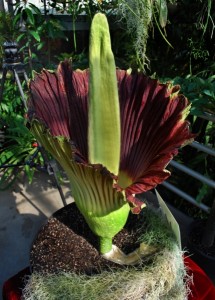
“Bella” blooming in 2010

“Odie” Ready to Bloom
“In captivity, Titan Arums usually bloom two or three times, and this bloom will definitely attract lots of people to the Botanical Gardens, as happened with Bella,” said Paula Gross, Botanical Gardens’ acting director.
To stay up-to-date on the bloom’s status, keep an eye on the Botanical Gardens’ Facebook site and its website. A live cam is tracking Odie’s progress on the Botanical Gardens website.
More about the Titan Arum
Used to the wilds of Sumatra in Indonesia, the plant is so sensitive to cold weather that if the temperature falls below fifty degrees Fahrenheit, it will not survive. Even in the Sumatran jungle the flower rarely blooms, and the event is even rarer in cultivation.
The flowering structure, with an opening of up to four feet in diameter, holds thousands of tiny flowers hidden inside the central column, or spadix. The day the flower opens, its scent of rotting flesh can be detected for up to half a mile away – a feature to attract flies, carrion beetles, wasps, and other insects that normally feed on dead animals. The attracted insects will carry pollen inside the flower from one plant to another, pollinating the flowers.
The first day of bloom offers the flower’s most stunning presentation. After the first day, the smell fades and the petals begin to droop. Within a few days, the flower’s bloom dies.
Words: Stewart Shelton, CLAS Communications Student Assistant
Images: Lynn Roberson and Courtesy of UNC Charlotte Botanical Gardens
Undergraduate Charlotte Research Scholars Learn By Doing
UNC Charlotte student scholars are researching diverse topics ranging from lightning strike patterns in the Southeast U.S. to the connection between Maya Angelou’s poetry and contemporary hip-hop to the impact of UNC Charlotte’s student-run food pantry.
They are among the College of Liberal Arts & Sciences’ participants in this summer’s Charlotte Research Scholars initiative. This effort offers students the opportunity to work alongside UNC Charlotte faculty members conducting original and innovative research.
The effort started in 2012 to give high-achieving undergraduate students the chance to gain experience in research and professional development in their fields of interest. These opportunities are not typically available in the undergraduate classroom. This learn-by-doing model places an emphasis on graduate education and allows the scholars to put their experiential learning into practice, preparing them to excel in their future studies and research.
In addition to mentored research activities, scholars participate in weekly professional development training to build skills critical to professional success. Topics include: responsible conduct of research, developing a competitive research fellowship application, preparing an academic resume, professional communication tools, and a session on preparing for graduate school.
Support comes from UNC Charlotte’s Office of Academic Affairs, the Charlotte Research Institute, the Duke Endowment Special Initiatives Fund, and the Graduate School.
With the project centered on Angelou, titled “Hip-hop/Rap Poetry Production,” Africana Studies major Thomas Tillman’s research aims to capture the essence of the famous author’s historic poetry and connect her pain, struggles and emotions to young people who are part of the hip-hop culture. Africana Studies professor Charles Pinckney is mentoring Tillman.
For the food pantry research, Marketing and Management major Alexis Friesz is working with mentor Kim Buch, a Psychology professor. The project is researching the impact of the Niner Food Pantry, using quantitative and qualitative research methods.
William Ruble, an Earth and Environmental Science major, is researching lightning patterns. His mentor is Geography and Earth Sciences professor Brian Magi. The research is using satellite remote sensing data to consider trends.
Other student scholars and advisors from the College of Liberal Arts & Sciences are:
- Student Leanne Barry, Psychology and Sociology major, faculty member Lisa Walker, Sociology, “The Search for a Generous Identity”
- Student Kaitlyn Beaver, Psychology and Sociology major, faculty member Amy Canevello, Psychology, “Betrayal in Close Relationships”
- Student Mirage Berry, International Studies and Political Science major, faculty member Jason Giersch, Political Science and Public Administration, “Unforgiven: The Path to Political Redemption”
- Student Marilyn Brown, Geography, faculty member Gang Chen, Geography and Earth Sciences, “What spatial resolution of remote sensing data is sufficient for urban forest carbon mapping?”
- Student Taylor Chick, Criminal Justice, faculty member John Stogner, Criminal Justice and Criminology, “Palcohol and Deviance: An Exploratory Analysis of the Abuse Potential of Powdered Alcohol”
- Student Kamaria Clifton , Political Science major, faculty member Eric Heberlig, Political Science and Public Administration, “Monopolizing Money: Congressional Leaders Use of Fundraising Organizations”
- Student Aubrey Davis, Sociology major, faculty member Vaughn Schmutz, Sociology, “The Effects of Gender on Consecration within the Music Industry”
- Student Jacob Dixon, Physics and Mathematics major, faculty member Jimmie Miller, Mechanical Engineering, “Mathematical Modeling in Dimensional Metrology”
- Student Alexis Friesz, Marketing and Management major, faculty member Kim Buch, Psychology, “Hunger and Food Insecurity among College Students: Understanding the Problem and Identifying Solutions”
- Student Emily Grassett, Philosophy and Political Science major, faculty member Martha Kropf, Political Science and Public Administration, “Mansplaining or Candidate-Splaining: A Large Scale Text Analysis of U.S. Senate Debates”
- Student Andrea Greer, Political Science major, faculty member James Walsh, Political Science and Public Administration, “Cruise Missile Proliferation”
- Student Sara Hall, Mathematics major, faculty member Michael Walter, Chemistry, “Time-Resolved Photoluminescence Properties of Thiazolothiazole Porphyrins”
- Student Aminah Hardy, Psychology major, faculty member Virginia Gil-Rivas, Psychology, “Cultural adaptations to cognitive-behavioral therapy interventions for Latina/African-American women”
- Student Monja Johnson, Environmental Science major, faculty member Sara Gagné, Geography and Earth Sciences, “Charlotte’s Butterfly Highway”
- Student Joshua Kennedy, Physics major, faculty member Nate Fried, Physics and Optical Science, “A Novel Miniaturized and Integrated Endoscope for Laser Surgery”
- Student Molly Kinyon, History and English major, faculty member Aaron Shapiro, History, the “Planning Memory and Heritage: the Private Side of Public History”
- Student Sarah Kistler, Sociology major, faculty member Elizabeth Stearns, Sociology, “Women and STEM majors: Does a Concern for Family Flexibility Steer them away?”
- Student Margaret Kocherga, Chemistry major, faculty member Dan Rabinovich, Chemistry, “Understanding the Toxicity of Mercury in Biological Systems”
- Student Kim Litfin, Earth and Environmental Science major, faculty member Sandra Clinton, Geography and Earth Sciences, “Quantifying in-stream habitat complexity in forested urban watersheds”
- Student Evan Lupton, Political Science major, faculty member Gabriela Tarazona-Sevillano, International and Area Studies, “The Evolving Capacity of Human Rights Law: Peru’s and Argentina’s Lessons in the Accountability of Gross Human Rights Violators and the Role of National Courts”
- Student Zach Merino, Physics and Mathematics major, faculty member Irina V. Nesmelova, Physics and Optical Science, “Protein Structure Elucidation via NMR Spectroscopy”
- Student Jonathan Murphy, Chemistry and Mathematics major, faculty member Jun-tao Guo, Mathematics, “Structure-based Prediction of Transcription Factor Binding Sites”
- Student Shannon Murray, Sociology major, faculty Malin Pereira, English, “The Anatomy of Racism”
- Student Tuan Phan, Biology major, faculty member, faculty member Inna Sokolova, Biological Sciences, “Elevated Temperature and freshwater acidification effect on metabolism of Corbicula alumina”
- Student Patrick Reinbold, Physics major, faculty member Thomas Suleski, Physics, “Design and Modeling of a Biomimetic Imaging Polarimeter”
- Student Kenia Rios, Psychology major, faculty member Sara Minslow, English, “Portrayals of Child Soldiers in Popular Culture and Its Potential Impact”
- Student William Ruble, Earth and Environmental Science major, faculty member Brian Magi, Geography and Earth Sciences, “Lightning in the Southeast USA”
- Student Mohamed Saeed, Physics and Chemistry major, faculty member Marcus Jones, Chemistry, “Fabrication of Au/polyelectrolyte/CdSe films for enhancement of QD emission”
- Student Beth Scarbrough, Biology major, faculty member Jerry Troutman, Biological Sciences, “Species selective inhibitors of the antibacterial target undecaprenyl pyrophosphate synthase”
- Student Bryanna Sierra, Biology and Chemistry major, faculty member Didier Dreau, Chemistry, “Expression of two extracellular matrix proteins: Periostin and Transforming growth factor beta induced in breast cancer progression”
- Student Daniel Smith, Biology and Spanish, faculty member Amy Ringwood, Biological Sciences, “The Cytotoxic Effects of Polydot Nanoparticles on Eastern Oysters (Crassostrea virginica)”
- Student Thomas Tillman, Africana Studies major, faculty member Charles Pinckney, Africana Studies, “Hip-Hop/Rap Poetry Production Project”
- Student Sarah Walker, International Studies and History major, faculty member Jurgen Buchena, History, “Corruption and Revolution in Mexico, 1910-1940”
- Student Jennifer Tillman, faculty member Computer Science and English major, faculty member Somaly Kim Wu & Nicole Spoor, Atkins Library, “Usability Analysis and Evaluation of Business Databases”
Words: Stewart Shelton, CLAS Communications Student Assistant
Researcher Passes Away After Lifelong Battle With Cystic Fibrosis
Joshua R. Stokell, a UNC Charlotte post-doctoral fellow, died on Monday, June 8 as a result of complications arising from his lifelong battle with Cystic Fibrosis.
Visitation will be Thursday, June 11, from 3 to 7 p.m. at McEwen Derita Chapel, 6300 Mallard Creek Road, Charlotte. The funeral service will follow at 7 p.m.
The Association of Biology Graduate Students at UNC Charlotte is collecting contributions to assist Stokell’s family with his final expenses. Checks can be made payable to ABGS with “Josh Memorial” as the memo and can be mailed to: Department of Biological Sciences, 257, Attention: ABGS, Woodward Hall, UNC Charlotte, Charlotte, NC 28223.
Stokell is survived by his parents Judy Stokell-Bailey and Thomas W. Stokell; his brothers Thomas W. Stokell Jr., Shawn McPheron, and Brian McPheron and his sisters Tracy Garrett and Christy L. Stokell. He also leaves his maternal grandparents, Kendall and Hazel Poole, of Somerset, KY. He is also survived by his girlfriend, Bushra Khan of Charlotte and his many close friends and several aunts, uncles and cousins.
He completed his bachelor’s degree in 2008 and his doctorate in microbiology in 2013 and worked as a post-doctoral fellow with Todd Steck, a biological sciences professor who has been his mentor. Stokell dedicated his studies to CF and was the lead author on a recent article in the Journal of Clinical Microbiology, which describes an unusual, single-patient study and an important finding that may point to an immediate cause of CF exacerbations.
The study found sudden growth of a specific bacterium, Burkholderia multivorans, preceded periods of acute illness. While B. multivorans has been known as a common pathogen in the lungs of CF patients, it is far less abundant than another pathogen, Pseudomonas aeruginosa, whose populations did not show significant changes prior to the life-threatening episodes.
Stokell and his colleagues were able to implicate B. multivorans due to a detailed genomic and metagenomic analysis of a unique, extensive collection of lung sputum samples taken twice-weekly over a three-year period.
Stokell’s co-authors on the paper are Steck and UNC Charlotte bioinformaticians Anthony Fodor, Malcolm Zapata, Raad Gharaibeh and Timothy Hamp.
As Stokell was both a researcher and the study subject in this case, the team gained unparalleled access to the subject’s life history and medical records, providing critical context for the findings. The study represented the most intensive sampling of a single CF patient to date.
Chronic diseases like CF are often daunting puzzles that require an extraordinary amount of research effort to understand — the long-term interaction between the human body’s dynamic systems and the disease can be extremely complex, even when there’s a relatively simple initiating cause, such as a genetic defect. Consequently, researchers studying such diseases need an extra amount of commitment and passion to struggle with the intricate complexities involved.
As a master’s student at UNC Charlotte, Stokell took a class in bioinformatics with Fodor, where students had to come up with projects involving metagenomic analysis of bacterial populations. Stokell recognized that this might be an important research area relevant to his own disease, so he chose lung bacteria in cystic fibrosis, with himself as a research subject. The researchers have received grants from NIH and the Cystic Fibrosis Foundation to continue the research.
Todd Steck’s Memories of Josh Stokell
“I first met Josh as a student in my class in spring of 2008. He would sit next to another student, Wes, about halfway back and to the side. He didn’t get the highest grade in the class, but I had a sense that he would be proficient in the lab, and so towards the end of the semester I asked him if he’d like to do some microbiology research. He seemed surprised by my offer, which didn’t surprise me. Many students don’t realize their potential, and it’s one of the perks of being faculty that you sometimes have the opportunity to allow young adults to see that they have more options than they realized. Josh was one of those students. At the time, I didn’t realize he had Cystic Fibrosis or know about his health struggles that probably contributed to his feeling his options were more limited than most.
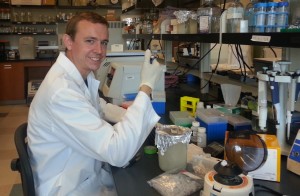
Josh accepted my invitation and began doing research. I soon knew that he would be good, and so I encouraged him to apply to our master’s degree program; he did. As before, he was surprised that I would suggest this. Within a few months he had completed an experiment that a previous student couldn’t do in two years, and was making excellent progress on a microbial source tracking project. Sometimes serendipity plays a role in how science projects are started, and that explains how Josh switched his research to CF. While taking a bioinformatics course with Anthony Fodor, he had to complete a class project. Students could use their thesis research projects as the source of material, but Josh’s project just wasn’t amenable. He and I talked and we decided he would use the bioinformatics tools to see what was going on with the bacteria in his own lungs. He did, and once we saw the interesting results, both Anthony and I thought this could become a thesis project. That became Josh’s new project.
Because Josh was doing so well, he transferred to our Ph.D. program. His dissertation project spanned biology and bioinformatics, and he ended up working closely with Anthony and members of his research team, especially Timm Hamp, who ended up earning his master’s degree in my lab and worked closely with Josh on multiple projects. Josh became trained in both molecular microbiology and bioinformatics. Manuscripts began to be published and honors and awards received. In his early years as a graduate student, Josh received an Outstanding Student Poster Award and Travel Grant recipient for American Society for Microbiology (ASM) Annual Conference. In his last year as a Ph.D. student, he became the Lucille and Edward Giles Dissertation-Year Graduate Fellow.
Once he earned a Ph.D., Josh wanted to continue his work on CF in my lab and received a Duke Energy Post-Doctoral Fellowship to be able to do so. Throughout this time, Josh became an integral part of the lab. Having good people in a lab can make the Principal Investigator’s life easy, and Josh made things easy on me. He was an unofficial Co-PI; he trained new lab members and helped write manuscripts and grants, including a Cystic Fibrosis Foundation Post-Doctoral Fellowship that was funded as well as a recent NIH award. With that NIH award his project was being expanded to include more CF patients, which would have led to many more papers and career opportunities for Josh.
All of these are facts about Josh’s academic career, and while they describe someone who was on track to become a successful academician, they don’t tell you the kind of person Josh was. Unfortunately, my writing skills are too limited to convey how truly special Josh was. What I can tell you is that Josh was easy to like. He was generous with his time, and was a good listener. He didn’t yell, he didn’t complain, he just smiled. It was as if he accepted each day as a gift that he wasn’t going to waste. Josh didn’t demand much of others; he was just grateful for the opportunities he was given. When I first knew him he didn’t have many plans for the future; last week he had a scientific career, a loving partner, and hope for a set of healthy lungs that would allow him to breathe deeply for the first time.
Over the years that I knew Josh, he and I became friends. We supported each other during difficult times. We’d often sit down together and talk; the conversations would start off discussing science, but then move into better topics concerning life. I enjoyed those conversations because Josh and I had shared values and faith, and our personalities meshed; we just liked each other. We also helped each other keep perspective; it’s easy for a job to become too consuming, especially if you’re doing something you love. Being his mentor, I knew Josh wanted to make me proud, and while he knew I was extremely proud of him he may not have known that his concern about obtaining my approval motivated me to be worthy of that respect.
When someone dies, it reminds us of our own mortality, and we look for a life lesson to be learned. For Josh, that lesson is his attitude towards life. We all know that life is precious, but it’s easy for us to take it for granted. Josh lived with a constant reminder of just how fragile life is. So for me, I will think of Josh and remember that life is a gift to be appreciated, respected, and enjoyed.”
Josh Stokell’s Honors, Awards and Publications
Honors/Awards
- Recipient of Outstanding Student Poster Award and Travel Grant recipient for American Society for Microbiology (ASM) Annual Conference 2011 (one of 40 awards given to more than 2800 presented posters).
- Lucille P. and Edward C. Giles Dissertation-Year Graduate Fellow for 2012-2013
- Duke Energy Post-Doctoral Fellow (2013-2014)
- Cystic Fibrosis Foundation Post-Doctoral Fellow (2014-2016)
- Co-I on NIH R15. “Identifying bacterial biomarkers associated with disease progression in cystic fibrosis.” (12/1/2014-11/30/2016)
Publications
- Stokell, J.R., Gharaibeh, R.Z., Hamp, T.J. Zapata, M.J., Fodor, A.A., and Steck, T.R. 2015. Analysis of Changes in Diversity and Abundance of the Microbial Community in a Cystic Fibrosis Patient over a Multiyear Period. J. Clin. Microbiol. 53(1): 237-247. doi: 10.1128/JCM.02555-14.
- Stokell, J.R., Khan, A., and Steck, T.R. 2014. Mechanical Homogenization Increases Bacterial Homogeneity in Sputum. J. Clin. Microbiol. 52(7):2340-2345. doi: 10.1128/JCM.00487-14
- Stokell, J.R., Gharaibeh, R.Z., and Steck, T.R. 2013. Rapid emergence of a ceftazidime-resistant Burkholderia multivorans strain in a Cystic Fibrosis patient. J. Cystic Fibrosis. 12:812-816. doi: 10.1016/j.jcf.2013.01.009.
- Stokell, J., and Steck, T.R. Viable but nonculturable bacteria. Oct 2012. In: Encyclopedia of Life Sciences. John Wiley & Sons, Ltd. Chichester. http://www.els.net [doi: 10.1002/9780470015902.a0000407.pub2]
Student, Faculty Research Finds Possible Vulnerability in Drug-Resistant Bacteria
A research team including a senior biology major has made progress towards finding a weak spot in the architecture of a group of enzymes that are essential to antibiotic resistance in a number of bacteria, using a complex modeling program that helps analyze the physical dynamics of large, structurally complex protein molecules.
In an article published in PLOS ONE, Jenna R. Brown – a biology major and chemistry minor – and her faculty mentor, UNC Charlotte professor of bioinformatics and genomics Dennis R. Livesay, present an analysis of the four currently known protein structures of the class C beta-lactamase enzymes – molecular machines that have evolved to allow bacteria to dismantle a variety of antibiotic molecules, including third generation cephalosporins.
Brown, the first author on the paper, won best Natural Sciences and Public Health poster at UNC Charlotte’s 2014 Summer Research Symposium and first place in the Bioinformatics division at the 2015 Undergraduate Research Conference for her presentations of this work.
The researchers find that all four molecules are remarkably similar in having a rigid protein superstructure, but with three “flexible” structural elements at the active site – the part of the enzyme that acts on the antibiotic. The analysis shows that the flexible structures are “cooperatively correlated” in their motions – the movements of the molecular segments are linked and the linkage is similar in all four molecules analyzed.
The researchers say that the unusual close similarity of the dynamical properties – the way the coupled dynamics within the active site loops has been preserved by the evolutionary process in four different bacterial groups – and the fact that the conserved correlated flexibility happens at the active site implies that this specific structural feature is critical to its advanced antibacterial properties.
“From an evolutionary perspective, this is really cool,” Livesay said. “Here’s a protein that has a very intense set of evolutionary pressures on it, making these couplings critical and not allowing them to vary. We’ve never seen that before. Typically these couplings are quite variable, even when they are otherwise closely related enzymes.”
This structural analysis of antibiotic resistance enzyme in essence reveals a possible chink in the chemical armor of the enzymes. “Clearly this result is important because it is at the active site, because it is evolutionarily conserved, and because we have never seen this degree of conservation in any other system before,” Livesay said.
The researchers conducted the analysis using a Distance Constraint Model (DCM), a protein analysis program developed by Livesay and UNC Charlotte biophysicist Donald Jacobs that allows relatively detailed but also relatively streamlined comparison of the properties and behaviors of complex protein structures based on their sequence of amino acids.
The DCM’s efficient but accurate structural analysis allowed the researchers to make complex structural comparisons between many different (but related) protein molecules in realistic computing timescales that would be inaccessible by traditional methods. The DCM allows researchers to quickly and accurately pinpoint specific differences in dynamical properties between the structures, such as differing amounts of rigidity/flexibility in specific parts of the protein’s complex structure.
In a previous study using the DCM to analyze a related class of beta-lactamase enzymes, Livesay and Jacobs found evolutionary changes in the structure of the enzyme had no relation to the specific antibiotics the enzyme was effective in dismantling. The researchers, however, did find that the overall structure of these class A beta-lactamase enzymes was unusually rigid.
The overall stability of the beta-lactamase protein, the authors of the previous study suspected, allowed changes in the components of the active site to evolve easily and rapidly because most changes there would not disrupt the more general characteristics of the protein. Beta-lactamase’s ability to almost endlessly evolve the structure of its active site without other consequences perhaps accounts for beta-lactamase’s ability to rapidly evolve in response to new antibiotics.
The earlier finding was discouraging for medicine because it meant that there were probably few (if any) opportunities to disable class A enzymes by bonding small molecules to the proteins and changing their enzymatic activity through allosteric effects – the active site was apparently unaffected by changes in other parts of the protein structure. However, the current finding regarding the linked, flexible structural components of class-C beta lactamases may be a very different story.
“We have strong evidence from our past research that allostery – dynamic connections between different structural components in a large molecule – is very sensitive to disruption,” Livesay noted. “And we have seen here that these coupled elements at class C active sites are highly conserved by evolution, probably for a good reason related to function. If you were able to disrupt that coupling, there is a good likelihood that you would have a nice therapeutic effect.”
While his lab does not do drug discovery, Livesay says the finding points to where labs that do such research ought to look.
“From a therapeutic point of view, you can imagine that if you could create a small molecule that bound to the active site somewhere else, it could decouple active site loop dynamics, and you would disable something vital to the enzyme,” he said.
Theoretically, adding such a molecule to antibiotics that class C beta-lactamases usually disable would make them effective again against drug resistant bacteria, Livesay said.
Words: James Hathaway
Botanical Gardens’ Retired Director Gives Insights on “The Live Wire”
Larry Mellichamp, who retired as director of UNC Charlotte Botanical Gardens after almost 40 years, shares his insights on this edition of UNC Charlotte’s The Live Wire. He talks about the new Mellichamp Native Terrace Garden, native plants, tips for sustainable gardens and other timely topics.
Students Earn Honors at Graduate Research Symposium
Students from the College of Liberal Arts & Sciences earned top honors for their research at UNC Charlotte’s 15th annual Graduate Research Symposium, held in April, 2015 in the J. Murrey Atkins Library. This student-run conference showcased current student research taking place at UNC Charlotte. First-place winners each received $800.
In the Physical Science Category, V Sombatsaphay, a biology doctoral student, earned first place for a paper titled “Phylogenetic diversity, developmental expression and salinity-induced expression of aquaporins in the estuarine anemone Nematostella vectensis.”
In the Physical Science Category, two students in the College tied for first place for their posters. They are Jason Case, a doctoral student in optical science and engineering, for “Ehanced Mid IR detection of breast cancer development in vivo” and Joshua Huot, a biology doctoral student, for “WNT and notch crosstalk in aged muscle following downhill running.
In the Health Category, Coline Dony, a geography doctoral student, received first-place honors fro her paper “Spatial accessibility to public parks in Mecklenberg County, NC: comparison by travel mode.”
The Graduate Research Symposium seeks to provide an inclusive and competitive environment for UNC Charlotte students to present their work. This year’s theme, “Learning Across Disciplines,” emphasized the interdisciplinary nature of the symposium, where research from all fields is made accessible to attendees.
College Home to Two of UNC Charlotte’s Three NSF Graduate Research Fellows
Physics major Jennifer Kassel and computer science and mathematics major Jonathan Knighten have received two of the three National Science Foundation Graduate Research Fellowships awarded to UNC Charlotte students for 2015.
The third recipient at UNC Charlotte is Kathryn Smith, who completed her bachelor’s degree in electrical engineering at UNC Charlotte in 2013 and is currently enrolled in the electrical engineering doctoral program.
These highly prestigious awards recognize and support outstanding graduate students who are pursuing research-based master’s and doctoral programs. The research fellows receive a $32,000 annual stipend for three years within a five-year fellowship period. They also receive a $12,000 cost-of-education allowance and professional development opportunities.
During their time at UNC Charlotte, Kassel and Knighten have found opportunities to conduct hands-on research while also helping others through volunteerism focused on science and technology.
Kassel Looks Ahead With Plans for Research
After completing her bachelor’s degree in May, Kassel plans to pursue a doctoratal degree, with future plans for teaching and leading her own research lab. Her field of study is Physics and Astronomy – Atomic, Molecular and Optical Physics; she has received offers from several universities. Michael Walter with the Department of Chemistry in the College of Liberal Arts & Sciences and the interdisciplinary Nanoscale Science Ph.D. Program is her advisor.
“I would like to stay in academia, contributing not only to scientific advancement, but the interest and understanding of our future scholars as well,” Kassel said. “I find well-known scientists like Carl Sagan, Neil Degrasse Tyson, and even Bill Nye inspiring in the way they share their fascination with the search for understanding. I see their candor as an attempt to spread that passion in hopes to spark a lifelong quest beyond the brink of human knowledge. If I can have that effect on just one person in my lifetime, I will consider my work a success. But I’ll never stop aiming for more.”
After high school, Kassel immediately entered the workforce for a few years. She then completed her associate’s degree in science at Central Piedmont Community College and later enrolled at UNC Charlotte. She quickly became involved with Tau Sigma and Omicron Delta Kappa honor societies and with the Society of Physics Students. She was chosen by fellow students to become the society’s president.
The students have volunteered with UNC Charlotte’s Science and Technology Expo, showcasing physics and astronomy. “We also help run the Star Party, educating registered guests to our campus on the telescope targets for the night while they get to view some of the cosmos a little closer,” she said.
Kassel learned about the graduate research fellowships opportunity as a participant in the Charlotte Research Scholars program. She furthered her knowledge about fellowships and research as one of 10 participants in the NanoSURE REU program.
Kassel is part of a interdisciplinary team of students, led by Walter and architecture faculty member Mona Azarbayjani, that has created a solar-responsive design material that transforms windows into environmentally-responsive surfaces that can simultaneously provide shade and convert sunlight into usable electric energy. The team won honorable mention in the People, Prosperity, and Planet Student Design Competition for Sustainability held by the U.S. Environmental Protection Agency in Alexandria, Virginia in April.
Knighten Plans to Pursue Ph.D. at Cornell University
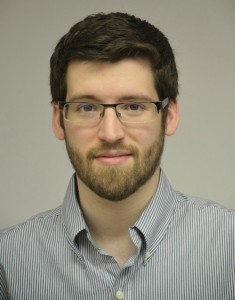
After graduation in May with bachelor’s degrees in computer science (College of Computing and Informatics) and mathematics (College of Liberal Arts & Sciences), Knighten plans to seek his doctoral degree in computer science at UNC Charlotte. He will draw upon his hands-on research experiences at UNC Charlotte. Jamie Payton, faculty in the Department of Computer Science in the College of Computing and Informatics, is his research advisor.
“Hands down the program that has had the biggest impact in my life is the Charlotte Research Scholars initiative,” Knighten said. “The CRS program opened my eyes to what research is and what it can be. It quickly became a passion. If it wasn’t for programs like CRS, I honestly do not know what I would be doing with my life right now.” Knighten learned about the fellowships while participating in the Charlotte Research Scholars program.
“Another major program that’s helped me find my way as a researcher is the NSF Research Experience for Undergraduate program,” he said. “Last summer I participated in the Data Intensive Computing REU held at Clemson University. Although I had already found my passion for research, the REU helped me mature and grow even more as a researcher. My experiences at Clemson showed me how important interdisciplinary research was and how amazing things can come out of having people with different academic backgrounds work together to tackle a problem.”
In addition to his academics and his research efforts, Knighten participates in the STARS Alliance and volunteers with Citizen Schools. He helps run an outreach program through STARS called MAD Investigators. “In MAD Investigators we teach middle school kids at MLK Middle School the fundamentals of Mobile Application Development, or MAD,” Knighten said. “During the outreach, students develop an Android app that tackles some type of issue in their community.”
For the last three years he has worked at Tutorial Services, which is a division of the University Center of Academic Excellence at UNC Charlotte. He was a senior peer tutor, meaning he was responsible for tutoring students and training other tutors. Through this work, he found a passion for teaching and mentoring others.
Three Former Chemistry Students Receive Honorable Mention Honors
In addition to the three students chosen to receive the fellowships, three chemistry students received honorable mention recognition.
- Patrick Quinlivan completed his bachelor’s degree in chemistry in 2013 and is attending Columbia University. Another participant in the CRS, his undergraduate advisor was chemistry professor Dan Rabinovich.
- David Townsend Smith received his bachelor’s degree in chemistry in 2012 and is attending the University of Arizona. While at UNC Charlotte, he worked with chemistry professor Craig Ogle.
- Marissa Styron received her bachelor’s degree in chemistry in 2013 from UNC Charlotte and is currently a Nanoscale Science doctoral student at UNC Charlotte. She is a recipient of the UNC Charlotte Graduate School’s 2013/2014 Everett Foundation First-Year Doctoral Fellowship. Rabinovich also was her advisor.
Over a period of 60 years, the NSF has awarded 48,000 fellowships in a wide range of disciplines including engineering, life sciences, economics, social sciences, psychology, mathematical sciences, physics and astronomy, chemistry, geosciences, computer and information science and engineering, STEM education and learning research and materials research. To date, 40 NSF fellows have gone on to become Nobel laureates. The NSF this year awarded just 2,000 fellowships among a national pool of 16,500 applications. UNC Charlotte ranks #4 in North Carolina for numbers of students awarded NSF Graduate Research Fellowships over the past six years.
Words: Brittany Algiere and Michael Eccles, CLAS Student Communications Assistants
Images: Courtesy of Kassel and Knighten
College Honors Faculty Members With 2015 Teaching Awards
Janna Shedd, Tonya Bates and Robin James have received the College of Liberal Arts and Sciences’ 2015 Teaching Awards for their dedication, teaching and research contributions and lasting impact on students.
Shedd of Religious Studies won the College’s Award for Outstanding Teaching by a Part-Time Faculty Member. Bates of Biological Sciences won the College’s Award for Outstanding Teaching by a Full-Time Lecturer. James of Philosophy won the College’s Integration of Undergraduate Teaching and Research Award.
They received their awards at a ceremony on Monday, April 20. Also at the ceremony, the finalists for each award were honored.
The two finalists for the Outstanding Teaching by a Part-Time Faculty Member Award are Allison Hutchcraft of English and Lawrence Blydenburgh of Criminal Justice and Criminology.
The two finalists for the Outstanding Teaching by a Full-Time Lecturer Award are John Taylor of Mathematics and Statistics and Sue Hodge of Criminal Justice and Criminology.
The two finalists for the Integration of Undergraduate Teaching and Research Award are Joe Kuhns of Criminal Justice and Criminology and Paula Connolly of English.
“These faculty members help students understand that taking risks is part of intellectual and emotional growth,” said Dean Nancy A. Gutierrez. “They help students understand that their capacity for success is constrained only by obstacles of their own invention. This is the power of a liberal arts education.”
Janna Shedd: Award for Outstanding Teaching by a Part-Time Faculty Member
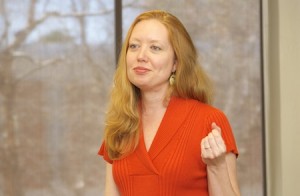
Shedd is a part-time lecturer in the Religious Studies Department of the University of North Carolina Charlotte, where she has taught since 2009. Janna completed her master’s degree at UNC Charlotte and her bachelor’s degree at UNC Asheville. Her research interests are South and East Asian religions, the effects of globalization on religion and culture, and multicultural education. For the last 18 months she has volunteered at a weekly community and educational outreach program for local Southeast Asian youth.
She has traveled to China for month-long excursions to religious sites across the country and was adopted by a monkey on her last trip three years ago. Shedd hopes to expand her travel destinations and the frequency of her trips in the future. Her goals for the next two years include publishing articles on teaching religion, leading a student tour group to Daoist sites in China, and expanding her scholarly expertise to include Japanese religions.
She earned her master’s degree in religious studies from UNC Charlotte in 2009 and has been a part-time lecturer with a 4-4 load since fall semester of that year. With her tremendous sense of initiative and imagination, she has developed courses, including an online version of Death and the Afterlife.
Students describe her as engaging, passionate and patient. They express appreciation for the way she shows them other ways of life that differ from their own, and how their respect for other cultures and choices grows through her example. She shows this respect in the classroom.
One student commented, “Professor Shedd was possibly one of the most impressive, intelligent and compelling professors I have had the good fortune of enjoying in five semesters. She was able to get even the most timid and quiet student engaged. Neither obscure nor fatuous questions seemed to slow her down, and if ever she did not know an answer, she always found it out for us.”
To explain her motivation for teaching, Shedd said, “By the time they leave my class at the end of the semester, I hope that each student feels more confident in their ability to take on the world and all it has to offer. In the end, I am really trying to teach students how to teach themselves, to value each other, and to see their own education as relevant, active, and ongoing.”
Tonya Bates: Award for Outstanding Teaching by a Full-Time Lecturer
A native North Carolinian, Bates earned a master’s degree in biology and as a graduate student taught introductory biology and microbiology labs at UNC Charlotte. After graduation, she worked as a researcher in industry, at UMASS Amherst, and at Carolinas Medical Center, which provided her with a broad range of clinical and technical skills. Along this journey, she discovered that more than doing bench research, she enjoyed sharing biology through teaching and mentoring.
Bates is currently a lecturer in the Department of Biological Sciences and recently took on the role of undergraduate coordinator. She teaches majors and non-science majors in a variety of courses including Principles of Biology, Nature of Science and Current Topics, and Public Health for educators. The undergraduate coordinator position enables her to have an impact on the undergraduate curriculum of biology majors in a way that is not possible as an instructor.
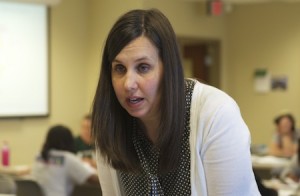
By participating in the Communication across the Curriculum program, she has initiated improving writing in her department by facilitating the use of peer writing mentors in select writing intensive courses.
Recently she was selected to participate in the Top 40 faculty academy to write a resource guide for new faculty in these large enrollment freshman courses. In her spare time, she promotes science in the community by participating in events such as the UNC Charlotte Science and Technology Expo and Science Olympiad. With colleagues, she continues to develop many professional development workshops for middle, high school, and AP biology teachers.
Bates’ other scientific achievements and involvement include participation in the SouthEast Summer Institute for Undergraduate Education in Biology in 2012, the position of liaison for the Center for Teaching and Learning, election to the Department Advisory Committee, and representing for the Women in Science program at UNC Charlotte.
One student nominator said this: “She is able to make small group projects work in a large class of 200 students, which seems like a magic trick to me.” Another student nominator said, “Professor Bates constantly gives creative analogies and finds ways to link what we are learning in class to our own lives. She is truly a phenomenal professor.” On of these creative endeavors includes “DNA Theater,” during which Bates and her students “dynamically act out the processes of DNA transcription and translation.”
Bates said, “Since 2010, I’ve taught biology to approximately 3,000 students. Each of these students has provided an opportunity to re-examine and reflect on why I do things the way I do inside and outside the classroom…. My personal goal has been to use my background as a scientist as an opportunity to do research to improve, develop, and refine my teaching and ultimately be able to communicate and disseminate this knowledge.”
Robin James: Integration of Undergraduate Teaching and Research Award
James is an associate professor of Philosophy at UNC Charlotte. She is the author of two books: Resilience & Melancholy: pop music, feminism, and neoliberalism, which was published by Zero books in February 2015, and The Conjectural Body: gender, race and the philosophy of music, which was published by Lexington Books in 2010.
Her work on feminism, race, contemporary continental philosophy, pop music, and sound studies has appeared in The New Inquiry, Noisey, SoundingOut!, Hypatia, differences, Contemporary Aesthetics, and the Journal of Popular Music Studies. She is also a digital sound artist and musician, and often works as a member of citation:obsolete. She blogs at its-her-factory.com and is a regular contributor to Cyborgology and xcphilosophy.
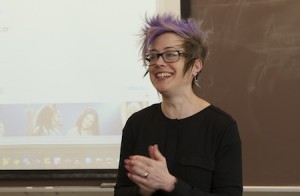
For James, the integration of teaching and research means using classroom conversations as a place to begin and continue her own research practice and teaching students some of the practices, including blogging, public writing, creative research in sound and the process of writing a book. “Often the questions I bring to class are ones I’m still working on, to which I don’t yet have answers,” James said. “The classroom is a place where the students and I work through philosophical questions, concepts, and problems together.”
Shannon Sullivan, Chair and Professor of Philosophy, said, “[I]t is not so much her scores that make Dr. James truly deserving of this award. It is what she does in her classes. Dr. James and her students do philosophy together.”
“As I understand it, philosophy is not so much a content […] but more of a how, a doing, a practice. So in all my classes, we do philosophy, we think,” James said.
James plans to integrate students’ thinking with media and philosophy. She has developed a new team-taught course for spring 2016, supported by an SOTL grant, that will give students the opportunity to engage philosophy via new media including film, video, websites and social media. They will interview Charlotte people on topics that connect philosophy to their lives. This will continue her practice of giving students hands-on experience developing philosophical ideas in ways that model what scholars do.
Students commend James for being, as one student described it, “a valuable living resource.” The student commented, “She encourages us, and in doing so helps us to realize the potential works that lie within us. But what distinguishes her from other professors I have is not just her ability to understand her students, but her affinity for understanding her students.”
Words compiled and edited by Taryn Walls, Student Communications Assistant
Images: Lynn Roberson, College Communications Director.
Pictured in top photo (left to right): Tonya Bates, Janna Shedd, Robin James, Nancy Gutierrez
Tonya Bates Honored as Teaching Award Finalist
Tonya Bates of Biological Sciences is one of three nominees for the College of Liberal Arts & Sciences Award for Outstanding Teaching by a Full-Time Lecturer. The other nominees are John Taylor of Mathematics and Statistics and Sue Hodge of Criminal Justice and Criminology.
A native North Carolinian, Bates earned a master’s degree in biology and as a graduate student taught introductory biology and microbiology labs at UNC Charlotte. After graduation, she worked as a researcher in industry, at UMASS Amherst, and at Carolinas Medical Center, which provided her with a broad range of clinical and technical skills. Along this journey, she discovered that more than doing bench research, she enjoyed sharing biology through teaching and mentoring.
Bates is currently a lecturer in the Department of Biological Sciences and recently took on the role of undergraduate coordinator. She teaches majors and non-science majors in a variety of courses including Principles of Biology, Nature of Science and Current Topics as well as Public Health for educators. The undergraduate coordinator position enables her to have an impact on the undergraduate curriculum of biology majors in a way that is not possible as an instructor.
By participating in the Communication across the Curriculum program, she has initiated improving writing in her department by facilitating the use of peer writing mentors in select writing intensive courses.
Recently she was selected to participate in the Top 40 faculty academy to write a resource guide for new faculty in these large enrollment freshman courses. In her spare time, she promotes science in the community by participating in events such as the UNC Charlotte Science and Technology Expo and Science Olympiad. With colleagues, she continues to develop many professional development workshops for middle, high school, and AP biology teachers.
She describes her teaching philosophy as “student-centered” and she strives to use a range of engagement strategies including low-stakes formative assessment, hand-on activities, and small group exercises. Her goal is to make students scientifically literate. One student nominator said this: “She is able to make small group projects work in a large class of 200 students, which seems like a magic trick to me.” Another student nominator said that “Professor Bates constantly gives creative analogies and finds ways to link what we are learning in class to our own lives. She is truly a phenomenal professor.”
John Taylor Honored as Teaching Award Finalist
John Taylor of Mathematics and Statistics is one of three nominees for the College of Liberal Arts & Sciences Award for Outstanding Teaching by a Full-Time Lecturer. The other nominees are Tonya Bates of Biological Sciences and Sue Hodge of Criminal Justice and Criminology.
Taylor attended both public and Catholic schools and graduated from Rocky Mount Senior High School where he played saxophone in the school’s national award winning marching band. He went on to attend N.C. State University where he graduated with his bachelor’s degrees in mathematics and military history. Continuing on at N.C. State, he graduated with a master’s degree in applied mathematics. During his graduate studies Taylor received an award for Outstanding Graduate Student Teaching, the first of many awards
After graduating, Taylor accepted a positon as a professor of mathematics at Nash Community College as well as working as an adjunct professor at NC State and Peace College in Raleigh. During his time at Nash Community College, Taylor became known among students and faculty as the “Math Guy” and his excellence in teaching was again recognized by being awarded the Teacher of Year. Ever since graduating with his undergraduate degree, he also worked part-time at the North Carolina State Archives as a Military historian and accompanied lecture tours for history and genealogy.
He eventually came to UNC Charlotte to complete his doctoral degree in Mathematics. As a graduate student, Taylor continued teaching and very quickly gained popularity among students for his unique and effective teaching style and won the Graduate Teacher of the Year award.
In 2006 he graduated with his Ph.D. in Commutative Ring Theory, and was immediately offered a position at UNC Charlotte. Taylor still works for UNC Charlotte, and is an in-demand faculty member in the Mathematics and Statistics Department.
He believes that “teaching is a complex art and effective teaching involves a multitude of variables. My mission as a teacher is to carefully consider all these elements and to provide a teaching-learning environment which is conducive to each student’s learning.” Students agree that he is successful in achieving this mission. One student nominator said this: “Dr. Taylor helped me so much. His voice is still in my head, in a good way I mean. He engraved Calculus I and II in my head. So in my major classes I’m finding it very easy to use calculus-related equations while I see others struggle.”
 Support comes from UNC Charlotte’s Office of Academic Affairs, the Charlotte Research Institute, the Duke Endowment Special Initiatives Fund, and the Graduate School.
 Josh accepted my invitation and began doing research. I soon knew that he would be good, and so I encouraged him to apply to our master’s degree program; he did. As before, he was surprised that I would suggest this. Within a few months he had completed an experiment that a previous student couldn’t do in two years, and was making excellent progress on a microbial source tracking project. Sometimes serendipity plays a role in how science projects are started, and that explains how Josh switched his research to CF. While taking a bioinformatics course with Anthony Fodor, he had to complete a class project. Students could use their thesis research projects as the source of material, but Josh’s project just wasn’t amenable. He and I talked and we decided he would use the bioinformatics tools to see what was going on with the bacteria in his own lungs. He did, and once we saw the interesting results, both Anthony and I thought this could become a thesis project. That became Josh’s new project.
 After graduation in May with bachelor’s degrees in computer science (College of Computing and Informatics) and mathematics (College of Liberal Arts & Sciences), Knighten plans to seek his doctoral degree in computer science at UNC Charlotte. He will draw upon his hands-on research experiences at UNC Charlotte. Jamie Payton, faculty in the Department of Computer Science in the College of Computing and Informatics, is his research advisor.
 She has traveled to China for month-long excursions to religious sites across the country and was adopted by a monkey on her last trip three years ago. Shedd hopes to expand her travel destinations and the frequency of her trips in the future. Her goals for the next two years include publishing articles on teaching religion, leading a student tour group to Daoist sites in China, and expanding her scholarly expertise to include Japanese religions.
 By participating in the Communication across the Curriculum program, she has initiated improving writing in her department by facilitating the use of peer writing mentors in select writing intensive courses.
 For James, the integration of teaching and research means using classroom conversations as a place to begin and continue her own research practice and teaching students some of the practices, including blogging, public writing, creative research in sound and the process of writing a book. “Often the questions I bring to class are ones I’m still working on, to which I don’t yet have answers,” James said. “The classroom is a place where the students and I work through philosophical questions, concepts, and problems together.”