CMS Teachers Study With Researchers in CTI Initiative
Teachers lay the foundation for students to understand and embrace science. This significant role holds true whether the students aspire to scientific careers or simply need as citizens to understand how scientific research can help their everyday lives.
Despite their critical role, teachers often find themselves limited in their exposure to the settings where scientific research occurs.
Charlotte Teachers Institute has worked with UNC Charlotte professors Susan Trammell and Marcus Jones to address that gap. Through a pilot program called the Summer Research Experience for Teachers, Charlotte-Mecklenburg Schools teachers collaborated with professors and graduate students in UNC Charlotte lab settings for the first time in summer 2016.
“I wanted to give teachers a first-hand look at what it is like to be a scientist,” says Trammell. “The teachers that I worked with come from many different grade levels and will prepare the scientists of the future. However, most of them have never been in a research lab and do not really know what it is like to ‘do science’ as a career. This is information that they need, to help inspire and guide their students.”
The summer initiative was a first for CTI, which is an educational partnership among Charlotte-Mecklenburg Schools, UNC Charlotte and other universities that works to improve teaching in Charlotte-Mecklenburg public schools.
“CTI is all about bringing together university and college professors to collaborate and co-create with classroom teachers,” says CTI Executive Director Scott Gartlan. “This program is no different. This experience for teachers cultivated their curiosity, creativity and knowledge of cutting-edge scientific techniques.”
The initiative came together because of converging interests, Gartlan says.
“Marcus Jones initially reached out to CTI to support his proposal for a NSF CAREER award,” he says. “Dr. Jones and I decided to include stipends for teachers to participate in a summer research experience in his university laboratory working alongside his graduate students.”
Meanwhile, Trammell, a three-time CTI seminar leader and CTI University Advisory Council member, also wanted to broaden her research agenda to include science teacher education, a passion of hers for years.
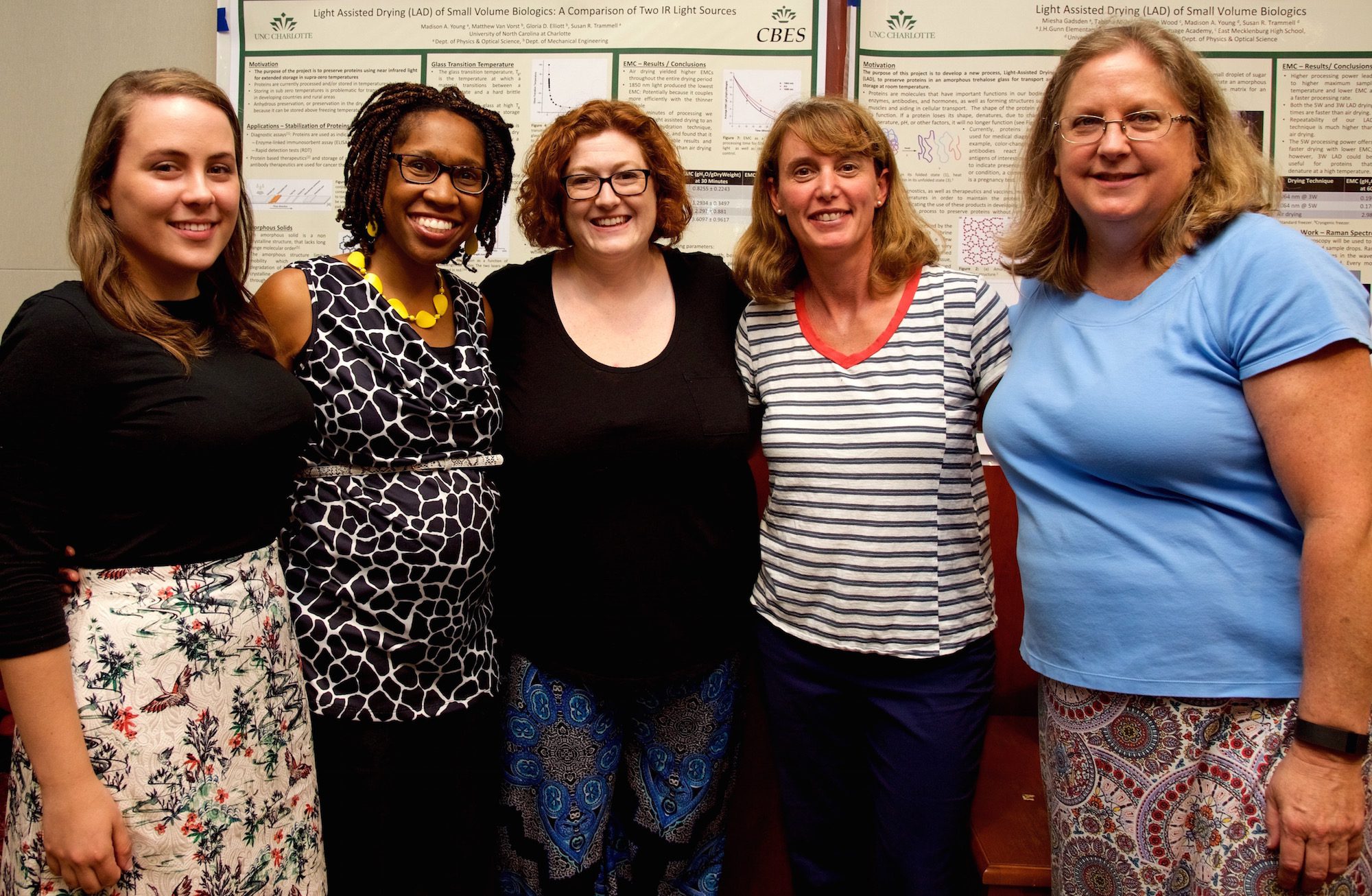 In each lab, Trammell and Jones provided guidance for the partnership. Graduate students educated teachers on laboratory protocols and scientific principles, as well as helping them develop curricula for later use in their classrooms. The teachers expressed surprise – and gratitude – for the important role that graduate students played in the labs and in their collaboration.
“As a graduate student, my duties included overseeing safety procedures and daily lab maintenance,” says Drew Tobias, a Nanoscale Science doctoral student in Jones’ lab who worked with the teachers, along with fellow student Kathleen Dipple.
“But my role ultimately became one of a mentor,” Tobias says. “We were able to keep the teachers engaged and productive, and they were excited to be here. I think they gained insight into actual experimentation and can better relate what we are doing to general life.”
Jones’ efforts with the teachers drew from his current CTI long-term seminar, called “It’s a Small World!” which draws upon themes from his NSF-funded research. “Nanomaterials could provide a pathway to cheap and abundant renewable electricity,” Jones says. “In that context, we discussed the need for sustainable energy and the economic and environmental factors that are driving the search for alternative sources.”
Coulwood Middle science teacher Joyce Patton describes the experience and its lingering impact as amazing.
“The summer experience in Dr. Jones’ lab was inquiry learning done right,” Patton says. “Engaging, inspiring and by far the best educational experience I have ever had. It was so inspiring I was able to work with a local scientific equipment company, CEM Corp., to donate a single-mode focused microwave unit. This will allow my students to safely synthesize nanoparticles, right in the classroom.”
UNC Charlotte’s Trammell also turned to her CTI seminar, which is titled “How Science is Done,” providing a behind the scenes look at university research and the scientific method. Doctoral candidates Joseph Peller and Madison Young joined her in coaching teachers in the lab.
Trammell’s research concentrates on biomedical applications of optical techniques, imaging and spectroscopy in particular. Projects in her lab include building a new camera that can be used for cancer detection and developing a method to preserve proteins that are used in diagnostic tests.
“It was great experience for the teachers as they learned lab work is not as formulaic as standard teaching labs would apply,” Peller says. “They encountered problem after problem, yet continued to work rigorously until they resulted in success.”
Two undergraduate students who were conducting research through the Charlotte Community Scholars program joined the team, working with CTI as interns. Political science and economics student Anthony Ellis and psychology student Kenia Rios were part of a 9-week research experience that provides students with an immersive engaged scholarship experience to address community needs.
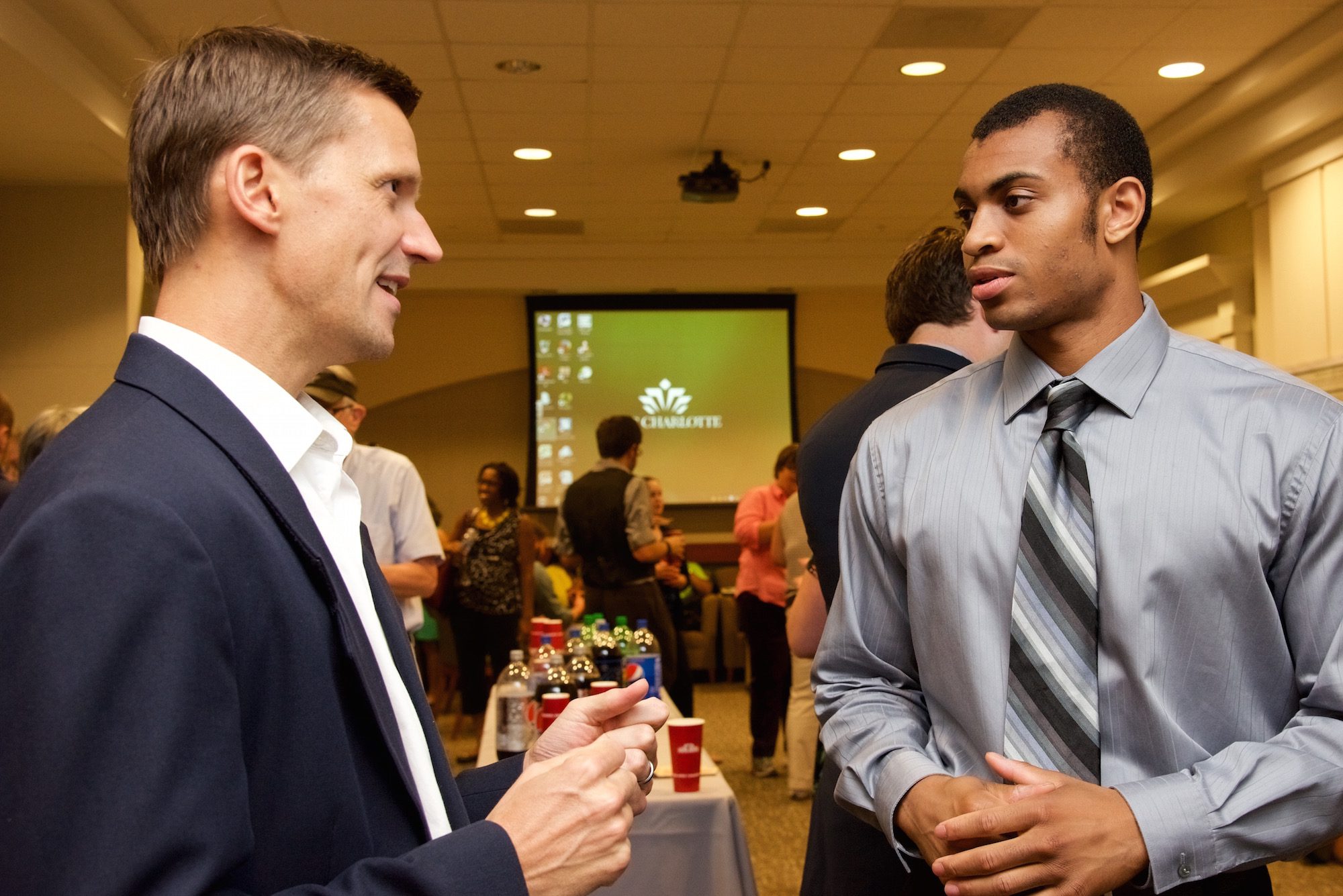 “Over the summer I worked directly with CTI to analyze six years’ worth of data to see if the program has caused any impact,” Ellis says. “I’ve gained tons of experience working with abstract quantitative data, and now have an idea on how we can use it to improve future programs.”
Since its inception in 2009, CTI has conducted 60 long-term seminars led by 46 Davidson College and UNC Charlotte professors for more than 400 CMS teachers, totaling over 17,000 hours of professional development. The summer experience provided another avenue for exposing teachers to intense professional development.
“The teachers developed a deeper understanding of university-level scientific research, methodology, and laboratory equipment and practices,” Gartlan says. “In turn, they will develop curricula that motivates and excites their students to see the essence of scientific inquiry more as a process of discovery than as a set of rules to follow.”
Words: Tyler Harris and Kendra Sharpe | Images: Lynn Roberson
Top Photo: Doctoral student Andrew Tobias (left) works with CMS teachers Joanne Rowe and Joyce Patton. Second photo: Professor Susan Trammell (second from right), doctoral student Madison Young (left) and teachers Miesha Gadsden, Tabitha Miller, Connie Wood. Third photo: Student Anthony Ellis (right) describes his undergraduate research with CTI as a Charlotte Community Scholar.
Arbor 49er Project “Speaks for the Trees” on Campus
“I speak for the trees, for the trees have no tongues. And I am asking you at the top of my lungs.”
Many of us recognize this quote from Dr. Suess’ book The Lorax from when we were young, but as we grow up we often forget to notice the trees. One exception may be during the fall when the leaves begin to change colors. After all, the fall foliage in the mountains of North Carolina is well known for its astonishing beauty.
That is why I have waited to introduce people to the Arbor 49er project until now, when they are paying extra attention to the trees. You may have noticed the colors, but do you know what kind of trees they are? Do you know anything about them? Do you realize what are they used for? Can you make tea from their flowers? What is that one with the heart-shaped leaves called?
If you have noticed tags hanging from the trees on campus, they are a large part of a local tree project I created on campus to maximize student-ecosystem interaction. As part of the project, students in my Ecology Labs and I chose 49 select separate tree species and took photographs of characteristic features and an overall shot of each tree.
We marked their coordinates with a GPS program and put those coordinates into Google Earth. We wrote a description of characteristics and any notable historical background for each of the 49 trees. This resulted in an interactive map with the exact location, pictures, and characteristics of each of the trees.
On my faculty webpage you can download the map that was published by Google Earth with the trees labeled or unlabeled, in a scavenger hunt format. I use the latter to help teach students tree identification in some of my field courses.
Next, my students and I labeled the physical trees. With help from UNC Charlotte Facilities Management, we obtained money to order bronze placards for each of the 49 trees and establish a fund for their replacement.
As a continuation, in the last phase of the project, we combined the physical and virtual worlds by creating scannable QR codes that allow the campus and broader community to scan each tree and read about their significant characteristics. Once the leaves have fallen, the corresponding information will also allow everyone to see what the trees look like in the summer.
Next time you’re waiting around for your next class to start or passing through campus while enjoying the autumn breeze, if you notice a tag, use that smart phone and scan a nearby tree. Not only will it give you a mental break, but it will foster the kind of appreciation the Lorax always wanted us to have.
As we feel each of our summers grow hotter than the last, we have become more aware of the importance of conservation. And it all starts with the appreciation of our immediate surroundings.
Because, to quote our friend the Lorax, “Unless someone like you cares a whole awful lot, nothing is going to get better. It’s not.”
I would like to thank Joey Cochran for funding the project, Paula Gross with the UNC Charlotte Botanical Gardens for double checking all the labels, my buddy Dan Rubin for telling me I should label the trees on campus to begin with, and Brittany Raines for making all of the QR code cards.
Words: Aaron Kampe, Biological Sciences lecturer | Image: Lynn Roberson
Jones Named Bank of America Teaching Award Finalist
Associate Professor of Chemistry Daniel Jones is among the five finalists for one of the University’s highest honors – the 2016 Bank of America Award for Teaching Excellence.
He joins the other award finalists Anita Blanchard, associate professor of psychology and organization science; Matthew Davies, professor of mechanical engineering and engineering science; Jae Emerling, associate professor of art and art history; and Janos Gergely, associate professor of civil and environmental engineering. The 2016 recipient will be named on Friday, Sept. 9.
In a 43-year career at UNC Charlotte, Jones has taught more than 5,000 students. Throughout these years, his teaching philosophy has been student-centered and holistic. While Jones sees it as his responsibility to assist in a student’s intellectual growth and academic success, he also acknowledges that teaching in the classroom is inseparable from his own learning and personal growth.
“It is especially important that I learn from my students, something which I do nearly every day,” Jones said.
Jones encourages student collaboration and engagement by creating an active learning classroom environment; he also is committed to involving students in research. According to Jones, the way he and his department colleagues conduct research is teaching.
Jones’ research involves the determination of molecular structures by X-ray crystallographic methods. He involves both graduate and undergraduate students in every aspect of this research, including data collection, data analysis, structure determination and manuscript preparation. In fact, since obtaining his research equipment in the 1980s, all but one of his scholarly publications have had one or more of his students as coauthors.
Known as “Diet Coke Man” to his students, Jones receives strong praise from students in the introductory chemistry courses, especially from those students who might not have taken chemistry previously or who are deathly afraid of chemistry.
Bernadette Donovan-Merkert, professor and chair of the Chemistry Department, said, “Dan has an approachable, calm demeanor that puts students at ease. He is patient with the students and makes chemistry relevant to their interests.”
Her comments are echoed by students. Freshman pre-nursing major Jillian Teeter stated, “As a freshman taking a chemistry course, I was worried about not adjusting well and struggling. Professor Jones has made my transition into college courses very smooth. He teaches with passion and cares genuinely about his students learning the material, not just passing the course.”
By focusing holistically on the intellectual development of his students, Jones hopes they develop the “lifelong process of thinking critically and asking and answering important ethical and moral questions.” For Jones, the best embodiment of this process is UNC Charlotte’s University Honors Program. One of his most-lasting contributions to UNC Charlotte is his role in establishing an honors program. In 1982, Jones co-wrote a proposal for a university-wide Interdisciplinary Honors Program, which became active during the 1983-84 academic year. Jones sees his long-standing involvement in honors education at UNC Charlotte as “one of the most important if not the most important” aspect of his academic career.
Jones recalls that in Chaucer’s “Canterbury Tales,” the Oxford clerk said that “gladly would he learn and gladly teach.”
“I can think of no greater accolade,” said Jones, “and I would be both honored and humbled if I were to be found worthy of this description.”
Retired Botanical Gardens Director Receives Excellence Award
Larry Mellichamp, retired director of the University’s Botanical Gardens, received the 2016 Tom Dodd Jr. Award of Excellence at the Cullowhee Native Plant Conference held at Western Carolina University in late July, 2016.
This annual award celebrates the North American Native Plantsman of the Year and is presented to individuals who have actively worked to conserve native flora in situ, study and promote the understanding of native flora, build expertise in the propagation/cultivation of native plants and use native plants in a diversity of natural and designed landscapes. It has been presented since 1988.
Currently president of the North Carolina Native Plant Society, Mellichamp was recognized for his dedication to the study, propagation and promotion of the native plants of Southeastern North America.
“Larry Mellichamp excels in all of these categories and is truly deserving of this award,” says Jeff Gillman, director of the UNC Charlotte Botanical Gardens.
The Cullowhee Native Plant Conference began in 1984 with a grant from the Tennessee Valley Authority to underwrite a “Plant Utilization” meeting. Since then the combination of field trips, workshops, lectures and social networking opportunities have become a model for similar native plant gatherings across the country.
The namesake of the Dodd Award was a well-known Alabama nursery owner who studied ornamental horticulture at Auburn University. His strong interest in plants led him to travel throughout the United States and many foreign countries in search of unusual native plants that could be adapted to Alabama. Dodd served in various leadership positions in the Alabama Nurserymen’s Association, South Alabama Botanical Society, Garden Club of America, American Association of Nurserymen and the American Horticultural Society.
Mellichamp joined UNC Charlotte in 1976 as a faculty member in the Biological Sciences Department, retired in spring 2015. He authored several works, including Native Plants of the Southeast, and a number of technical and popular articles on plants and gardening.
UNC Charlotte Botanical Gardens Celebrate 50 Years With Symposium
Gain an intoxicating perspective on the leaves, bark, seeds, roots, flowers and fruit imbibed around the world when Amy Stewart, best-selling author of The Drunken Botanist: The Plants 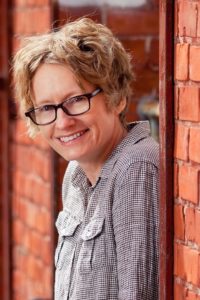 That Create the World’s Great Drinks, keynotes a UNC Charlotte Botanical Gardens’ 50th Anniversary Symposium on Saturday, October 8, 2016.
Attendees also will learn easy-to- remember garden design strategies for working with such elements as form, texture and color, during a talk by Steve Aitken, editor of Fine Gardening magazine. This symposium also features a look back at the gardens’ history as well as a peek at what is coming next. Lunch and a tour of the Gardens are included.
Doors will open at 8:30 a.m. on the third floor of the Student Union on the UNC Charlotte main campus. Complimentary parking will be available in the Student Union parking deck. Participants will tour the Gardens from 3 p.m. to 4 p.m. Walking shoes are encouraged.
The symposiu m is open to the public; pre-registration is required. Register online or call 704-687- 0721 by August 31 to receive the “Early Bird” discount rate for the daylong event. Registration will close October 3.
Begun in 1966 on the newly-established Charlotte campus of the University of North Carolina system, the Botanical Gardens were the brainchild of biology professor Herbert Hechenbleikner and UNC Charlotte founder Bonnie E. Cone. The gardens serve as a living classroom for biology students and as a horticultural and botanical resource for the campus and greater community.
As landscape manager, Hechenbleikner began growing unusual native plants on UNC Charlotte’s young but growing campus; this led to the development of the Van Landingham Glen, a seven-acre garden of hybrid rhododendrons and native plants of the Carolinas. Today, the Botanical Gardens include 10 acres of outdoor gardens, a 4,500-square- foot glasshouse with attached workspace, and a classroom that also contains a botanical and horticultural library of more than 1,200 books. More information can be found on the gardens’ website.

Researcher Uncovers Clues to Cancer, Neurodegenerative Disorders
Frogs and their tiny eggs are helping a UNC Charlotte researcher unlock the mysteries of genomic instability, with implications for cancer and neurodegenerative disorders such as Alzheimer’s and Parkinson’s Disease.
Biological sciences assistant professor Shan Yan researches DNA damage that human cells sustain from thousands of internal and environmental assaults each day. Researchers know that the body’s cells have a complex set of processes that constantly assess the damage and make repairs to fragile genetic material.
Yet, the vital biochemical processes by which this constant DNA repair takes place are still only partially understood because of their complexity, speed, and the difficulty of studying complex interactions within living cells. Moreover, it remains unknown how cells sense the oxidatively damaged DNA in the first place.
“The main question we try to answer is how genomic integrity is maintained,” Yan says. “All living organisms have a genome, which must maintain its integrity in response to damaging agents, such as oxidative stress or chemotherapy drugs. The process is not well studied and there are many unanswered questions, which is why we are interested.”
For organisms to maintain their integrity, an elaborate network called DNA damage response detects abnormal DNA structures through a process called checkpoint signaling and coordinates the repair and activation. This DNA damage response has been demonstrated as a biological barrier to the formation of tumors.
In an article published in the Proceedings of the National Academy of Sciences (PNAS) in 2013, Yan’s lab first announced the discovery of a previously unknown surveillance mechanism.
Two biochemical pathways, known as ATM-Chk2 and ATR-Chk1, govern the cell’s response and repair of double-strand DNA breaks and other types of DNA damage or replication stress respectively. The molecular mechanisms underlying the ATR-Chk1 checkpoint activation include the uncoupling of DNA helicase and polymerase activities and DNA end resection of double-strand breaks.
The UNC Charlotte researchers found a third, previously unknown trigger for ATR-Chk1 checkpoint pathway, and this novel mechanism was discovered in the context of oxidative stress.
A base excision repair protein known as APE2 plays unexpected roles in the checkpoint response: single-strand DNA generation and Chk1 association. The protein was previously known to be involved in the DNA repair of oxidative damage, but not to the extent revealed in the study’s findings.
“Better understanding of these processes can give us new clues or avenues for therapies for human diseases,” Yan says. “We have discovered that many of the target proteins we’re working with in Xenopus are correlated with those found in cancer patients.”
Yan’s research is funded in part by the National Institutes of Health’s National Institute of General Medical Sciences (NIGMS). The funding (NIH R15GM101571) has allowed Yan to support his lab, train students, and publish eight papers in a three-year period, often with students.
The most recent research papers were published in Biochemical and Biophysical Research Communications and Cellular Signalling. Yan also summarized the current understanding of oxidative stress response and discussed applications of these findings from basic research to cancer and neurodegenerative diseases in two comprehensive review articles in Cellular and Molecular Life Sciences and International Journal of Molecular Sciences.
In March 2015, the NIH awarded him additional funding of over $360,000 (NIH R15 GM114713). He also has received funding from UNC Charlotte.
“The whole research program is growing, and we are grateful for the funding support,” Yan says. “This is a very encouraging and emerging area, and our cutting-edge research projects will help to better understand genome stability and cancer development.”
Yan works closely with students and fellows, including postdoctoral fellows and graduate, undergraduate and high school students.
“We’re passionate about this line of research because we want to know how it works at the core,” says Steven Cupello, who is pursuing a doctoral degree in biology. “We don’t just get to uncover that DNA repair happens, but also try to unravel the nuanced mystery of exactly how it happens.”
Another student who works with Yan, Jude Raj, was chosen for a 10-week intensive Research Experience for Undergraduates (REU) program funded by the National Science Foundation. This Biology and Biotechnology REU program allowed him to develop lab research skills, continue independent projects, and present the results at various research symposiums.
“After successful months of training, Dr. Yan offered me the incredible opportunity to pursue an independent project,” says Raj, a biology honors student. “I’ve become deeply passionate about molecular biology and fascinated about the invisible, microscopic reactions taking place in living organisms.”
Raj has gained insights not only into the subject but also into research practices. His research presentation was awarded first place in Biological Sciences at the University’s Undergraduate Research Conference in April.
“I think the biggest life lesson I have learned from my research experience is to never quit and keep moving forward, no matter how much you fail,” he says. “Research has had such a great impact on me by increasing my problem-solving skills, and even making my classes more interesting. My ultimate dream would be working alongside other scientists to eradicate disease.”
Yan’s students have created a video and a written resource for the Journal of Visualized Experiments, describing how the lab use Xenopus egg extracts to study pathways of DNA damage response. Yan’s lab also shares its research by giving tours of the lab during the UNC Charlotte Science and Technology Expo each spring.
To expand access among a larger group of students beyond his lab, Yan integrates his research in the classroom. By sharing real-world examples of cell biology research outside the textbook, he hopes to inspire his students.
“Science is always the driving force for the overall human being,” he says. “It’s not always easy to move forward, but every new discovery through basic research could open unidentified and unexpected new avenues.”
Words: Tyler Harris | Image: Lynn Roberson, showing Biological Sciences researcher Shan Yan and master’s degree student Stephen Cupello in Yan’s lab.
Mukherjee Receives National Award for Making a Difference in STEM Fields
UNC Charlotte distinguished cancer researcher Pinku Mukherjee has received a 2016 Inspiring Women in STEM Award from INSIGHT Into Diversity magazine, the largest and oldest diversity and inclusion publication in higher education. The Inspiring Women in STEM Award honors women who work to make a difference in the fields of science, technology, engineering, and mathematics (STEM).
Mukherjee will be featured, along with 65 other recipients, in the September 2016 issue of INSIGHT Into Diversity magazine. Each award recipient was nominated by a colleague and selected by INSIGHT Into Diversity based on their efforts to inspire and encourage a new generation of young women to consider careers in STEM through mentoring, teaching, research, and successful programs and initiatives.
As the Irwin Belk Endowed Professor of Cancer Research at UNC Charlotte, Mukherjee is transforming the ways in which cancer is diagnosed and treated. She has designed innovative approaches to more accurately detect breast cancer early and is developing targeted therapy and imaging for pancreatic, ovarian and colon cancers.
Mukherjee also is the chair of the Department of Biological Sciences at UNC Charlotte. She collaborates with researchers from across UNC Charlotte and at other institutions, and with students in classroom and lab settings.
This is the latest accolade for Mukherjee, who was honored a year ago with the O. Max Gardner Award – the highest faculty accolade given by the Board of Governors of the University of North Carolina. The award, established by a provision in the will of Gov. O. Max Gardner, recognizes UNC system faculty members who have “made the greatest contribution to the welfare of the human race.”
Mukherjee has secured approximately $7 million in funding and has over 100 peer reviewed scientific journal publications and proceedings. She has participated in several FDA clinical trials from 1998 to 2008 at Mayo Clinic. She was part of the panel of scientists invited to Capitol Hill in 2010, and part of the NIH/NCI Think Tank for Tumor Progression and Metastasis in 2008. She was the spokersperson for Cristie Kerr’s “Birdies for Breast Cancer Foundation” from 2006-2008 and spokesperson for the CARE Foundation from 2004-2006.
She is the founder of CanDiag and is the sole inventor of the CanDiag antibody which has been used to develop early detection blood tests for breast cancer. She received her bachelor’s degree in microbiology from Bombay University, India and her master’s and doctoral degrees in immunology from Brunel University, London, UK.
Math Meets Language and Cognition
English language learners in Mariella Duarte’s eighth-grade class at Whitewater Middle School in Charlotte face the steep task of learning middle school math in a language they have yet to master.
For these students, the cognitive load can prove overwhelming.
Anthony Fernandes, a mathematics professor at UNC Charlotte, is seeking solutions to that struggle. “There is a bias that teaching math to English language learners should be fairly easy,” he says. “It’s numbers and shapes. But how are you going to explain these numbers and shapes?”
Fernandes prepares future math educators and has turned his research focus to the unique challenges that English language learners face in math class. He has tapped into Cognitive Load Theory for possible answers to the dilemma. He works directly with students and educators in public schools, as well as his UNC Charlotte students.
“Our working memory has a limited capacity, but it plays a key role in problem-solving,” he says. “The job of working memory is to work with new pieces of information and draw upon the larger long-term memory, as well.”
Fernandes uses the game of chess to explain this theory. A fundamental difference between a novice and a Grandmaster is the cognitive load required to make a strong, strategic move. For the novice, each turn presents a brand new set of problems, obstacles, and potential solutions—and each is treated by the mind as a separate chunk of information.
On the other hand, the Grandmaster knows patterns. The brain of the Grandmaster treats whole situations as single chunks of information, well-known and easy to recall. Thus the cognitive load for the Grandmaster is significantly less taxing, providing a substantial upper hand in solving the problem: What’s my best move?
In the case of students learning math while still learning English, one solution is when students offload information from their working memories through good record keeping, which Fernandes says is as simple as “what students might scribble or draw.”
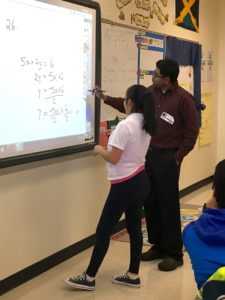
Anthony Fernandes works with a student.
With the support of a $300,000 grant from the National Science Foundation, Fernandes and his research partners hope to redesign mathematics tasks to encourage record keeping and make other changes. “We have to figure out what internal resources these students bring with them and how we can set up problems in a way these kids can make sense of them,” Fernandes says.
While analyzing interviews he conducted with English learner students from various schools, Fernandes noticed that students’ gestures did not always match the words they used to describe a mathematical concept. Perhaps most fascinating, the gestures were more reliable indicators of what the students knew.
For example, Fernandes noticed that a student had correctly defined area as “the inside of a shape,” but the student made a gesture of outlining the shape, rather than filling it in. Turns out, the student’s calculations had confused area for perimeter.
Fernandes, a mathematics educator, has found himself becoming well-versed in language acquisition, cognition, and multimodality. He has gained comfort in the world of a linguist, adding to the tools he can use to address the mathematical issues the students face.
“Increasing the scope of the communication modes gives these students more to play around with and more opportunities to be successful,” he says.
Duarte, an English as a Second Language teacher who holds two master’s degrees, sees the collaboration with Fernandes as critical to engaging her students. “Before, they weren’t participating, but now they want to do it,” she says. “They want to raise their hands, and they want to be the ones who go to the board and work the problems out. He opened their minds to like math.”
Within the first two months of working with him, students’ math scores went up – way up, she says.
Different methods and an increase in student engagement are certainly linked to the increase in student performance, but there may be another factor – hope.
“The students feel like they are learning, and they see that what we’re doing is really helping them,” Duarte says. “They see, ‘Hey, she’s a Latina, and he’s from India, and they’ve achieved things that we can achieve, too.’ They believe in themselves.”
North Carolina’s student population has seen an increase of about 400% in English language learners just in the past ten to fifteen years, and “the increase isn’t stopping,” Fernandes says. “We have to do something different.”
What is best for these English language learners may prove best for math education more generally. “What we’re doing is figuring out better ways to teach math, which ultimately benefits everyone,” Fernandes says.
Words: Brittany Stone | Images: Lynn Roberson and courtesy of Anthony Fernandes
Professor Receives Board of Governors’ Highest Teaching Honor
At the May 14 College of Liberal Arts & Sciences’ commencement ceremony, Stanley Schneider, Biological Sciences, officially received a 2016 UNC Board of Governors Award for Excellence in Teaching.
This annual honor recognizes one professor at each of North Carolina’s public institutions. The 17 recipients are nominated by individual campus committees and selected by the Board of Governors’ Committee on Personnel and Tenure. Each award winner receives a $12,500 cash prize and a commemorative bronze medallion. Pearl Burris-Floyd, a member of the UNC Board of Governors, presented the award at the Saturday morning ceremony.
As a teacher, one of Schneider’s goals is to change the way students think about and live on Earth. “I want them to experience awe and a sense of privilege and responsibility for living on this planet,” he says.
Schneider’s passion for animal behavior, social insects including honeybees, and the evolution of social behavior is infectious, and his students thrive under his guidance. Schneider and colleagues explore how honeybees communicate, with potential implications for honeybee health.
Teaching is a social interaction, as the contagious enthusiasm of the teacher can capture students’ imaginations and help them dream, Schneider says. Excellent teachers are rigorous and fair, and they demonstrate respect for students by holding them to high standards of performance by providing clear, organized and relevant lectures, he says.
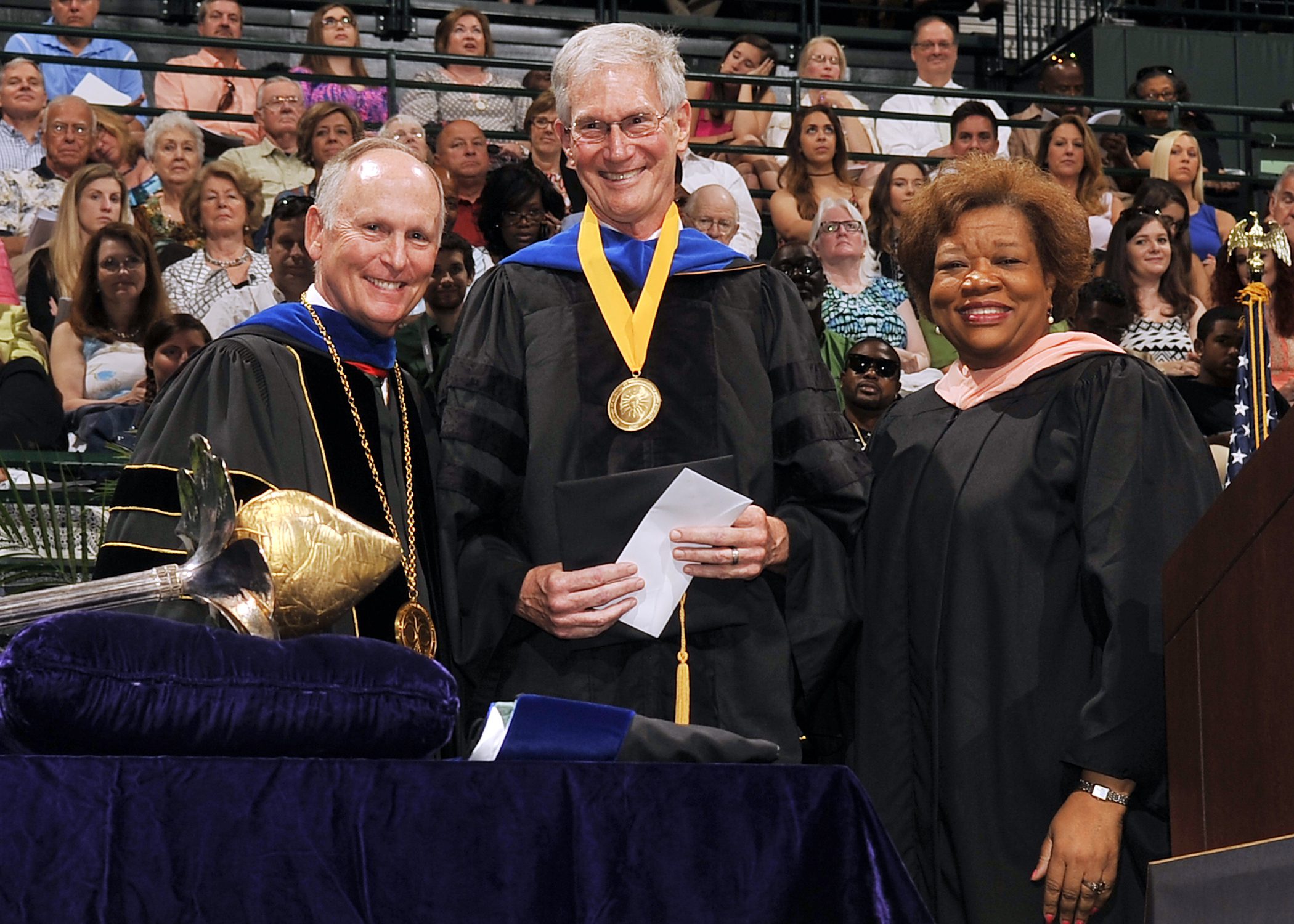
Schneider with Chancellor Philip Dubois and BOG Member Pearl Burris-Floyd
Schneider exposes students to the process of conducting research as he views this as the primary means by which students learn how new information is generated and synthesized into an existing body of knowledge. Since joining the UNC Charlotte faculty in 1985, Schneider has worked with over 150 graduate and undergraduate students through individualized instruction, many of whom have gone on to become productive biologists, teachers, researchers and entrepreneurs.
“I think it’s very important to take students through the entire process to completion, and completion is having the results published in a peer-reviewed journal,” he says. “They understand the importance of communicating your findings with the larger audience. That benefits them, and it benefits us and the university.”
Close to 60 percent of the Biological Sciences Honors students working with Schneider have published with him, some with multiple publications. Because of the finite time period during which undergraduates work with him, obtaining enough data to publish can at times prove difficult. This remains a goal for him, however.
“In a university, teaching and research are inextricably interlinked,” he says. “Lectures give people the background information necessary to train them to start applying it. Research training trains them to generate that knowledge themselves. So, you can’t separate the two. The interaction of those two is what moves education forward and what moves human understanding forward.”
Because of his research on honey bees, Schneider frequently is invited to give talks to beekeeping associations and gardening and birding clubs. Given the worldwide decline of pollinators, he sees these talks as an important public service, as he draws upon his research to teach the general public more about the role they can play in helping to combat the problem.
Schneider earned a doctoral degree in animal behavior from the University of California at Davis in 1984. His bachelor’s and master’s degrees in biology are from Texas State University.
Established by the Board of Governors in 1994 to underscore the teaching and to award good teaching across the University, the Board of Governors Awards for Excellence in Teaching are given annually to a tenured faculty member from each UNC campus. Winners must have taught at their present institutions at least seven years.
In fall 2015, Schneider was named the recipient of UNC Charlotte’s top teaching award, the Bank of America Award for Teaching Excellence.
In 2014, Schneider received the College of Liberal Arts & Sciences’ Award for the Integration of Undergraduate Teaching and Research. He has served as principal investigator or co-principal investigator on grants totaling $1.3 million, including funding to support undergraduate research.
International Research Team Investigates Marine Species Adaptation
It has long been known that animals can adapt to their environment through changes to their DNA, or their genetic code. More recently, research has shown that non-genetic components may be important, as well — and in some cases essential — for processes such as health, aging and development.
For example, genetically identical twins, despite having identical DNA, are not copies of one another in appearance, behavior, or other characteristics that are dependent on their environmental experiences. Two central non-genetic contributors to individual variation are chemical modifications of the DNA, or epigenetics, and associations with different bacterial species or microbial symbioses.
An international research team led by Adam Reitzel of UNC Charlotte Biological Sciences is investigating how epigenetic regulations and microbial communities influence the adaption of coastal marine species to climate change.
The team received funding in March from the Human Frontier Science Program, as one of only seven teams to receive a Young Investigators’ Grant from 871 teams that sought funding. Reitzel’s collaborators are Sylvain Forêt of the Australian National University and Sebastian Fraune of the Christian-Albrechts University of Kiel, Germany.
“Evidence is growing that climate change has profound effects on marine ecosystems, yet our understanding and ability to predict how species respond in these ecosystems is still very limited,” Reitzel says. Unlike the genes of an animal, epigenetics and microbial composition can rapidly alter due to changes in the environment, making them ideal mechanisms to study how species respond to environmental threats like global warming.
The researchers are modeling their study on the anemone Nematostella vectensis, in which they will first monitor physiological, epigenetic, and microbial changes associated with thermal acclimation. They will then separate the effects of each change through bacterial experimentation, and will carry out gene knockdown and over-expression experiments to determine the function of critical host genes in epigenetic regulations and in the plasticity of the microbiota.
This research will include fieldwork in estuaries throughout the United States, including in North Carolina.
The aim of this research is to determine how epigenetic regulations and microbial communities participate in thermal acclimation of a coastal marine species residing in a dynamic temperature environment, and how these non-genetic factors interact with each other. The researchers hypothesize that changes in the microbial community improve the thermal tolerance of the host, and that the epigenetic landscape is responding both to the shifts in temperature and to the altered microbial composition.
“We believe these results will not only have important consequences for our understanding of the response of marine species to climate change, but will more broadly give us insight into unanswered questions regarding the role of epigenetic regulations and microbes in animal ecology and evolution,” Reitzel says.
The research team also will explore how epigenetics, microbiomes, and genomic mutations intersect, as they are largely studied in isolation at the moment.
The Human Frontier Science Program Organization is a non-profit association based in Strasbourg, France that supports novel, innovative and interdisciplinary basic research focused on the complex mechanisms of living organisms. Research grants are provided for international science teams that wish to combine their expertise to focus on problems in the life sciences. Young Investigators’ Grants are awarded to teams whose members all are within the first five years of obtaining an independent laboratory.
Reitzel has been an assistant professor at UNC Charlotte since 2012 and received his doctoral degree in 2008 from Boston University.
In addition to this funding, he also has received funding from the National Science Foundation for the marine species adaptation research, and is the recipient of a National Institutes of Health AREA grant for his research on circadian clocks. He has been on the review editorial board for Frontiers in Marine Molecular Biology and Ecology since 2013 and has authored more than 60 peer-reviewed journal publications.
Words: Tyler Harris | Image: Vanna Sombatsaphay, used with permission