Strategic Plan 2025-2032
Discovering What’s Next: The Klein College of Science
Message from the KCOS Founding Dean, Bernadette Donovan-Merkert
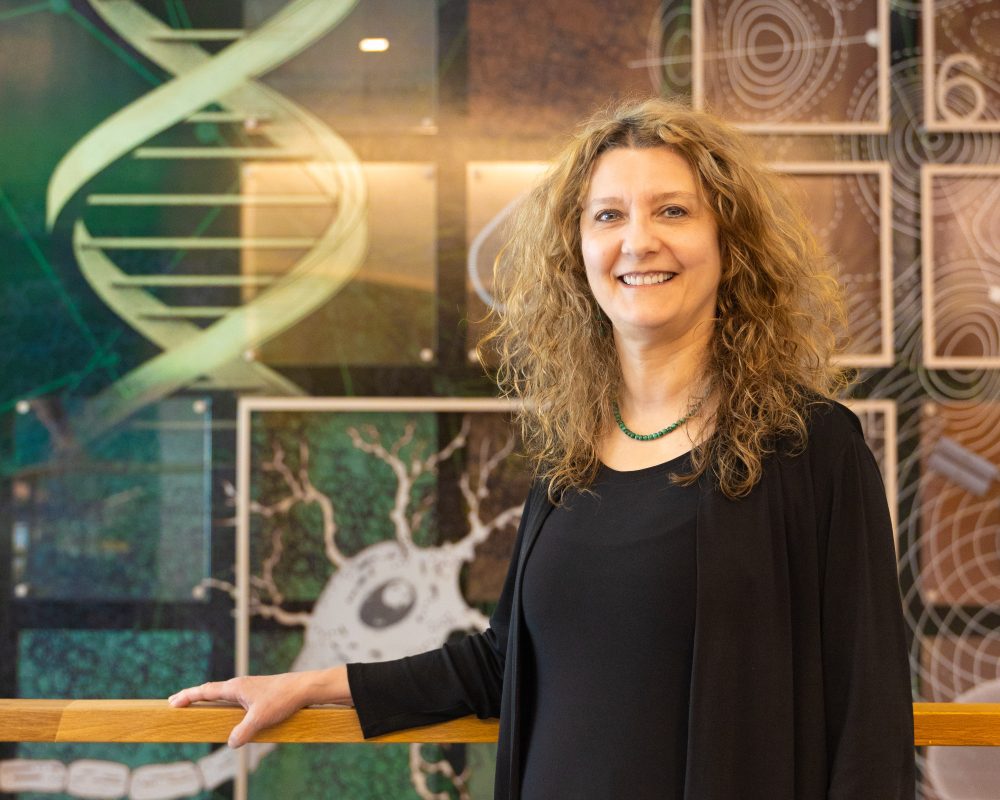
It is with immense pride and enthusiasm that I share the inaugural strategic plan for the Klein College of Science (KCOS) — a bold blueprint for our future. Born from a transformative gift from Fred and Gené Klein and a renewed institutional commitment to science, KCOS has embraced this moment to define its mission, vision and path forward. This plan acknowledges the College’s critical role in contributing to the elevation of UNC Charlotte’s reputation as a recently designated R1 institution on the rise. The plan also recognizes our shared ambition to elevate KCOS as a nationally and internationally recognized leader in research, education and public engagement and a valued partner with the Charlotte region.
Over the next seven academic years (2025-2032), we will pursue four strategic focus areas that build on our strengths and chart a course toward greater impact:
- Research: We will advance world-class research, elevate our programs and centers to national and international prominence, expand our impact in fundamental and use-inspired science, increase external funding, grow program numbers and enrollment, and forge consequential partnerships from the local to global levels.
- Education: Embracing the Charlotte Model, introduced in Shaping What’s Next: The UNC Charlotte Strategic Plan 2021-2031, we will empower students through high-impact and experiential learning experiences and will prepare them to thrive as skilled, job-ready professionals in a dynamic global workforce.
- Community and Collaboration: We will expand our engagement with learners of all ages and backgrounds, strengthen our growing internal community, develop additional partnerships with industry, government, K-12 school systems, non-profits, donors and policymakers, amplify KCOS’s visibility and societal contribution and deepen our connections with the Charlotte region and beyond.
- Talent and Assets: We will cultivate visionary leadership, ensure financial sustainability, strengthen infrastructure and expand the core capacities of KCOS people. We will continue to invest in and celebrate the contributions and achievements of KCOS faculty, staff and students, and elevate our engagement with KCOS alumni to support long-term, first-choice excellence in research and education.
This plan presents numerous goals, objectives and actions, all of which are critical for KCOS to realize its vision of rising as a first-choice, internationally recognized college of science. All statements are organized for clarity but do not imply any prioritization.
This strategic plan is more than a roadmap — it is a commitment and a call to action! I extend my deepest gratitude to the Strategic Planning Committee and the hundreds of KCOS community members who contributed their insight and energy to this process. With your vision and dedication, KCOS will reach new heights of excellence in collaborative science, building a better future for the global community and the planet.
Focus Area A: Research
We aim to elevate our rising status among U.S. R1 institutions while advancing our departments, programs and centers toward greater international recognition. To achieve this, we will enhance our efforts in fundamental, use-inspired and translational sciences; increase and diversify the external funding portfolio; and expand the College’s size while continuing to build an outstanding team of researchers. Additionally, KCOS will foster impactful local and global partnerships to boost our reputation as a world-class research institution and deliver lasting value to the Charlotte region and beyond.
Goal A1. Position KCOS as a first choice for science, innovation and partnership.
Objective A1.1. Expand and broaden external funding to amplify research excellence and accelerate innovation in emerging scientific frontiers.
Action A1.1.1. Define clear, college-wide research priorities, competitive programs and centers that reflect KCOS’s established strengths, target emerging funding opportunities and advance its aspiration to build a compelling reputation and international recognition.
Action A1.1.2. Broaden the portfolio of external funding sources beyond federal agencies, including philanthropic foundations, industry partnerships and sponsors.
Action A1.1.3. Enlarge and coordinate seed funding programs to support early-stage, interdisciplinary, high-risk/high-reward and proof-of-concept research aligned with strategic priorities.
Action A1.1.4. Increase research project funding through enhanced proposal development with the Center for Research Excellence and strengthen pre- and post-award project administration through departmental collaboration with the Office of Research Services.
Objective A1.2. Champion regional, national and international partnerships to boost our standing as a premier college of science while delivering value to the Charlotte region and beyond.
Action A1.2.1. Leverage KCOS’s research strengths and centers of excellence to catalyze regional, national and international collaboration, connecting internal capacity and expertise with regional and global research needs and opportunities.
Action A1.2.2. Establish long-term partnerships with higher education institutions that facilitate the movement of international researchers and students through strengthened organizational policies, partnership management capabilities and mutually beneficial exchange programs.
Objective A1.3. Increase scaffolding for entrepreneurial initiatives and the commercialization of pioneering research innovations.
Action A1.3.1. Strengthen collaboration with the Office of Research Commercialization (ORCP), the Center for Entrepreneurship and Innovation (CEI), the North Tryon Tech Hub, NCInnovation, NCBiotech, NC Idea and The Pearl to accelerate the translation of KCOS discoveries into products, services and ventures.
Action A1.3.2. Build leading-edge college infrastructure and expertise to support next-generation discoveries, entrepreneurship and commercialization.
Action A1.3.3. Pursue globally competitive use-inspired and translational research mechanisms, along with federal and state government innovation and technology transfer programs, to drive entrepreneurial opportunities and scale innovation.
Goal A2. Promote excellence among KCOS’s faculty, staff and students.
Objective A2.1. Nurture and support all faculty whose excellence in research and innovation elevates KCOS as a respected international peer.
Action A2.1.1. Recruit, retain and empower top-tier faculty at all career stages through competitive salaries, startup packages, mentoring, leadership development and ongoing support to maintain research momentum.
Action A2.1.2. Define KCOS primacy in emerging research areas through creative hiring strategies.
Action A2.1.3. Elevate the national and international recognition of KCOS’s scholarly impact by encouraging faculty to publish in prestigious journals and participate in editorial leadership and by nominating faculty for academy memberships, awards and society honors.
Action A2.1.4. Create multiple endowed professorships in each department to promote the college’s research mission and vision to be an internationally recognized college of science.
Objective A2.2. Enhance recruitment and support of postdoctoral research fellows and research professors as essential contributors to KCOS’s strategic research priorities.
Action A2.2.1. Increase the number of strategic appointments of postdoctoral fellows and research professors by enhancing financial support and establishing cost-sharing partnerships across KCOS and with the Division of Research.
Action A2.2.2. Recruit outstanding and highly productive postdoctoral fellows and research professors with structured recruitment pipelines, competitive salaries, high-impact projects and access to advanced infrastructure for research and professional development.
Action A2.2.3. Support the retention of high-performing postdoctoral fellows with long-term research potential by facilitating their timely promotion to Research Assistant Professor roles through mechanisms such as internal bridge funding, competitive mini-grants and external grant applications.
Objective A2.3. Advance recruitment, retention and research success for students across all KCOS disciplines.
Action A2.3.1. Scale up graduate programs and enrollment to strategically expand KCOS’s research capability and prepare highly trained professionals needed for the workforce.
Action A2.3.2. Implement competitive recruitment initiatives to make KCOS the first choice for well-prepared and productive students.
Action A2.3.3. Advance student retention and career readiness by offering merit-based support for internships across government, industry and academic research settings – strengthening skill development and professional pathways.
Action A2.3.4. Enrich student success and retention by expanding well-being, training and career development programs in collaboration with the Graduate School and the Office of Undergraduate Research.
Objective A2.4. Strengthen research capacity through recruitment and support of administrative staff.
Action A2.4.1. Establish competitive hiring to increase the number of administrative staff to support research operations and productivity.
Action A2.4.2. Establish regular training and professional development to attract and retain skilled administrative staff.
Action A2.4.3. Ensure equitable workload distribution among staff members to promote the timely execution of critical processes that support KCOS’s research.
Focus Area B: Education
As a college of science within a top-tier research university that prioritizes access and student success, we cultivate an educational environment that prepares skilled science professionals for a dynamic global workforce. Guided by this strategic plan and by The Charlotte Model, we will deliver innovative, data-informed instruction, enriched high-impact and experiential learning opportunities and expanded workforce-aligned partnerships. With expanding programs and a growing student body, we will promote academic excellence, career readiness and student support. Teaching, mentorship and continuous faculty development will lay the foundation of this commitment.
Goal B1. Create an educational environment that nurtures students and prepares them to become skilled professionals.
Objective B1.1. Strengthen partnerships and outreach to attract and welcome high-potential science students into KCOS.
Action B1.1.1. Foster engagement with prospective students, their families and advocates through research-informed practices and recruitment outreach, expanded entry pathways and empowered faculty and staff presence.
Action B1.1.2. Forge enduring partnerships with Charlotte-area science educators to develop pathways that connect talented high school students to enrichment programs, science career exploration and elevated visibility.
Action B1.1.3. Design and implement branded experiences that highlight KCOS’s academic strengths and encourage early engagement among prospective students and their families.
Objective B1.2. Enhance academic preparation through innovative curricula and student-centered learning experiences in alignment with The Charlotte Model.
Action B1.2.1. Conduct a comprehensive curriculum review to guide the redesign of existing courses and the development of new programs that reflect KCOS’s mission, address emerging scientific areas and align with student and workforce demand.
Action B1.2.2. Integrate onboarding, advising and support services to build early momentum, promote degree progress and enhance the well-being of all students.
Action B1.2.3. Promote high-impact and experiential learning opportunities inside and outside the classroom to encourage active participation and skill development, regardless of students’ pathways into KCOS.
Action B1.2.4. Invest in exceptionally-prepared, motivated students through advanced research-oriented coursework, enriched honors programming, targeted mentoring, leadership development and positioning for national and international fellowships and awards, in collaboration with the Honors College.
Action B1.2.5. Support the reduction of financial barriers to participation in out-of-classroom experiences through KCOS-specific internships, assistantships and specialized funding.
Objective B1.3. Sustain KCOS’s central role in delivering foundational, pre-professional and General Education coursework.
Action B1.3.1. Maintain KCOS’s leadership in delivering high-volume student credit hour courses and its central role in the Quality Enhancement Plan (QEP) through the Department of Mathematics and Statistics and cross-unit collaborations.
Action B1.3.2. Advocate for resource support by quantifying KCOS’s impact on university-wide student success by using student credit hour data, QEP alignment and cross-college dependencies to build a compelling case for sustained and increased investment in KCOS’s instructional capacity.
Objective B1.4. Advance professional and career readiness through workforce-aligned learning and external partnerships.
Action B1.4.1. Embed professional skills and job search readiness — including data fluency, entrepreneurial mindset, résumé preparation and industry networking — into academic programs and student services in collaboration with the Career Center.
Action B1.4.2. Expand undergraduate research and professional training programs in tandem with alumni and community mentorship to support seamless transitions into KCOS Ph.D. programs, other graduate pathways and science-based careers.
Objective B1.5. Use data-driven insights to guide strategic investments in student success.
Action B1.5.1. Enhance KCOS’s educational quality and student success through data-informed tools and strategies to improve teaching, advising, experiential learning, and curriculum design, resulting in better retention and outcomes.
Action B1.5.2. Analyze student performance trends to promote persistence, degree completion and post-graduation job readiness.
Action B1.5.3. Engage alumni, industry leaders, scientific societies and other key stakeholders to identify evolving skill needs and use that insight to implement timely curricular innovations that better prepare students for lifelong career success.
Goal B2. Elevate student success through a culture of teaching and mentorship.
Objective B2.1. Invest in the teaching and mentoring capacities of KCOS’s faculty and staff.
Action B2.1.1. Provide regular updates and workshops on current research on learning, retention and generational trends to inform and strengthen teaching practices and strategies that drive student success.
Action B2.1.2. Maintain instructional innovation through peer-led learning communities, teaching symposia and pedagogical collaboration.
Action B2.1.3. Promote faculty and staff mentoring that is intentional and impactful through training, support materials and structured opportunities for engagement that foster students’ academic, professional and personal development.
Objective B2.2. Cultivate an academic culture that values teaching, mentoring, collaboration and student success as hallmarks of excellence.
Action B2.2.1. Advance faculty and staff success by aligning differentiated workloads, non-salary incentives and targeted professional development with a shared pursuit of educational excellence.
Action B2.2.2. Ensure that reappointment, promotion and tenure policies recognize and reward curricular and pedagogical improvements in courses and teaching supported by data on improved student outcomes.
Action B2.2.3. Empower instructional excellence by establishing a faculty-led Teaching and Mentoring Network that promotes training opportunities, collaborative pedagogy and shared inquiry into student success, engaging graduate students who teach or assist in KCOS courses and aspire to future faculty roles.
Focus Area C: Community and Collaboration
We will deepen our engagement with both external and internal communities to advance KCOS’s impact across Charlotte, the state and the University. Externally, we will deliver value through outreach, collaboration and long-term partnerships with industry, government, school systems, non-profits, donors and policymakers. These efforts will promote science literacy, foster community involvement and inspire learners of all ages within Charlotte’s increasingly competitive higher education landscape and beyond. Internally, we will strengthen KCOS as a vibrant intellectual community with deeper cross-campus connections and position the College as a thought leader in campus-wide scholarly exchange and institutional innovation.
Goal C1. Ignite scientific discovery through outreach, partnerships and collaboration.
Objective C1.1. Build long-lasting strategic partnerships with external stakeholders.
Action C1.1.1. Work with the Office of Corporate Engagement and the Division of Research to connect KCOS research expertise and facilities with industries in the Charlotte region.
Action C1.1.2. Drive cross-sector collaboration through local-to-global partnerships that advance workforce development, in conjunction with knowledge and technology exchanges.
Action C1.1.3. Strengthen regional employer and innovation partner ties to link graduates with career, internship and entrepreneurship opportunities.
Objective C1.2. Advance science learning and community connection by engaging and inspiring learners in the Charlotte region and beyond.
Action C1.2.1. Partner with schools, communities and organizations to improve science learning about fundamental and emerging scientific topics, inspire learners of all ages, attract potential students and their families and enhance KCOS’s educational and community engagement.
Action C1.2.2. Promote campus activities and outreach efforts that connect learners of all ages with KCOS’s scientific mission, increasing visibility and engagement.
Action C1.2.3. Strengthen community science learning by creating accessible digital platforms, curating public on-demand content and showing KCOS research venues in action via virtual tours.
Goal C2. Champion KCOS’s workplace vitality and campus leadership.
Objective C2.1. Foster a thriving community and efficient workplace.
Action C2.1.1. Create workplace vitality by supporting community belonging, well-being, safety and professional fulfillment that accommodates work styles and life circumstances.
Action C2.1.2. Enhance operational efficiency by reviewing policies, streamlining workflows, implementing time-saving technologies and enhancing coordination with UNC Charlotte offices.
Objective C2.2. Position KCOS as a thought-leading college within UNC Charlotte.
Action C2.2.1. Ensure KCOS meaningfully contributes to campus priorities, strategies and service stewardship by encouraging and nominating faculty to lead or contribute to university-wide mission and vision-related initiatives.
Action C2.2.2. Elevate the College’s role in campus-wide discourse and scholarly exchange by deepening University ties and sponsoring interdisciplinary and cross-college forums that foster collaboration.
Action C2.2.3. Implement a communications strategy aligned with internal audiences, the Charlotte region and the global scientific community to amplify KCOS’s educational excellence and international research reputation through engaging storytelling, effective branding and broad media outreach.
Focus Area D: Talent and Assets
We promote visionary leadership by cultivating the next generation of scientists, educators and global leaders. We will enhance the College’s financial sustainability through expanded economic and contingency planning and the development of diverse revenue streams; make strategic investments in infrastructure and equipment to support excellence in research and education; and engage alumni and partners to strengthen our regional and global capacity and competitiveness. We will continue encouraging and celebrating the contributions, achievements and leadership of all KCOS members.
Goal D1. Cultivate visionary leadership.
Objective D1.1. Develop the next generation of science mentors, communicators and global leaders.
Action D1.1.1. Promote and support mentorship as a scholarly leadership role for advancing faculty through institutional recognition and through promotion and regular evaluation processes.
Action D1.1.2. Empower students to lead research, academic and civic projects through mentorship and leadership training, fueling pipelines for future scientists and other science-engaged leaders.
Action D1.1.3. Train KCOS faculty, staff and student researchers to communicate the societal impact of their work to enhance public understanding, support and trust in science.
Objective D1.2. Foster visionary KCOS leadership by empowering future-ready leaders at all levels.
Action D1.2.1. Utilize a KCOS Advisory Board composed of leaders from various sectors to provide strategic insights, increase visibility and offer guidance on long-term planning.
Action D1.2.2. Advance the leadership expertise of the Dean’s team, academic and governance leaders and emerging talent via internal programs and local, disciplinary and national initiatives.
Action D1.2.3. Elevate faculty research leadership through training in team science, cross-disciplinary collaboration, resource management and strategic communication.
Goal D2. Build financial sustainability through resource and asset cultivation and varied revenue streams.
Objective D2.1. Strengthen financial sustainability by expanding contingency planning, multi-year budgeting practices and risk management.
Action D2.1.1. Equip KCOS leadership (Dean, Associate/Assistant Deans, Chairs and staff leaders) with training in resource planning, multi-year budgeting and expenditure oversight to support data-driven fiscal management.
Action D2.1.2. Implement multi-year financial planning using scenario-based models and annual planning cycles to align resources with strategic priorities, forecast needs and assess risk exposure.
Action D2.1.3. Integrate unit-level contingency planning into annual budgeting by identifying financial risks, outlining prioritization scenarios and developing mitigation strategies for funding volatility.
Objective D2.2. Broaden and optimize philanthropic and industry support.
Action D2.2.1. Secure philanthropic and industry support through aligned investments—including endowments, naming opportunities, professorships, fellowships, teaching assistantships, innovation funds, marquee events and KCOS facility sponsorships.
Action D2.2.2. Strengthen alumni and donor engagement and improve participation through tailored messaging, milestone campaigns, departmental liaisons, data-driven outreach, storytelling and recognition strategies.
Action D2.2.3. Foster enduring donor and funder partnerships by aligning philanthropic aspirations and shared legacy building with KCOS’s long-term vision, mission and values.
Objective D2.3. Expand and diversify entrepreneurial and innovation-based revenue streams.
Action D2.3.1. Initiate new revenue strategies and increase funding capacity through fundraising campaigns, crowdfunding platforms and public-private partnerships.
Action D2.3.2. Boost income from innovation through patents, licensing, recharge centers and affiliated ventures, including community-based services like consulting units and public assets such as the observatory, conservatory and botanical gardens.
Action D2.3.3. Expand industry engagement, unlock revenue streams and maximize college assets through infrastructure and equipment-sharing programs, long-term research and development (R&D) partnerships and co-investment in facilities and instrumentation.
Goal D3. Strengthen infrastructure, assets and talent to support R1 research-intensive goals.
Objective D3.1. Invest in state-of-the-art facilities, equipment and instrumentation to support excellence in research and education.
Action D3.1.1. Advance high-performance research by acquiring and maintaining advanced instrumentation, supported by well-trained lab specialists and efficient access policies across facilities and centers.
Action D3.1.2. Upgrade classrooms and shared innovation spaces to support active learning, flexible instruction, interdisciplinary collaboration and hybrid engagement, enabled by smart infrastructure and digital tools that support all scientific disciplines, research methods and types of meetings.
Action D3.1.3. Integrate energy-efficient design, climate resilience and universal accessibility into new and renovated KCOS facilities to ensure long-term viability and alignment with institutional sustainability goals.
Action D3.1.4. Install clear, accessible signage and site-specific displays across KCOS venues to guide visitors and highlight the research, innovation and societal impact occurring in each space.
Objective D3.2. Enhance public-facing infrastructure and engagement capacity for community partnerships and donor cultivation.
Action D3.2.1. Utilize KCOS landmarks and unique venues — including the Conservatory, Observatory and Botanical Gardens — for signature engagement events to foster public partnerships, advance science outreach and strengthen donor relations and stewardship.
Action D3.2.2. Launch an annual marquee event series for strategic stakeholders — donors, philanthropic partners, industry executives, research collaborators and leaders from K-12 and local government — highlighting KCOS talent and accomplishments and offering opportunities for institutional partnerships.
Action D3.2.3. Assign engagement leaders and provide them with yearly planning resources to coordinate public outreach, build stakeholder relationships and deliver responsive, community-focused programs.
Objective D3.3. Invest in and celebrate our people.
Action D3.3.1. Prioritize funding mechanisms and competitive support structures that enable the recruitment, retention and advancement of exceptional faculty, staff, postdoctoral research fellows and graduate students.
Action D3.3.2. Ensure that department and college policies governing annual review, promotion and tenure explicitly recognize and value staff and faculty contributions that reflect the emerging priorities outlined in this strategic plan — particularly community engagement and the generation of innovation, patents, licensing and commercialization.
Action D3.3.3. Embed mentorship and leadership development as core academic and professional priorities, formally recognized in evaluation systems and sustained through peer learning networks, structured training and fellowship opportunities across all career stages.
Action D3.3.4. Support faculty, staff and student leadership in professional societies through involvement, collaborative outreach and access to development and funding opportunities.
Action D3.3.5. Honor the impact of KCOS’ faculty, staff, students, alumni and stakeholders through expanded awards and KNOBEL prizes, alumni honors, stakeholder recognition and ceremonies that elevate KCOS’s legacy.
Action D3.3.6. Launch an annual Recognition Week and establish a permanent awards display celebrating excellence in teaching, mentoring, research, staff support contributions, service and leadership.
Objective D3.4. Elevate alumni presence and engagement within the KCOS culture and environment.
Action D3.4.1. Expand student-alumni and retired faculty and staff retiree networking events, especially in the Charlotte region, which foster cross-sector connections and the expansion of KCOS relationships with alumni.
Action D3.4.2. Strengthen alumni engagement through virtual events that share KCOS updates and foster ongoing connections with college life.
Action D3.4.3. Collaborate with alumni to anticipate evolving skill demands and enhance student career readiness through meaningful involvement in curriculum-based activities and volunteer educational experiences.
Action D3.4.4. Extend alumni communications to build alumni relations.
More Information
Critical Terms Used in the Plan
An R1 institution is a university classified under the Carnegie Classification of Institutions of Higher Education as having “very high research activity,” the top tier of U.S. research universities, based on research spending, number of doctorates awarded and research staff. Carnegie Classification of Institutions of Higher Education. “Basic classification description: Doctoral Universities – Very High Research Activity (R1).” Center for Postsecondary Research, Indiana University Bloomington, 2021.
The Charlotte Model is introduced in Shaping What’s Next: The UNC Charlotte Strategic Plan 2021-2031 in Area A: Opportunity and Excellence, Goal A1: Provide students a unique, comprehensive, intellectually rigorous education—referred to as the “Charlotte Model”—to be delivered through enhanced pedagogy and transformative co-curricular experiences and integrated with robust student success measures.
High-impact learning practices (HIPs) support deep learning by promoting student engagement. Research shows that HIPs significantly increase retention and success to graduation across all disciplines. Practices include problem-based learning, cohort models, first-year seminars and experiences, common intellectual experiences, writing-intensive courses, collaborative assignments and projects, internships, service-learning and capstone courses and projects. Key elements include performance expectations set at appropriately high levels; interactions with faculty and peers about substantive matters; frequent, timely and constructive feedback; periodic structured opportunities to reflect and integrate learning; and public demonstration of competence. Based on research by Kuh, G.D. (2008). Excerpt from high-impact educational practices: What they are, who has access to them and why they matter. Association of American Colleges and Universities, 14(3), 28-29. AAC&U. (no date.) Trending topic: High-impact practices.
Experiential learning encompasses the substantive application of academic preparation in real-world settings, both inside and outside the classroom. These include creative, innovative and entrepreneurial projects; undergraduate research; global or sociocultural learning; internships, cooperative education and employment; career and professional experiences; leadership; study abroad; and community-based and service-learning. State University System of Florida (2023, March). Experiential learning definitions.
The National Association of Colleges and Employers and the Society for Experiential Education.
KCOS Strategic Planning Process
The Klein College of Science (KCOS) launched its inaugural strategic plan after a year of community-driven effort led by a ten-member Strategic Planning Committee (SPC). Founding Dean Bernadette Donovan-Merkert convened the committee on February 3, 2025, and charged it with creating a bold, actionable roadmap — including new mission, vision and values statements — that reflects KCOS’s academic excellence, societal impact and global ambitions, while aligning with UNC Charlotte’s strategic priorities.
Members of the KCOS SPC:
- Kirill A. Afonin, Professor of Chemistry
- Tonya C. Bates, Senior Lecturer of Biological Sciences and 2024-25 KCOS Faculty Council Chair
- Sharon Bullock, Teaching Professor of Biological Sciences and Biotechnology Minor Program Coordinator
- Didier Dreau, Professor of Biology and Graduate Program Director
- Jeff Gillman, Director, Botanical Gardens
- Donald Jacobs, Professor of Applied Physics and Graduate Program Director
- Reneé Johnson, Office Manager and Assistant to the OPTI Graduate Program Director
- Kevin McGoff, Professor of Mathematics
- Rosario Porras-Aguilar, Associate Professor of Physics and Optical Science
- Juan Vivero-Escoto, Professor of Chemistry and Director of CITRANS
- Bernadette T. Donovan-Merkert, Dean, Klein College of Science
- Sharon A. McDade, Strategic Consultant – Practice Leader for Strategic Services with Greenwood Asher & Associates
To guide KCOS’s positioning, the SPC reviewed more than 50 strategic plans from leading domestic and international science colleges. Committee members conducted a combined SWOT and SOAR analysis to assess KCOS’s strengths, challenges and aspirations.
During the first input phase (April 9–May 2, 2025), the SPC distributed an electronic survey to gather feedback on draft statements for mission, vision and values and six aspirational areas: education, research, community and outreach, infrastructure, leadership and sustainability. The survey garnered 178 responses (71 faculty, 30 staff, 7 administrators, 41 undergraduates, 27 graduate students, 4 postdoctoral researchers and 8 alumni). A response percentage is unavailable due to multiple-option selections on the KCOS relationship question. Based on this information, the SPC drafted a strategic plan.
The SPC introduced the second input phase at the August 15 All-College Meeting and opened the new survey from October 1 to 25, 2025. This round drew 182 responses — surpassing spring participation — and invited feedback on the introduction, mission, vision, values and each section of the draft plan. All relationship groups participated except postdoctoral fellows/trainees. Undergraduate students (n = 76, 42% of total responses), faculty (n = 59, 32.4%), graduate students (n = 21, 11.6%) and staff (n = 24, 7.7%) contributed the most responses. Respondents represented all academic and work-affiliation areas, with the largest numbers coming from Biological Sciences (n=70/38.5% of total responses), Chemistry (n=38/20.9%), Mathematics and Statistics (n=31/17%) and Physics and Optical Sciences (n=18/9.9%). Ratings on a 1–5 linear scale averaged 4.36, with a range of 4.32-4.40. Participants also submitted 229 written comments across every section of the plan. Most comments affirmed the plan’s strength and offered suggestions to enhance its content further. This final input ensured the plan reflected community priorities.
In fall 2025, the SPC invited the Dean’s leadership team to join them in proposing metrics to help KCOS monitor, analyze and improve its efforts to achieve the goals of the strategic plan. The joint efforts produced executive and predictor dashboards for each Focus Area. The group recommended these to the Dean and the Dean’s leadership team for further refinement and pursuit of baseline data. The SPC also produced draft timelines for the completion of each goal, objective and action in each focus area, and recommended them to the Dean’s leadership team for further refinement and finalization.
Also, in fall 2025, the SPC invited the Dean’s leadership team to co-develop metrics for tracking progress. Together, they proposed executive and predictor dashboards for each Focus Area to the Dean and the Dean’s whole leadership team for refinement and baseline data development. The SPC members drafted timelines for every goal, objective and action. They submitted these recommendations to the Dean and the Dean’s team for refinement of the implementation plan.
Between February 3 and December 2, 2025, the SPC held 42 committee meetings and organized additional subgroup sessions focused on research, writing and editing. On December 2, 2025, the SPC voted to advance the SP document to the dean for public release. Members contributed more than 1,200 person-hours and produced over 80 main drafts. The longest version totaled 237,302 words. After careful editing for clarity and precision, the final SP contains approximately 2,950 words. KCOS’s strategic plan anticipates a midpoint review in 2028–2029 and a conclusion in 2031-2032.