Reitzel Lab collaborates on new research featured in EurekAlert
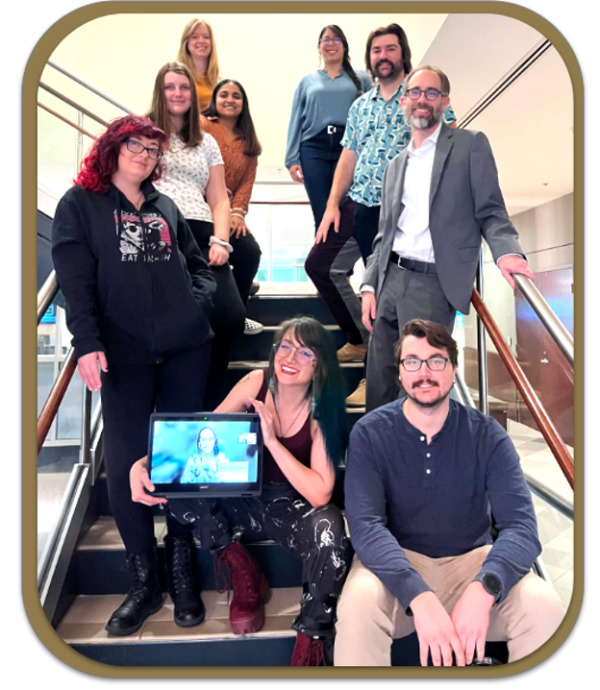
UNC Charlotte’s Reitzel Lab collaborated on a new research study led by Ph.D. candidate Ton Sharoni and Yehu Moran, Ph.D., at the Hebrew University of Jerusalem. Published in Nature Ecology & Evolution, the article “An ancient anthozoan protein reveals an alternative evolutionary path of antiviral signalling” challenges long-held assumptions about the evolution of immune systems and reveals that animals may have developed more than one molecular solution for combating viral infections.
Led by Adam M. Reitzel, Ph.D., the Reitzel Lab investigates the evolution and ecology of coastal invertebrates through an interdisciplinary approach that integrates comparative genomics, molecular biology, population genetics, evolutionary ecology and field studies. The lab’s focal species, the starlet sea anemone Nematostella vectensis, has become a model cnidarian due to its sequenced genome, ease of laboratory culture and broad distribution in estuarine habitats across North America.
Postdoctoral researcher Sydney Birch, Ph.D., and Ph.D. student Hannah Justin contributed to the project, which found that sea anemones use an antiviral defense system that resembles the human MAVS pathway but operates in a fundamentally different way. Researchers identified a protein they named CARDIB (CARD Inhibitor Binding protein), which looks like MAVS yet suppresses immune activity instead of activating it. When scientists removed CARDIB using CRISPR gene editing, sea anemones became far more vulnerable to viral infection, demonstrating that CARDIB’s “brake” function is necessary for an effective antiviral response.
Tests in natural marine environments confirmed the pathway’s importance, with CARDIB‑deficient anemones accumulating significantly more viruses when exposed to estuarine water. The findings suggest that evolution produced multiple antiviral strategies rather than a single ancient mechanism.
Read the full EurekAlert: Sea anemone flips a human antiviral strategy on its head
The news was also covered by ScienceDaily, Brightsurf, Mirage News and Phys.org.